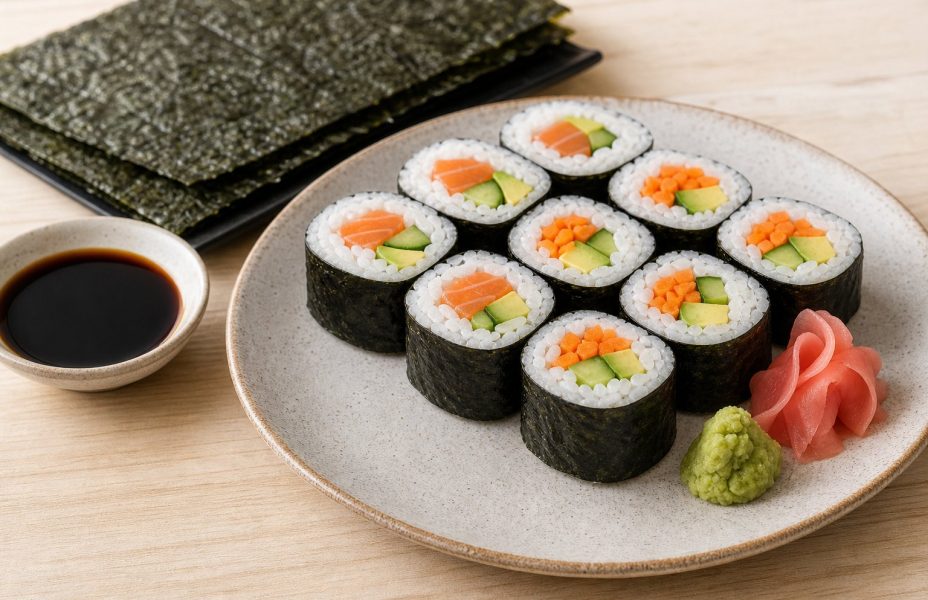
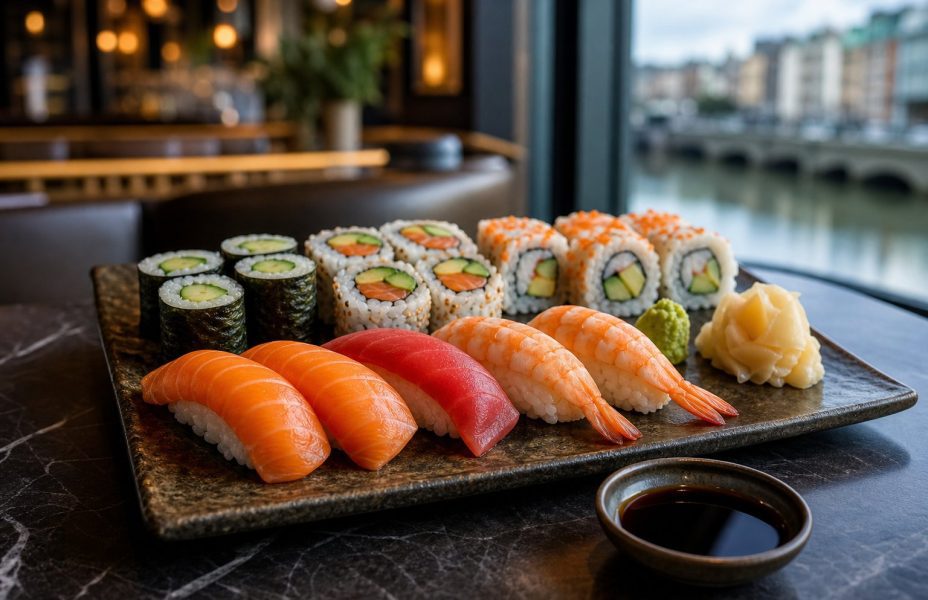
Making sushi at home? It all starts with picking the right rice. If you use the wrong kind, your rolls will fall apart or taste kind of bland.
Getting this foundation right makes a huge difference between a so-so attempt and something that actually feels restaurant-worthy.
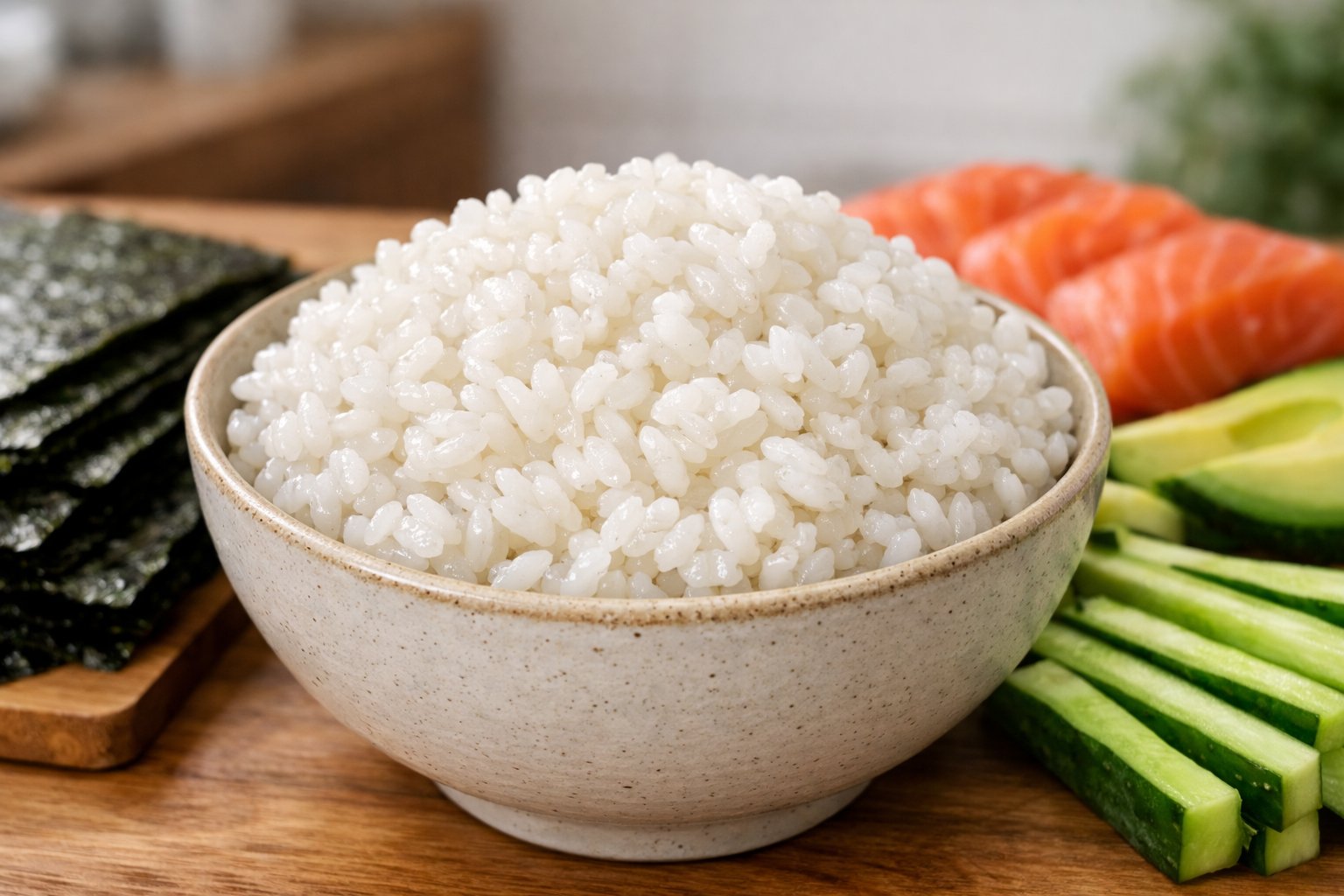
The best rice for sushi rolls is short-grain Japanese rice. It’s usually labelled as “sushi rice” at the store and has a high starch content, which creates the sticky texture you need to keep your rolls together.
Varieties like koshihikari, hitomebore, and akitakomachi are top picks. These types have more amylopectin starch than other rice, so you end up with that signature sticky, slightly firm bite.
Tempted to use whatever rice you have on hand? Standard long-grain or brown rice just won’t cut it.
The right rice, plus proper seasoning, is the backbone that holds everything in place and adds a subtle flavour. Once you know what to buy and how to prep it, making sushi at home gets a lot easier.
Key Takeaways
- Short-grain Japanese rice labelled as “sushi rice” is essential because its high starch content creates the sticky texture needed for sushi rolls.
- You’ll need about 1 cup of prepared sushi rice for a medium roll and 1.5 cups for a full-sized roll.
- Rinse your rice well and mix it with seasoned vinegar while it’s still warm for the best flavour and texture.
Why Rice Selection Matters for Sushi Rolls
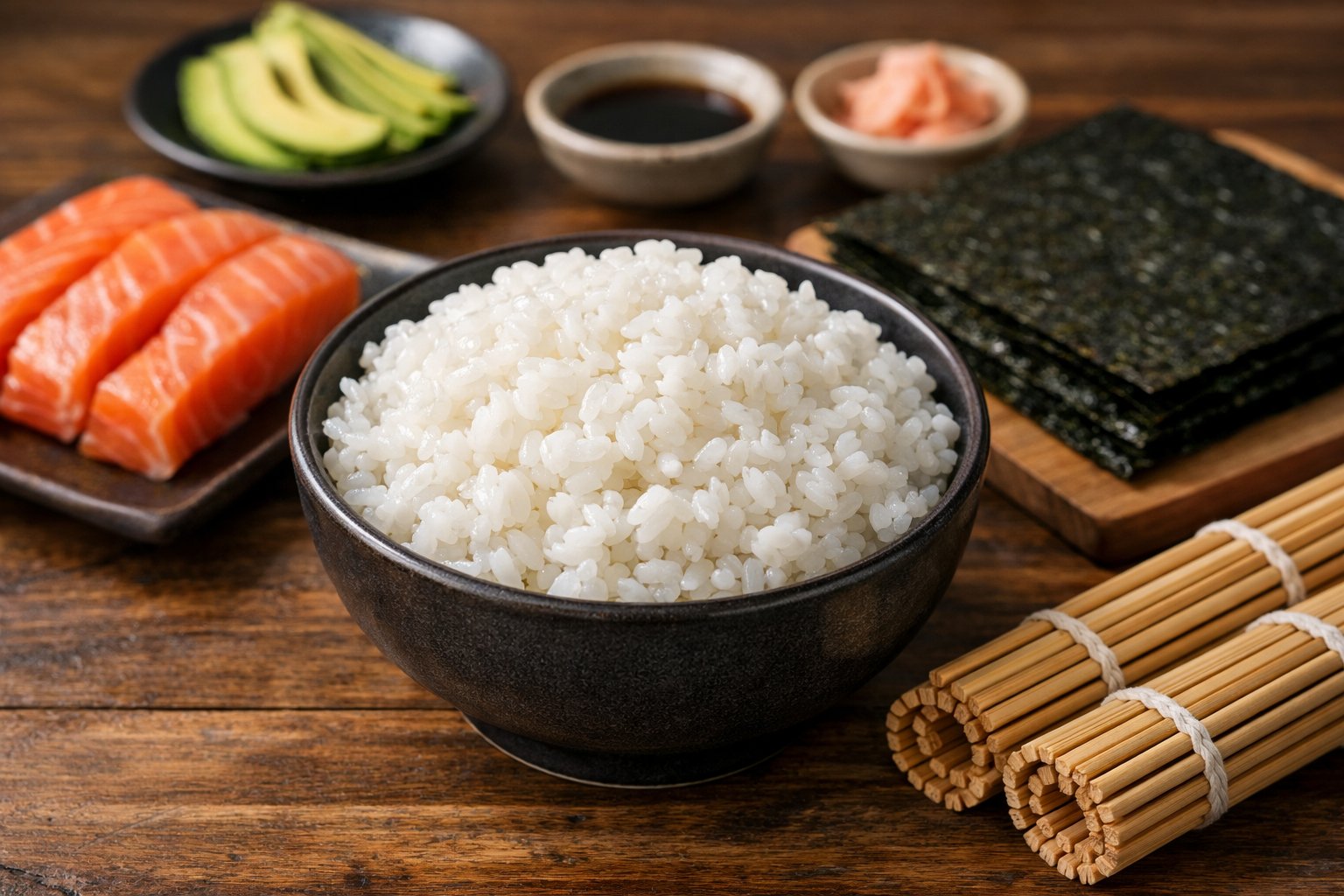
The rice you choose totally changes how your sushi rolls hold together and taste. Nailing the rice means your rolls stay intact and actually feel like real Japanese sushi.
Impact on Texture and Structure
Japanese rice for sushi is loaded with amylopectin starch. That’s what makes it sticky enough to hold your rolls together.
Without enough stickiness, your sushi falls apart when you slice it or try to pick it up.
Short-grain sushi rice gives you the right binding. The grains stick together, but don’t get mushy. You get a firm, tender texture so you can form tight rolls that don’t fall apart.
Long-grain rice like basmati or jasmine? Those turn out fluffy and separate, not sticky. They just don’t have enough amylopectin, so your rolls end up loose and crumbly. It’s honestly a pain to work with and not very tasty.
Authenticity in Japanese Cuisine
Traditional Japanese sushi uses specific short-grain rice grown for its unique texture and flavour. Using the right rice makes your rolls taste like actual Japanese sushi, not some weird knockoff.
Good sushi rice has a subtle sweetness that plays well with raw fish, veggies, and nori. Season it with rice vinegar, sugar, and salt, and you get that classic sushi flavour—just the right mix of sweet and tangy.
Picking the right rice isn’t just about taste. It’s about respecting Japanese food traditions and the techniques chefs have honed for centuries. If you want that real-deal sushi experience, this is where you start.
Types of Rice for Sushi Rolls
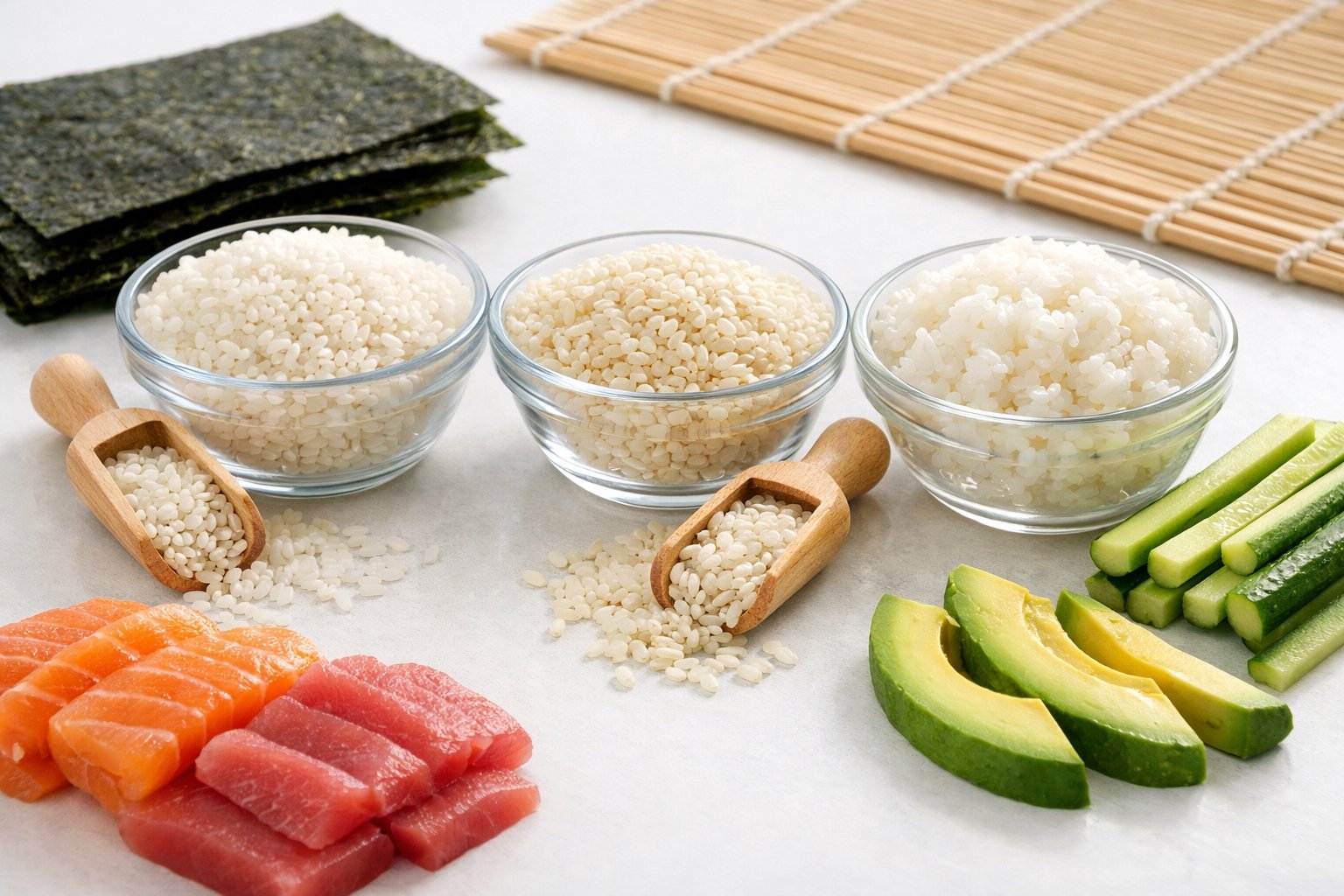
Short-grain rice is the classic choice for sushi. Medium-grain and brown rice offer different textures and health perks, but they’re not quite the same.
Japanese Short-Grain Rice Explained
Japanese short-grain rice is the backbone of authentic sushi rolls. It’s packed with amylopectin starch, so you get the stickiness sushi needs.
The grains are almost round and turn soft and a little chewy when cooked.
Koshihikari is the gold standard—glossy, plump, and perfectly balanced between sticky and defined. Hitomebore is a bit more budget-friendly but still great for sushi.
These types soak up the vinegar seasoning really well and hold their shape. The natural sweetness doesn’t overpower your fillings, just complements them.
Medium-Grain Rice Options
Medium-grain rice can work if you can’t find short-grain. Calrose, mostly grown in California, is the go-to here.
It’s got enough starch for some stickiness, though it’s not quite as good as the real thing.
Medium-grain grains are a little longer but still stick together if you prep them right. You’ll need to rinse them well to get rid of excess starch, and watch the cooking time so they don’t get mushy.
Note: Don’t mix up medium-grain rice with glutinous (sweet) rice. That one’s way too sticky for sushi.
Brown Rice and Alternative Grains
Brown rice is a healthier swap, loaded with more fibre and nutrients. The bran layer stays on, so it’s chewier and nuttier.
You’ll need to cook brown sushi rice longer and add more water.
The texture is a lot different from classic sushi rice. Brown rice doesn’t soak up vinegar as well and won’t get as sticky.
If you use brown rice, you might need to tweak your rolling technique. Some folks mix brown and white rice for better nutrition and texture—just cook them separately before mixing with the seasoning.
Rice Types to Avoid in Sushi Rolls
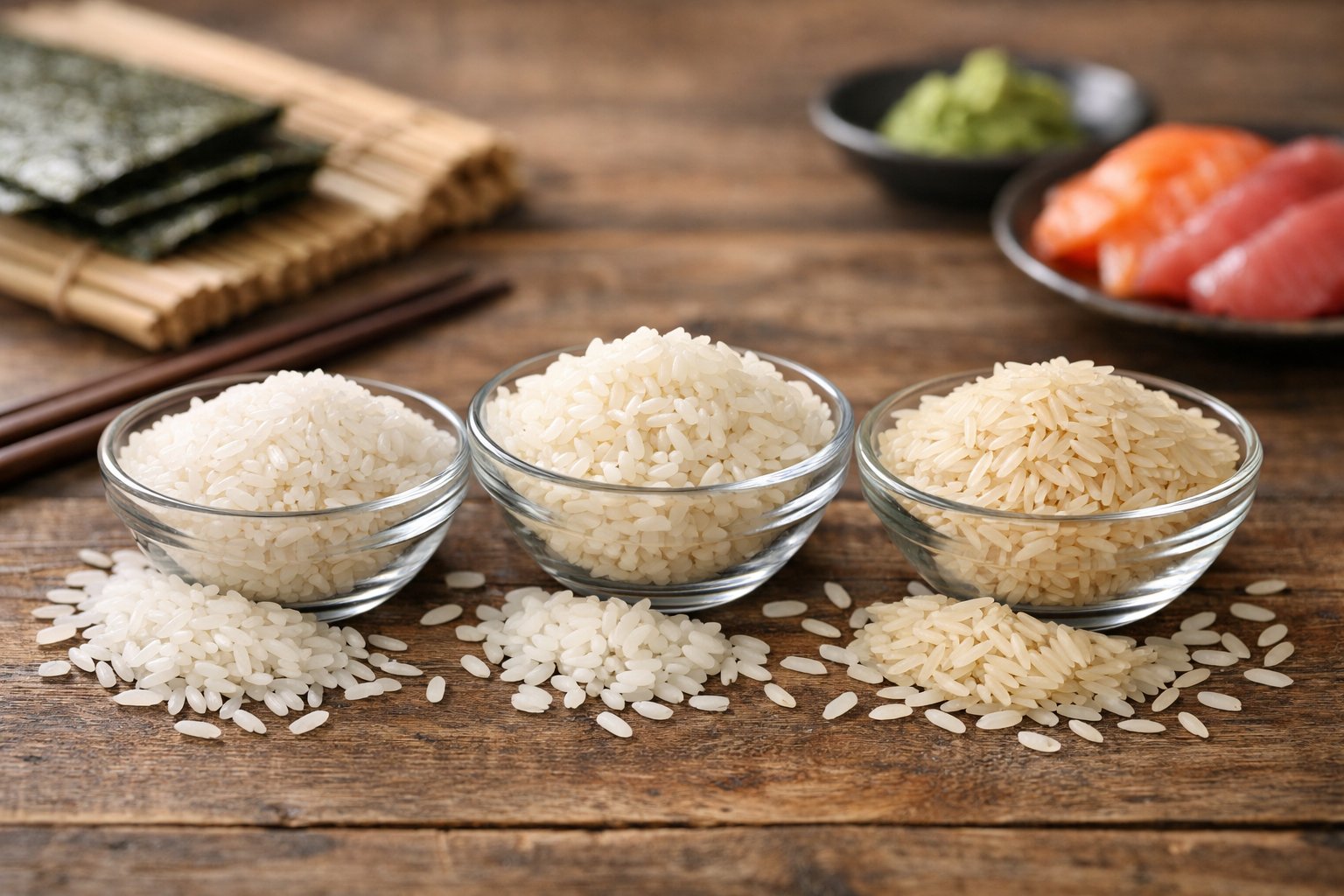
Some rice just doesn’t work for sushi rolls. The wrong kind won’t stick and can ruin the whole vibe.
Why Not to Use Jasmine or Basmati Rice
Jasmine and basmati rice are long-grain types that really don’t work for sushi. They’re low in starch, so they cook up fluffy and dry.
Sushi needs rice that clings together. Jasmine rice falls apart because the grains stay loose. Basmati does the same.
Plus, both have strong smells and flavours—jasmine is floral, basmati’s nutty. Those bold tastes totally clash with the delicate fish, veggies, and sushi vinegar. Your sushi ends up tasting off because the rice overpowers everything else.
Problems with Glutinous and Long-Grain Rice
Glutinous rice sounds like it should work, but it’s actually too sticky. It turns into a gummy, clumpy mess when cooked.
That texture is just too thick and heavy for sushi rolls.
Long-grain rice is the opposite problem—there’s not enough starch to make the grains stick. Your rolls won’t hold their shape.
You want rice that’s sticky but not gluey, firm but not dry. Long-grain is too loose, glutinous is too dense. Neither one gives you that classic sushi texture.
The Role of Sushi Rice Seasoning
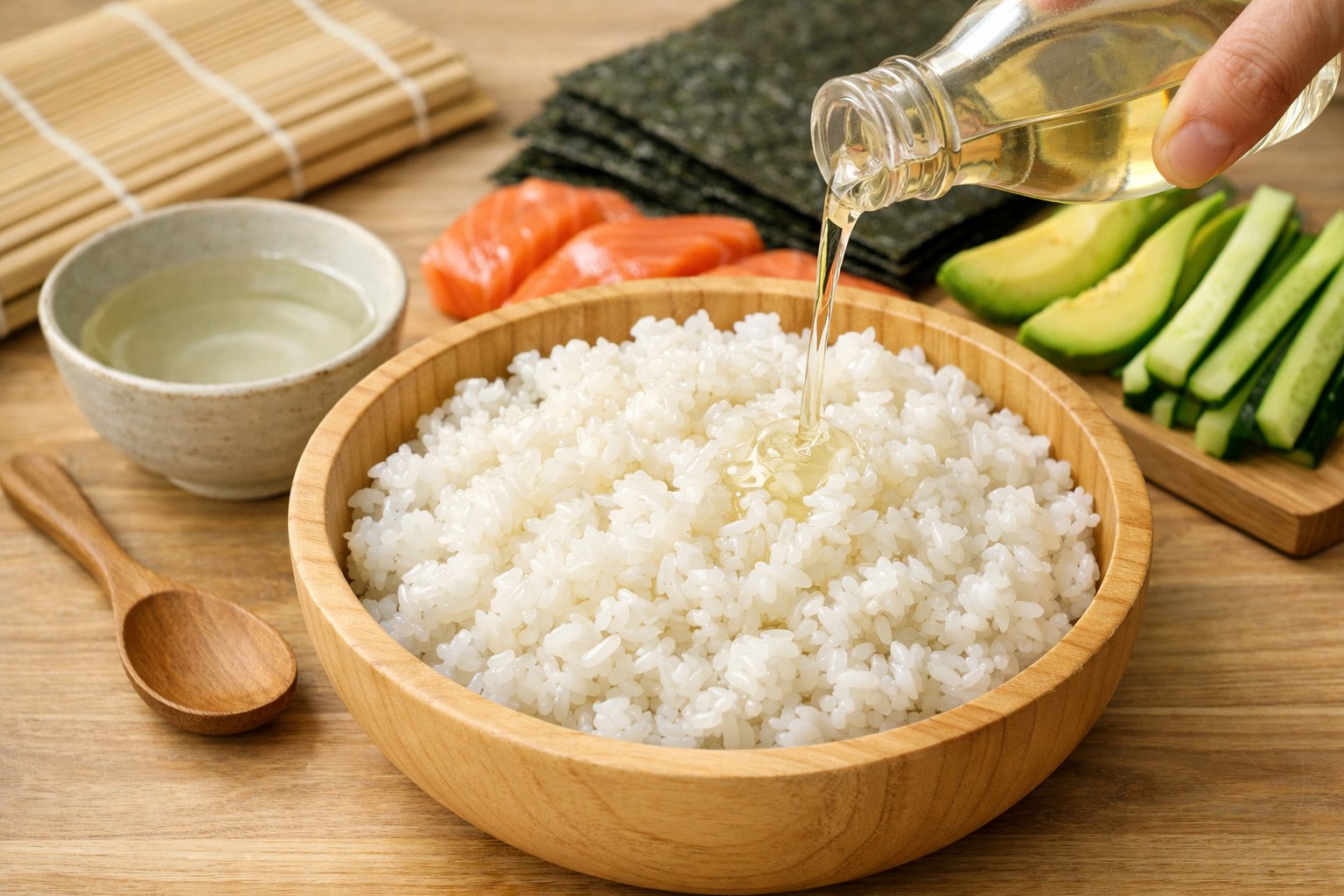
Seasoning is what transforms plain rice into the tangy, slightly sweet sushi rice we all crave. The magic mix of rice vinegar, sugar, and salt gives sushi its signature flavour.
Rice Vinegar Mixture Composition
The usual sushi rice seasoning uses three simple things. For every 3 cups of dry rice, grab 120ml rice vinegar, 2 tablespoons white sugar, and 2 teaspoons salt.
Stick with rice vinegar—it’s mild and blends right in. Other vinegars are just too sharp and will mess up the balance.
To make it, heat everything together in a small pot over medium heat. Stir until the sugar and salt dissolve. This is your sushi vinegar, ready to pour over hot rice.
Importance of Sushi Vinegar and Proper Proportion
That vinegar mix does more than just add flavour. It brings a little tang and sweetness that balances your fillings. It also helps the rice stick together without turning into glue.
Start with about 1 tablespoon of seasoning per cup of cooked rice. The exact amount depends on your taste and how strong your vinegar is.
If you’re new to this, mix up half the recommended amount first. Taste and add more if you want. It’s easy to add, impossible to take away once it’s in.
Step-by-Step: Making Perfect Sushi Rice
Perfect sushi rice takes a bit of care: wash it well, use the right water ratio, and season while it’s still warm.
Washing and Soaking Techniques
You’ve got to wash Japanese short-grain rice really well to get rid of surface starch. Dump the rice in a big bowl, cover with cool water, and swirl it gently for about 30 seconds.
Drain the cloudy water and repeat 4 or 5 times until it’s mostly clear.
Let the washed rice sit in a fine-mesh strainer for 10 minutes. That gets rid of extra water.
Transfer the rice to your pot, add the right amount of water, and let it soak for 20 to 30 minutes. This helps the grains absorb water evenly, so you get that perfect sticky texture.
Cooking Methods and Ratios
Use a 1:1 water-to-rice ratio by volume. Two cups of rice? Two cups of water. You can use standard or rice cooker cups.
Stovetop Method:
- Put the pot on medium-high heat with the lid closed.
- Wait 4–5 minutes for it to boil.
- Turn the heat to low and cook for 12 minutes.
- Check if the water’s absorbed; if not, cook in 2-minute bursts.
- Take it off the heat and let it sit, lid on, for 10 minutes.
Don’t lift the lid while it cooks—steam is key! A rice cooker makes this easier, but the stovetop works fine if you follow these steps.
Seasoning and Cooling the Rice
Move the cooked rice to a big bowl or wooden sushi oke while it’s still hot. Mix up your vinegar, sugar, and salt, then pour it evenly over the rice.
Use a rice paddle or wooden spoon to gently slice and fold the rice. Cut through at an angle, scoop under, and flip it over.
Mix for 2–3 minutes until the vinegar’s absorbed and there are no clumps. Cover with a damp towel and let it cool to room temp. The rice should be a little warm and look glossy when it’s ready.
How Much Rice for Each Sushi Roll
Getting the rice amount right is huge. Too much or too little, and your rolls won’t hold or just feel off.
Standard maki rolls need about 80–100 grams of cooked rice. Inside-out rolls take a bit more.
Standard Maki and Uramaki Rolls
For a classic maki roll, use 80–100 grams (about 1/2 cup) of cooked sushi rice. That covers half a nori sheet, leaving a 1–2 cm border at the top to seal.
The rice layer should be thin enough to see a bit of nori peeking through, but thick enough to stick everything together.
Uramaki rolls (rice on the outside) need 100–120 grams of cooked rice per roll. Spread the rice edge-to-edge, then flip it before adding fillings. That extra rice forms the outer layer and lets you add stuff like sesame seeds or tobiko.
Thin hosomaki rolls use less rice—about 60–80 grams. Thick futomaki rolls with lots of fillings need 150–250 grams to keep their shape.
Tips on Rice-to-Filling Ratio
Your rice should act as the foundation, but don’t let it drown out the other ingredients. Most people find a balanced roll has about 60-70% rice and 30-40% filling by volume.
Too much rice covers up the flavors, but too little makes your roll fall apart. It’s a fine line, honestly.
Keep your fillings compact and centered. Try a strip of filling that’s only 1-2 centimeters wide for standard maki rolls.
If you go wider, the rice gets pushed out and rolling becomes a headache.
For sushi bowls, you can stick with similar proportions but just layer everything. Start with about 150-200 grams of rice as your base.
Arrange your fillings on top. You get the same flavors, just without the rolling.
Measuring and Adjusting Quantities
A kitchen scale gives you the most accurate results. Weigh your rice right onto cling film or into a small bowl before spreading it on your nori.
No scale? No problem—just use these rough volume measurements:
- Hosomaki: 1/3 cup cooked rice
- Standard maki: 1/2 cup cooked rice
- Uramaki: 3/4 cup cooked rice
- Futomaki: 1 to 1 2/3 cups cooked rice
Start with a little less rice than you think you’ll need. It’s easier to add more than to scrape off extra from the nori.
Wet your hands before you touch the rice to keep it from sticking. The rice should spread easily across the nori without much pressure.
Frequently Asked Questions
Short-grain Japanese rice is still the go-to for authentic sushi rolls. Its sticky texture holds everything together.
Understanding how to wash, season, and cook your rice makes all the difference when you’re making sushi at home.
What type of rice is traditionally used in making sushi rolls?
Japanese short-grain rice, or Japonica rice, is the classic choice for sushi. It’s got a high starch content, which gives you that sticky, cohesive texture.
When cooked, the rice turns slightly sticky. That helps it bind together instead of falling apart.
Koshihikari is a premium variety that a lot of sushi chefs swear by for its tender texture and gentle sweetness.
Can short-grain rice varieties other than Japanese sushi rice be used for sushi rolls?
Calrose rice is a solid alternative to Japanese sushi rice. It’s a medium-grain rice grown in California and gets pretty sticky, so it works for maki and nigiri.
It soaks up seasonings well and keeps its shape when rolled. Sure, it’s not exactly the same as Japanese rice, but for home sushi, it does the job.
Steer clear of long-grain types like jasmine rice. They’re just not sticky enough to keep your rolls together.
Is it necessary to wash sushi rice before cooking, and if so, why?
You really need to rinse sushi rice under cold water until it runs clear. This gets rid of extra surface starch that would make the rice too gummy.
Washing helps you get the right texture—distinct grains that still stick together. After rinsing, let the rice drain in a fine-mesh strainer for about 30 minutes.
That step helps you nail the water-to-rice ratio, which affects how your rice turns out.
What is the difference between sushi rice and regular rice?
Sushi rice is short-grain and gets seasoned with rice vinegar, sugar, and salt after you cook it. Regular rice usually means long-grain varieties that stay fluffy and separate.
Short-grain sushi rice has more starch, which makes it sticky and perfect for holding sushi rolls together.
Long-grain rice just doesn’t have the stickiness you need. The grains stay loose, so they won’t hold together for rolls or nigiri.
How do you season rice for sushi rolls to achieve authentic flavour?
Season sushi rice by mixing rice vinegar, sugar, and salt into freshly cooked, still-warm rice. The warmth helps the grains soak up the seasoning.
Use a cutting and folding motion with a wooden paddle to mix everything in. That way, you don’t crush the rice.
The vinegar gives a subtle tang that balances out your other ingredients. Let the seasoned rice cool to room temperature before you start rolling.
What are the key characteristics to look for when selecting rice suitable for sushi rolls?
Start with short-grain rice that’s labeled specifically for sushi. If the packaging says it’s meant for sushi, that’s usually a good sign.
Check the packaging date to make sure the rice is fresh. Fresher rice just tastes better and gives you that ideal texture.
Premium Japanese types like Koshihikari or Tamaki Gold are fantastic if you can find them. Calrose rice is also a solid choice and a bit easier to track down.
You want rice with high starch content so it turns sticky but doesn’t get mushy. The grains should stay separate but still stick together enough to hold a roll’s shape.