Tiger roll sushi has become a go-to at many sushi spots, especially for folks who want to skip raw fish. A tiger roll is a sushi roll with tempura-fried shrimp, cucumber, avocado, sushi rice, and nori seaweed. It’s a cooked option, great for anyone new to sushi.
The name comes from the tiger shrimp in the roll, though you’ll sometimes find different takes on it. 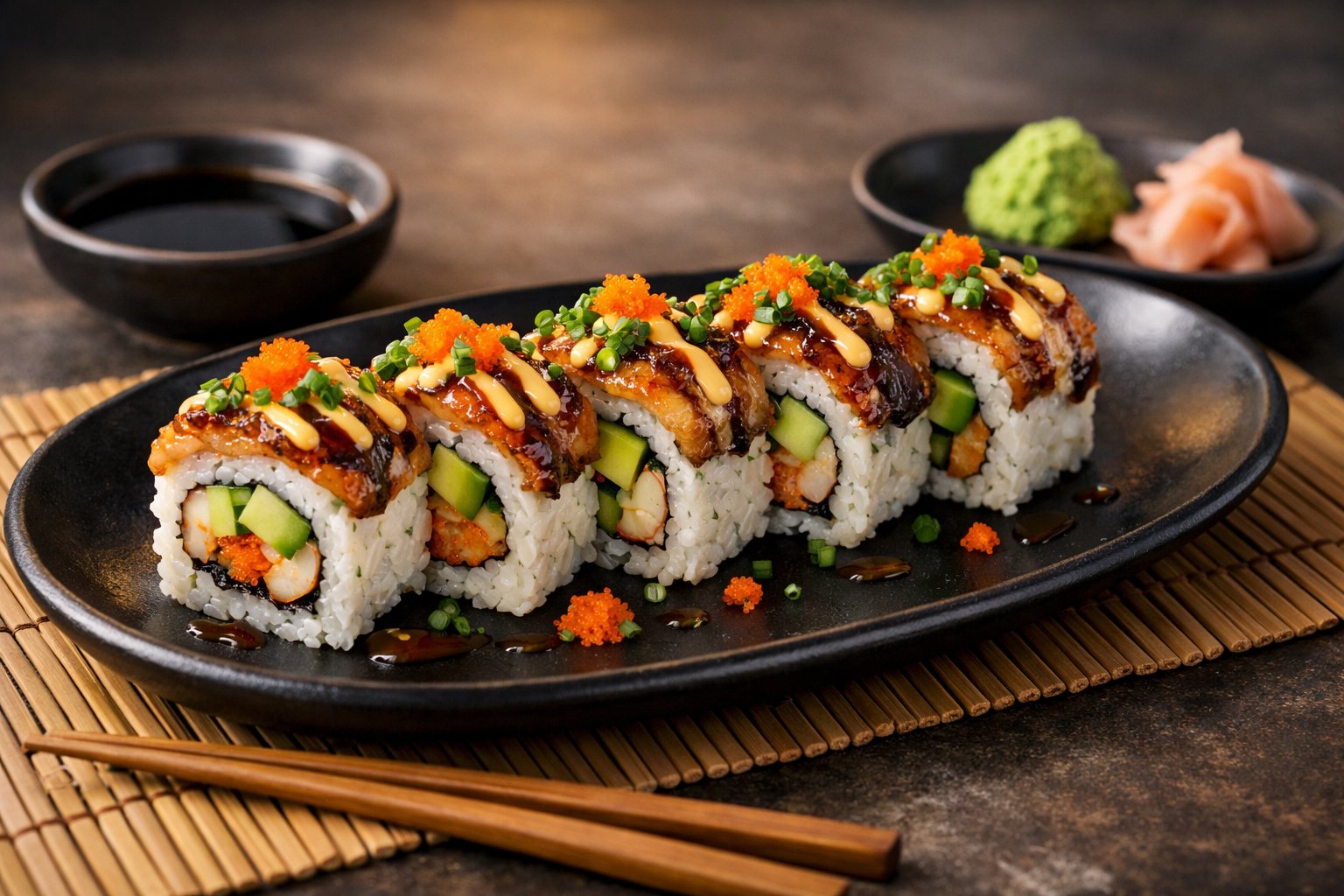
This roll stands out with its mix of textures and flavors. The crispy shrimp tempura plays off the creamy avocado and crunchy cucumber.
Tiger rolls are higher in calories than a lot of other sushi options—one roll clocks in around 508 calories and 21 grams of fat. Whether you’re ordering out or getting adventurous in your own kitchen, knowing what goes into a tiger roll helps you know what you’ll get.
Key Takeaways
- Tiger rolls use cooked tempura shrimp instead of raw fish, making them a solid pick for sushi beginners.
- Main ingredients: tempura shrimp, cucumber, avocado, sushi rice, and nori seaweed.
- You can make tiger rolls at home with frozen tempura shrimp from the store.
What Is a Tiger Roll Sushi?
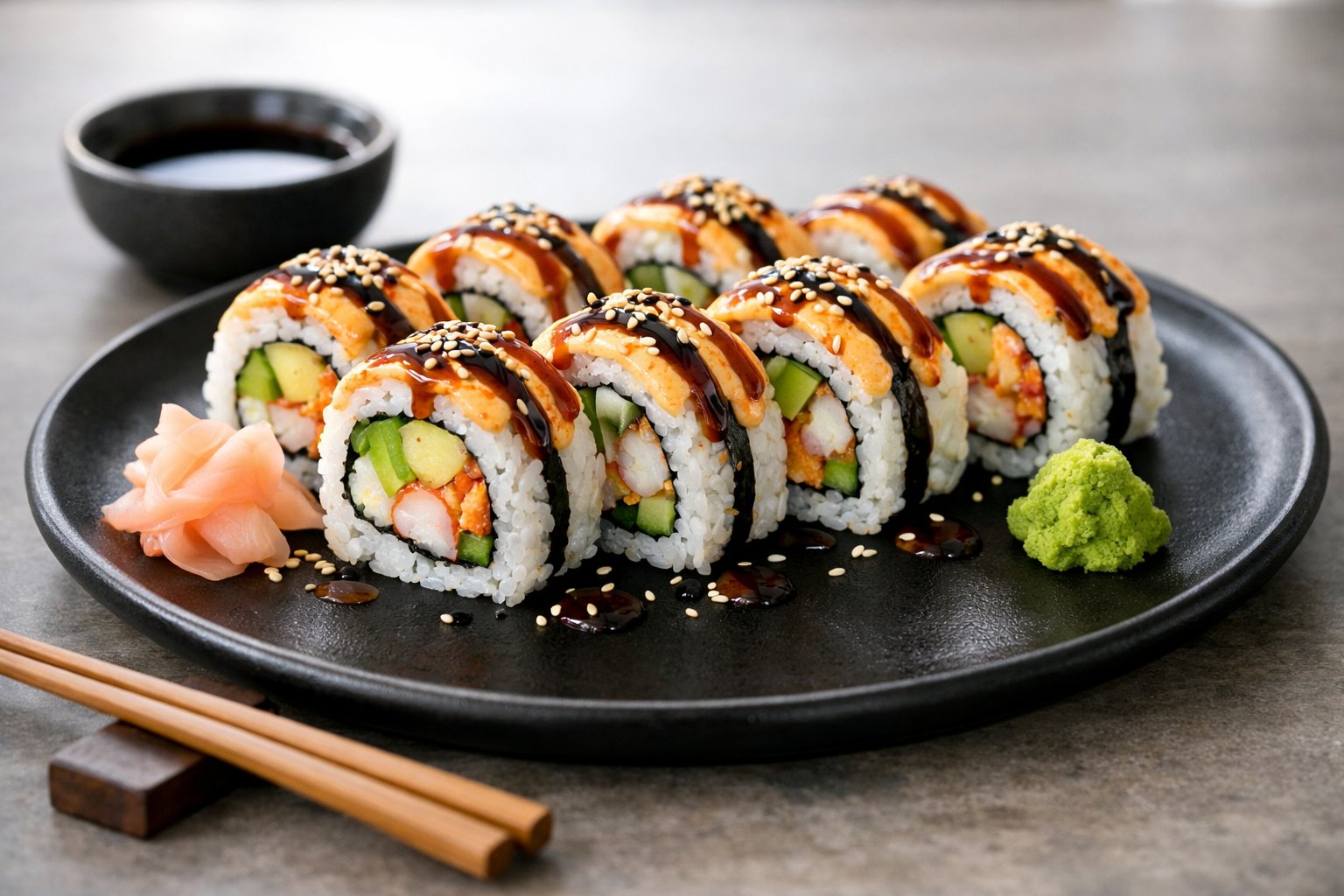
A tiger roll sushi brings together crispy tempura-fried shrimp with fresh veggies and seasoned rice. It’s a cooked alternative to the usual raw fish rolls.
The roll gets its name from tiger shrimp, and you’ll spot its eye-catching striped patterns at many sushi bars.
Defining Features of the Tiger Roll
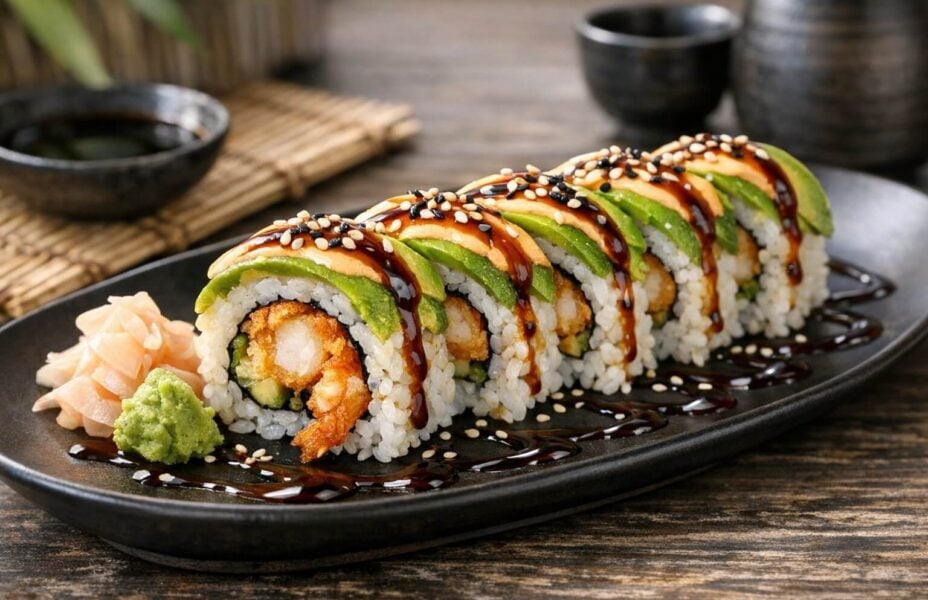
The tiger roll features tempura shrimp as its signature filling, wrapped in seasoned sushi rice and nori. Most versions include cucumber and avocado alongside the fried shrimp.
Some restaurants add their own twists—maybe masago (fish eggs), imitation crab, or even cream cheese. A classic tiger roll comes topped with spicy mayo and unagi sauce for that sweet and savory combo.
You won’t find raw fish here, which makes it a friendly starting point for sushi newcomers. A full tiger roll has about 508 calories and 21 grams of fat, so it’s a bit more indulgent than many other rolls.
Origin of the Name and Visual Appeal
The “tiger roll” name comes from its main star: tiger shrimp. These big prawns give the roll its identity and look pretty cool when butterflied and arranged on top.
We often see butterflied shrimp placed on top to make those tiger-like stripes. The golden tempura adds even more visual flair with its crispy, textured look.
Restaurants get creative with presentation. Sometimes the shrimp goes inside, sometimes it’s arranged on the outside. The mix of orange shrimp, green avocado, and white rice really pops on the plate.
Place in Modern Sushi Culture
Tiger rolls are a Western-style fusion creation rather than a traditional Japanese sushi staple. You rarely see tempura, spicy mayo, or cream cheese in classic Japanese sushi.
Rolls like this have exploded in popularity at Western sushi joints. They’re a nice entry point for anyone wary of raw seafood, but still want that sushi experience. The name and ingredients can shift depending on the chef—everyone likes to put their own spin on it.
Core Ingredients of the Tiger Roll Sushi
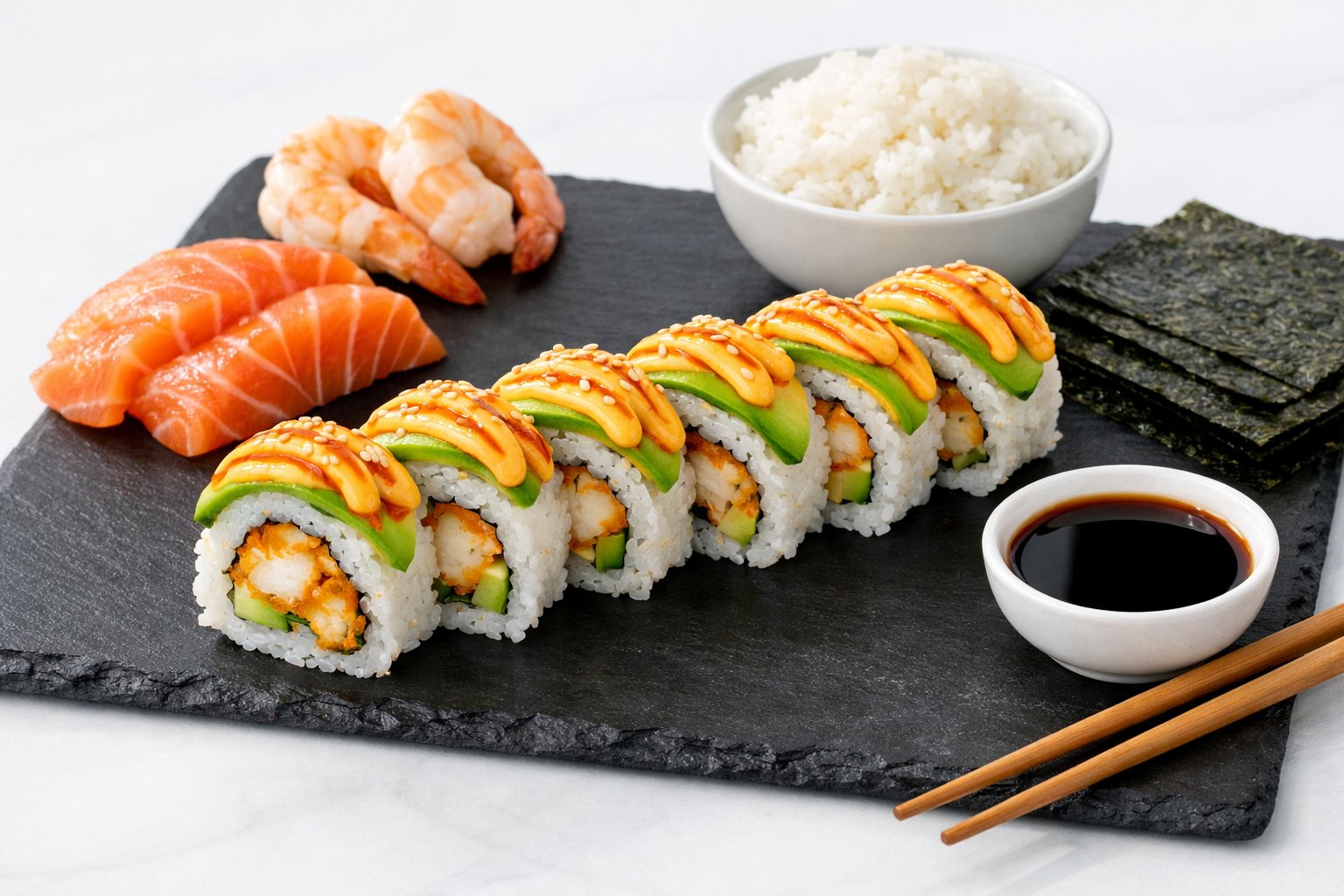
The tiger roll brings together just a handful of key ingredients for its unique taste and texture. Each part matters, from the seasoned sushi rice to the crispy shrimp tempura in the middle.
Sushi Rice and Nori Seaweed
Every tiger roll starts with good sushi rice. This short-grain rice gets seasoned with rice vinegar, sugar, and salt for that sweet-tangy flavor. The rice needs to be sticky enough to hold together but not mushy.
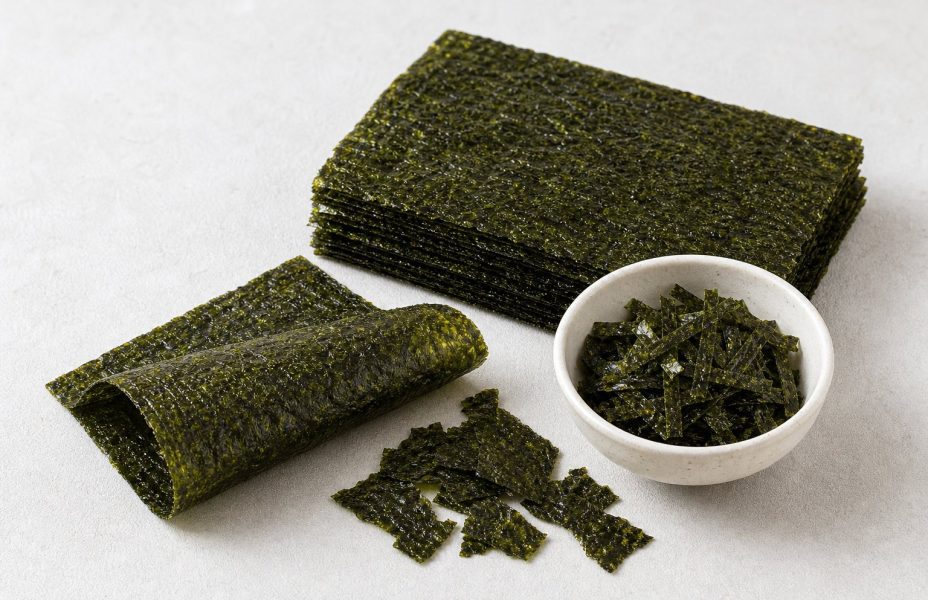
Nori, the dark green seaweed sheet, wraps around the outside to keep everything in place. Nori adds a subtle ocean flavor that pairs well with the shrimp. Lightly toasting the nori before rolling gives it a better texture and brings out its savory notes.
Honestly, the quality of rice and nori makes a big difference. Top-notch nori should be dark, smooth, and free of holes.
Shrimp Tempura as the Key Filling
Shrimp tempura is what really sets a tiger roll apart. Tiger shrimp are the usual pick—they’re big and sweet. The shrimp get coated in a light batter (flour, egg, ice-cold water), then deep-fried until golden and crisp.
Some versions use butterflied shrimp inside, while others lay whole cooked shrimp on top. That tempura crunch is a perfect contrast to the softer rice and veggies.
Fresh, properly prepped shrimp is a must. Many places butterfly the shrimp for even cooking and a better fit in the roll.
Avocado and Cucumber for Texture and Balance
The rich, fried shrimp needs some freshness, so we add avocado and cucumber. Avocado brings a creamy, buttery feel that’s just right with the crispy shrimp. It should be ripe but not mushy, sliced thin for even bites.
Cucumber adds a cool, refreshing crunch. Seedless varieties work best, cut into matchsticks. The cucumber’s high water content keeps things light and balances out the fried shrimp.
These veggies add color and keep the roll from feeling heavy. The mix of creamy avocado and crisp cucumber keeps every bite interesting.
Toppings, Sauces, and Garnishes
The final touches turn a tiger roll into something special. Sauces and garnishes like spicy mayo, eel sauce, and fish roe boost both flavor and looks.
Spicy Mayo and Japanese Mayonnaise
Spicy mayo is a must-have on most tiger rolls. It’s just Japanese mayo mixed with sriracha or another chili sauce—creamy, tangy, and with a gentle kick.
Japanese mayo is richer and smoother than the typical Western kind. It uses more egg yolks and rice vinegar, which makes it a little sweeter and more savory. That pairs perfectly with fried shrimp tempura.
Usually, you’ll see spicy mayo drizzled in zigzags over the top. Spice levels can vary—some places keep it mild, others really turn up the heat. It ties everything together and balances out the crunch.
Unagi Sauce and Eel Sauce
Unagi sauce (eel sauce) adds the sweet and savory note that rounds out the tiger roll. It’s a thick, glossy sauce a bit like teriyaki, made from soy sauce, mirin, and sugar.
The sauce got its name from being served with grilled eel, but it’s great with shrimp tempura too. It’s syrupy and brings a caramel-like sweetness, which works nicely with the spicy mayo.
We usually lay down eel sauce first, then add spicy mayo on top. The combo is classic for American-style sushi rolls—sweet, spicy, and super satisfying.
Tobiko, Masago, and Additional Garnishes
Tobiko and masago—tiny fish eggs—add a pop of color and texture. Tobiko is flying fish roe, a bit bigger and crunchier, while masago comes from capelin fish and is a little softer.
They usually come in bright orange or red, but you’ll sometimes spot green (wasabi-flavored) or black versions. They add a gentle briny flavor and a fun little crunch.
Alongside the roll, you’ll get wasabi, pickled ginger, and soy sauce. Wasabi brings heat, ginger cleans your palate, and soy sauce is optional—most Western rolls already have plenty of seasoning from the sauces.
Popular Variations of the Tiger Roll
The tiger roll has gone through plenty of changes, with chefs putting their own twist on the classic. Some versions add extra crunch, others crank up the spice, and comparing them to similar rolls is half the fun.
Crunchy Tiger Roll
The crunchy tiger roll takes texture to the next level by piling on even more crunch. Chefs might sprinkle panko breadcrumbs or tempura flakes over the top, or even add fried onion strings or crispy wonton strips.
The base is still shrimp tempura, avocado, and cucumber wrapped in rice. What makes this one stand out is the contrast between soft rice, smooth avocado, and all those crunchy bits.
Lots of places add cream cheese for a rich, smooth bite that balances out all the crispiness. The extra toppings aren’t just tasty—they also make the roll look pretty impressive.
Spicy Tiger Roll Variants
Spicy tiger roll versions turn up the heat but still keep the roll’s core identity. The most common approach uses a generous drizzle of spicy mayonnaise mixed with sriracha or chili oil on top.
Some chefs work spicy elements right into the filling—think jalapeño slices or spicy tuna paired with the shrimp tempura. Another popular twist is a spicy crab mixture spread over the roll.
This combo usually blends imitation crab or crab stick with spicy mayo, making a creamy, fiery topping. Spice levels can vary, so it’s totally fair to ask for more or less heat based on your mood.
These spicy versions often keep the sweet eel sauce drizzle, giving you that sweet-and-spicy flavor combo. The heat’s there, but it doesn’t bulldoze the other ingredients—shrimp tempura still gets its moment.
Comparisons with Other Sushi Rolls
Trying to figure out what’s in a tiger roll? It helps to stack it up against other favorites. The California roll is milder, with imitation crab, avocado, and cucumber, but skips the crispy tempura.
It’s an inside-out roll and pretty friendly for sushi newbies. The dragon roll goes in a different direction, featuring grilled eel and avocado for a sweeter, umami-packed vibe.
While the tiger roll leans into crunch and fried bits, the dragon roll is all about rich eel sauce and tender fish. Plus, dragon rolls tend to look more elaborate and are usually bigger.
| Roll Type | Main Protein | Texture | Heat Level |
|---|---|---|---|
| Tiger Roll | Shrimp Tempura | Crispy | Mild to Medium |
| California Roll | Imitation Crab | Soft | None |
| Dragon Roll | Grilled Eel | Tender | None |
The tiger roll lands somewhere in the middle—cooked seafood like the California roll, but with bolder flavors and crunch that feel closer to specialty rolls.
How to Make a Tiger Roll Sushi at Home
Making tiger roll sushi at home takes some gear, a bit of patience, and a little attention to detail. The right tools make rolling easier, and good technique helps the rice and fillings stick together.
Essential Equipment and Tools
You’ll need a bamboo sushi mat—nothing fancy, just something to help shape the roll. The mat lets you press evenly and get that tight sushi cylinder. Without it, the roll kind of falls apart.
A sharp sushi knife is a must for clean cuts. Wet the blade between slices to keep rice from sticking. A rice cooker gives you perfect sushi rice, but a regular pot works if you watch the water closely.
Other handy items:
- Plastic wrap for covering the bamboo mat
- Small bowl of water for wetting your hands
- Cutting board for prep
- Strainer for rinsing rice
With these basics, you’re set to roll like a pro at home.
Preparation Steps and Techniques
Start by rinsing 1½ cups of sushi rice under cold water until it runs clear. Cook it with 1¾ cups water, then mix in ¼ cup rice vinegar, 2 tablespoons sugar, and 1 teaspoon salt as it cools.
For the filling, coat prawns in batter and fry until they’re golden for shrimp tempura. Slice avocado thin and cut cucumber into strips. A classic tiger roll recipe might add crab salad, but imitation crab works fine too.
Lay nori shiny side down on your bamboo mat. Spread rice evenly, leaving about a half-inch at the top. Place two tempura shrimp in the center, with cucumber and avocado alongside.
Tips for Rolling and Presentation
Lift the edge of the mat closest to you and fold it over the filling, tucking it tight. Roll away from yourself, pressing firmly but not too hard, to keep everything together. Moisten the top edge of the nori so it sticks and seals the roll.
For the tiger look, layer thin avocado slices across the top in overlapping rows. That’s what gives it those signature stripes. Drizzle Japanese mayo and unagi sauce in thin lines for extra flavor and a little flair.
Cutting is easier with a wet, clean knife. Slice into 6-8 pieces, wiping the blade between cuts. Arrange the pieces flat on a plate, showing off that pretty top.
Serving and Enjoying the Tiger Roll Sushi
Serving a Tiger Roll isn’t just about the roll itself—the right extras and a bit of care can turn it into a full-on sushi experience. Knowing the classic pairings and a little etiquette helps you really savor each bite.
Traditional Serving Accompaniments
Tiger Roll sushi usually comes with a few key sides. Pickled ginger, or gari, works as a palate cleanser. Just eat a small piece between bites to refresh your taste buds.
You’ll also get a small mound of wasabi. This green paste packs a sharp, nose-tingling heat that goes great with crispy shrimp tempura. Mix a little into your soy sauce or dab it right on the roll.
Soy sauce is a must for dipping. Pour a bit into a shallow dish and dip each piece, rice-side up, so you don’t soak the roll. Some spots serve seaweed salad on the side—a nice, refreshing contrast to the fried shrimp.
Etiquette and Eating Experience
You can use chopsticks or just your hands to eat Tiger Roll sushi. Either is totally fine. If you go with chopsticks, hold the roll gently so it doesn’t fall apart.
Try to eat each piece in one or two bites—nibbling can make the roll crumble and muddle the flavors. Dip fish-side down in soy sauce, not rice-side, since rice soaks up too much.
Between different sushi types, use pickled ginger to clear your palate. Don’t mix wasabi right into your soy sauce at traditional places—it’s not really the done thing.
Pairings and Complements
Tiger Roll goes best with lighter drinks that don’t drown out the flavors. Green tea is classic, giving a clean, slightly bitter edge to the rich shrimp. Sake, warm or cold, brings out the umami.
If you’re skipping alcohol, sparkling water with a squeeze of citrus does the trick. Light Japanese lagers are a solid match too, cutting through the tempura’s richness.
People often order Tiger Roll with lighter picks like cucumber rolls or sashimi. Mixing it up keeps your taste buds interested and makes for a more balanced meal. The crunchy Tiger Roll and delicate sashimi together? That’s a good time.
Frequently Asked Questions
Tiger roll sushi usually has tempura shrimp, avocado, and cucumber, often topped with spicy mayo and eel sauce. Making it means prepping sushi rice, frying shrimp tempura, and carefully assembling everything with decorative avocado slices on top.
What ingredients are commonly found in a tiger roll?
The core ingredients of a tiger roll are tempura shrimp, sushi rice, nori sheets, cucumber, and avocado. That’s the base.
Japanese mayo often gets drizzled on top, along with unagi sauce for extra flavor. Sometimes there’s crab salad inside, kind of like a California roll twist.
The tiger stripe look comes from thin avocado slices layered over the roll. Sometimes you’ll see sesame seeds or tobiko sprinkled on top for crunch and color.
How does a tiger roll differ from a dragon roll in sushi cuisine?
A tiger roll uses tempura shrimp as its main protein and usually keeps the topping simple with avocado slices. The name comes from the stripes made by the avocado and sauce.
Dragon rolls often have eel or shrimp inside, with avocado arranged on top to look like dragon scales. They’re more showy, and usually come with a mix of sauces.
Both rolls use avocado and cucumber, but the protein and presentation set them apart. Tiger rolls are crunchier because of the tempura shrimp.
Could you explain the preparation steps for making a tiger roll at home?
Start by preparing sushi rice—mix in rice vinegar, sugar, and salt after cooking, and let it cool to room temp.
Next, make shrimp tempura by dipping peeled shrimp in a batter of cold water and flour, then frying until golden. You can use pre-made tempura shrimp if you’re short on time.
Lay nori on a bamboo mat, spread rice on top, and leave a border at the top. Add tempura shrimp, cucumber, and avocado in the center, then roll it up tight with the mat.
Layer thin avocado slices on top in an overlapping pattern. Finish with a drizzle of Japanese mayo and unagi sauce, then slice into bite-sized pieces.
What are the dietary considerations when consuming a tiger roll?
Tiger rolls have shellfish—shrimp—so they’re off-limits for anyone with shellfish allergies. Always check with the restaurant if allergies are severe.
The tempura batter contains wheat flour, so the roll isn’t gluten-free. If you need gluten-free sushi, ask for changes or pick another roll.
Tiger rolls are on the higher-calorie side because of the fried shrimp and mayo sauces. Avocado brings healthy fats, and cucumber adds some fiber and hydration.
If you’re watching sodium, keep in mind that soy sauce, unagi sauce, and seasoned rice add a lot of salt. Asking for sauce on the side helps cut down on sodium.
What types of sauces or condiments typically accompany a tiger roll?
Spicy mayo and unagi sauce are the main sauces drizzled on tiger rolls. Spicy mayo mixes Japanese mayonnaise with sriracha or chili paste for a creamy kick.
Unagi sauce—aka eel sauce—is a sweet, soy-based glaze that adds depth. Its thick, syrupy texture balances out the fried shrimp nicely.
Tiger rolls come with soy sauce, pickled ginger, and wasabi on the side for dipping. These let you tweak each bite to your liking.
Some spots offer ponzu or sweet chili sauce instead. Changing up the sauce can totally shift the roll’s flavor.
In what way do the toppings of a tiger roll influence its flavour and texture?
The avocado topping brings a creamy, buttery texture. It stands out against the crispy tempura shrimp inside.
This mix gives you layers of mouthfeel in every bite. Drizzled sauces add moisture and pull the flavours together.
Spicy mayo throws in some heat and tang. Unagi sauce, on the other hand, offers a gentle sweetness that balances out the savoury notes.
Sesame seeds or tobiko on top add a bit of crunch and a hint of nuttiness. These little touches boost the eating experience but don’t steal the show from the main ingredients.
The way the toppings look changes how we expect the roll to taste. That tiger stripe pattern from the avocado and sauce just makes it look more tempting and gets you excited for the first bite.