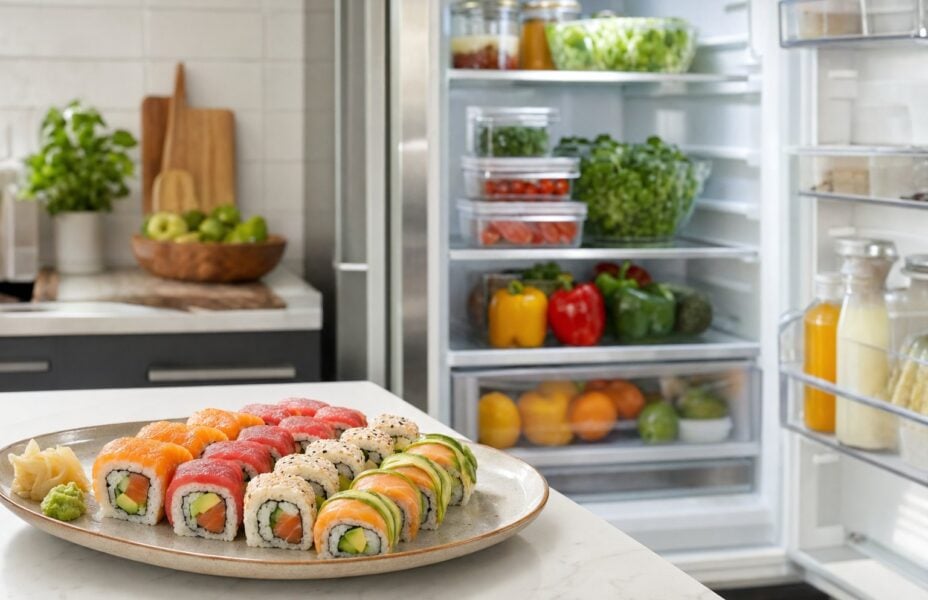
You’ve got leftover sushi rolls in your fridge, but you’re not sure if they’re still safe to eat. It’s a common situation, and knowing how long sushi lasts can help you avoid food waste whilst staying safe.
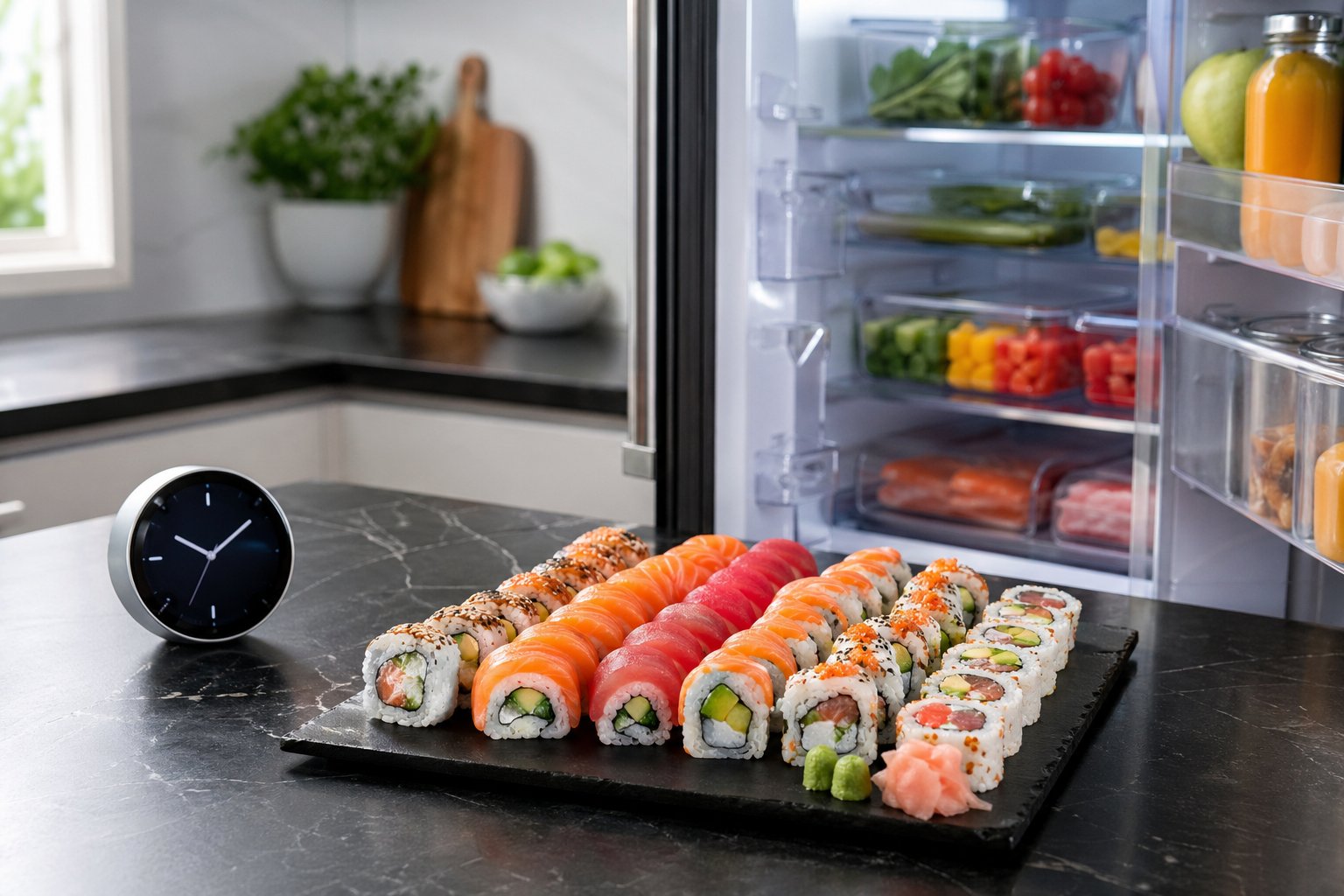
Cooked sushi rolls can last 3-4 days in the fridge, whilst raw fish rolls should be eaten within 1-2 days for best quality and safety. The difference comes down to bacterial growth, which happens faster with raw ingredients. Vegetable rolls follow the same timeline as cooked varieties since they don’t contain raw fish.
Proper storage makes all the difference in keeping your sushi fresh. The temperature of your fridge, how you seal the container, and how quickly you refrigerate your leftovers all affect how long your sushi stays good. This guide will help you understand exactly how to store sushi, spot the signs of spoilage, and make smart choices about when to eat or toss those leftover rolls.
Key Takeaways
- Raw fish sushi rolls last 1-2 days whilst cooked and vegetable rolls stay fresh for 3-4 days when refrigerated properly
- Always store sushi in an airtight container and keep it below 5°C to slow bacterial growth
- Discard sushi if you notice any sour smells, slimy texture, or discolouration regardless of how long it’s been stored
Understanding How Long Sushi Rolls Stay Fresh
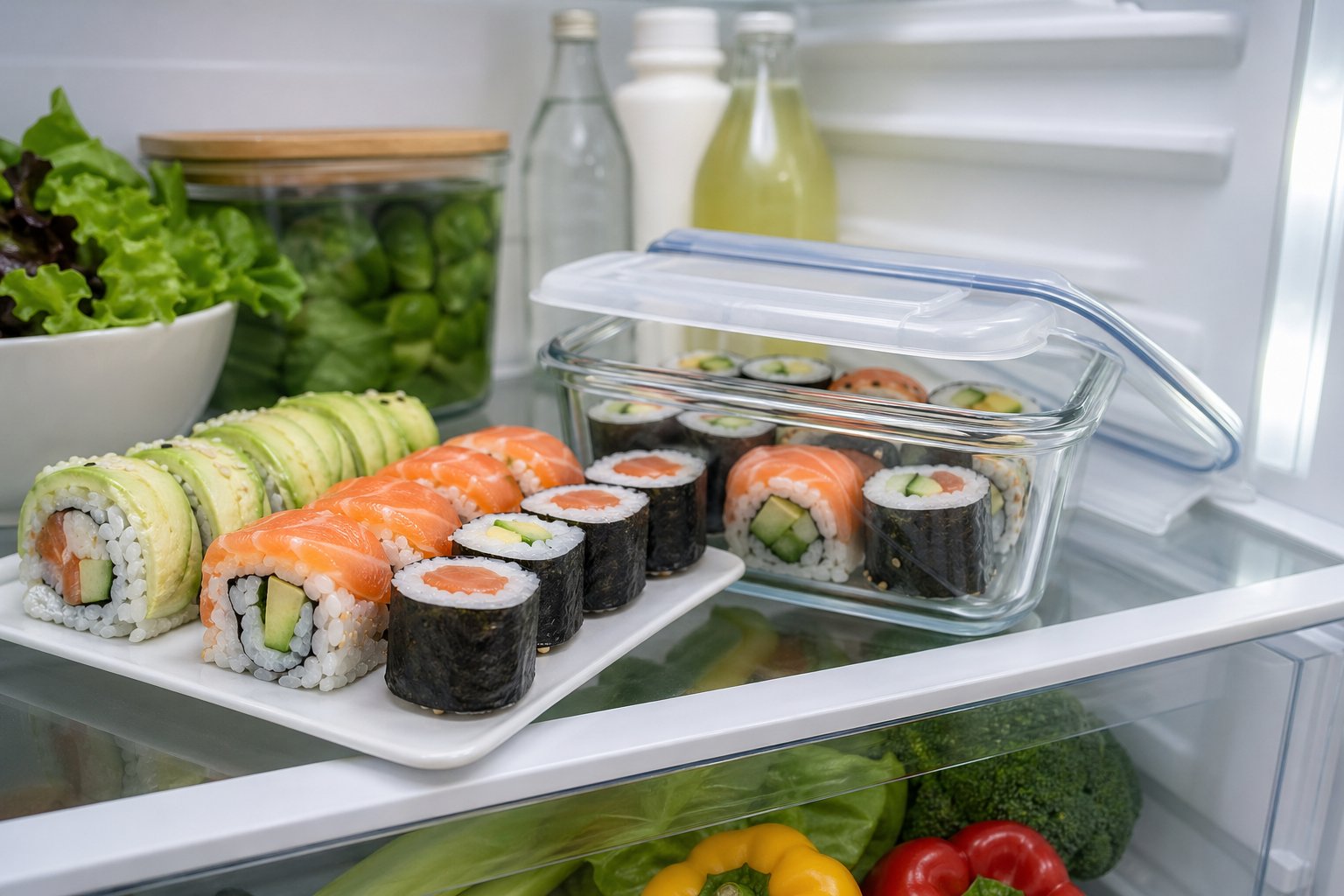
Sushi shelf life depends primarily on whether your rolls contain raw fish, cooked ingredients, or only vegetables. The storage time ranges from 24 hours for raw fish varieties to 3-4 days for cooked options, with proper refrigeration being essential throughout.
Raw Fish Sushi Versus Cooked and Vegetarian Rolls
Raw fish sushi has the shortest lifespan in your fridge. Nigiri, sashimi, and maki rolls with raw salmon or tuna should be consumed within 24 hours for optimal safety, though they may remain acceptable for up to 48 hours maximum when stored properly at 4°C or below.
Cooked seafood rolls offer more flexibility. Tempura prawns, cooked crab, and grilled eel rolls can last 3-4 days when refrigerated correctly. The cooking process eliminates many bacteria that make raw fish spoil quickly.
Vegetarian rolls follow similar timing to cooked varieties, typically remaining safe for 3-4 days. However, ingredients like avocado and cucumber release moisture as they sit, causing the nori wrapper to become soggy and the overall texture to deteriorate noticeably after day two.
Key Factors That Influence Lifespan
Temperature control is the most critical factor affecting how long sushi lasts. Your sushi must remain at 4°C or below from the moment you get it home. Never leave sushi at room temperature for more than two hours, as bacterial growth accelerates rapidly in the danger zone between 4°C and 60°C.
The rice component presents its own challenges. Sushi rice can harbour Bacillus cereus bacteria, which multiply quickly at improper temperatures. Even cooked rice becomes a safety risk when left out or stored incorrectly.
Proper storage technique matters significantly. Airtight containers prevent moisture loss and protect against cross-contamination with other foods. Storing sushi in door compartments where temperatures fluctuate shortens its lifespan compared to placement on the coldest shelf.
Timeframes for Homemade and Store-Bought Sushi
Shop-bought sushi typically comes with use-by dates that reflect commercial preparation standards. These dates account for handling during transport and display time. Consume shop-bought raw fish sushi within 24 hours of purchase, regardless of the printed date, especially if you’re unsure how long it sat before you bought it.
Homemade sushi follows the same safety guidelines but gives you more control over freshness. When you make sushi at home with fish purchased the same day, you maximise your storage window. Leftover sushi you’ve prepared should still be consumed within 24 hours for raw varieties and 3-4 days for cooked options.
Both homemade and shop-bought sushi require immediate refrigeration. The clock on how long sushi is good for starts ticking the moment it reaches room temperature during preparation or purchase.
Proper Techniques for Storing Sushi in the Fridge
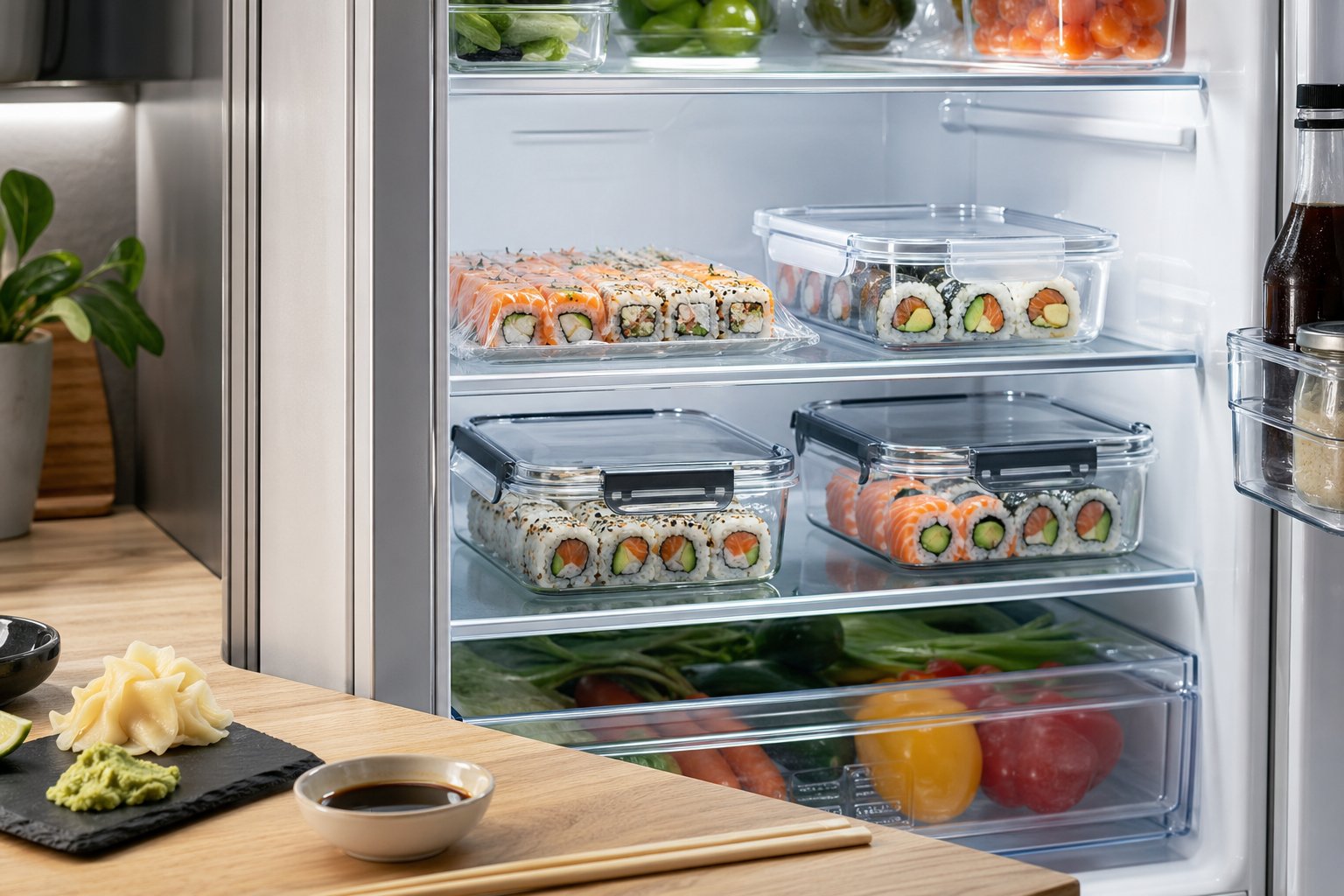
Storing sushi correctly in the refrigerator requires attention to temperature, proper containers, and keeping ingredients separate. These three factors work together to keep sushi fresh and safe to eat.
Ideal Temperature Settings
Your refrigerator must maintain a consistent temperature of 4°C or below when you store sushi. This temperature slows bacterial growth and keeps raw fish safe.
Check your fridge temperature with a thermometer to ensure accuracy. The middle or bottom shelves are best for sushi storage because they maintain the most stable temperature. Avoid placing sushi in the door, as the temperature fluctuates each time you open it.
Keep your fridge clean and free from strong-smelling foods. Sushi absorbs odours easily, which can ruin its taste. If your refrigerator runs warmer than 4°C, consume your sushi within a few hours rather than storing it overnight.
Best Storage Containers and Wrapping Methods
An airtight container is essential for proper sushi storage. Place your sushi rolls in a single layer inside the container to prevent crushing.
Wrap each piece individually in cling film if you don’t have an airtight container. Make sure the wrap touches the sushi completely to prevent air exposure. Never stack sushi pieces on top of each other, as this damages the delicate rice and toppings.
For sushi with raw fish, consume it within 24 hours even with perfect storage. Vegetable or cooked rolls can last 3-4 days when stored correctly. Label your container with the date so you know when you refrigerated the sushi.
Separation of Ingredients to Prevent Contamination
Keep raw fish sushi separate from cooked or vegetable rolls in your fridge. This prevents cross-contamination between different types.
Store soy sauce, wasabi, and ginger in separate containers rather than mixing them with the sushi. These condiments add moisture that makes the rice soggy. If your sushi came with these items, remove them before refrigerating.
Place sushi away from raw meat, poultry, and other potentially contaminated foods in your fridge. Use the original packaging or a clean container rather than reusing one that held other foods. Keep sushi covered at all times to protect it from bacteria and odours from other refrigerated items.
Safe Handling and Sushi Safety Guidelines
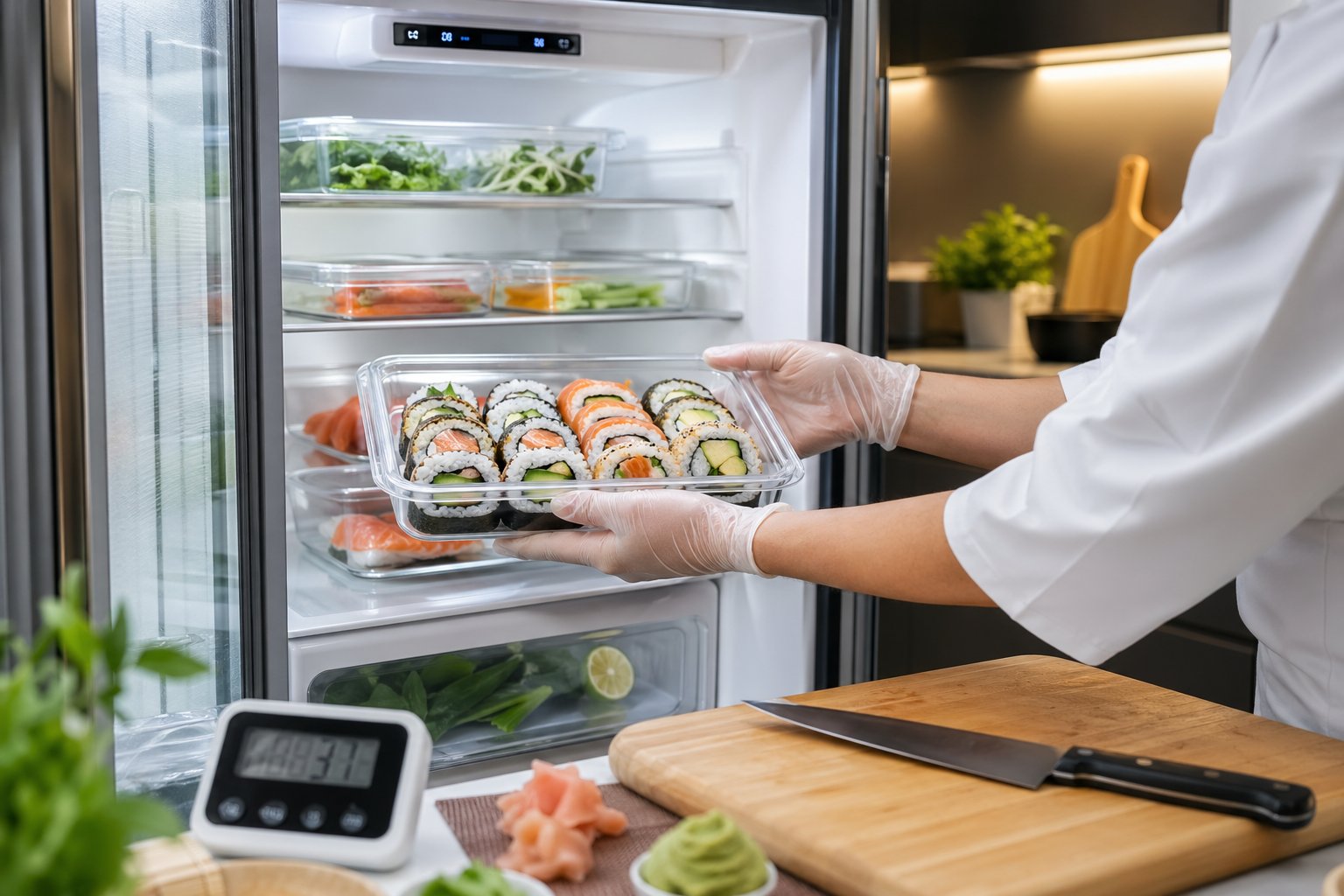
Proper handling of sushi requires understanding temperature controls and timing to prevent bacterial growth. The window between safe consumption and potential food poisoning is shorter than many people realise, especially when sushi contains raw fish.
Avoiding the Danger Zone
The danger zone refers to temperatures between 4°C and 60°C where bacteria multiply rapidly. Your sushi must stay outside this range at all times.
Keep sushi refrigerated at or below 4°C immediately after purchase or preparation. If you’re storing sushi at home, place it on the bottom shelf of your fridge in a sealed container. This prevents cross-contamination with other foods.
Never store sushi near heat sources or in warm areas of your kitchen. The temperature control is especially important for raw fish, which provides an ideal environment for harmful bacteria to grow. Check your fridge temperature regularly with a thermometer to ensure it maintains the proper cooling range.
How Long Sushi Can Sit Out Safely
Sushi should never remain at room temperature for more than two hours. After this point, bacterial growth accelerates to dangerous levels.
If the room temperature exceeds 30°C, this safe window drops to just one hour. Once sushi has been left out beyond these time limits, you should discard it rather than refrigerate it. The bacteria that developed during this time won’t be killed by cold storage.
When serving sushi at home, keep portions small and only take out what you’ll eat immediately. Leave the rest refrigerated until needed. If you’re transporting sushi, use an insulated bag with ice packs to maintain safe temperatures.
Recognising Food Poisoning Risks
Raw fish sushi carries higher risks than vegetarian or cooked varieties. Symptoms of food poisoning typically appear within 24 to 48 hours after eating contaminated sushi.
Watch for these warning signs:
- Nausea and vomiting
- Diarrhoea
- Stomach cramps
- Fever and chills
- Headache
Certain groups face greater risks from foodborne illness, including pregnant women, young children, elderly people, and those with weakened immune systems. These individuals should avoid raw fish sushi entirely or consult their doctor before consuming it. If you experience severe symptoms such as bloody stools, persistent vomiting, or signs of dehydration, seek medical attention immediately.
Identifying Spoilage: When to Discard Leftover Sushi
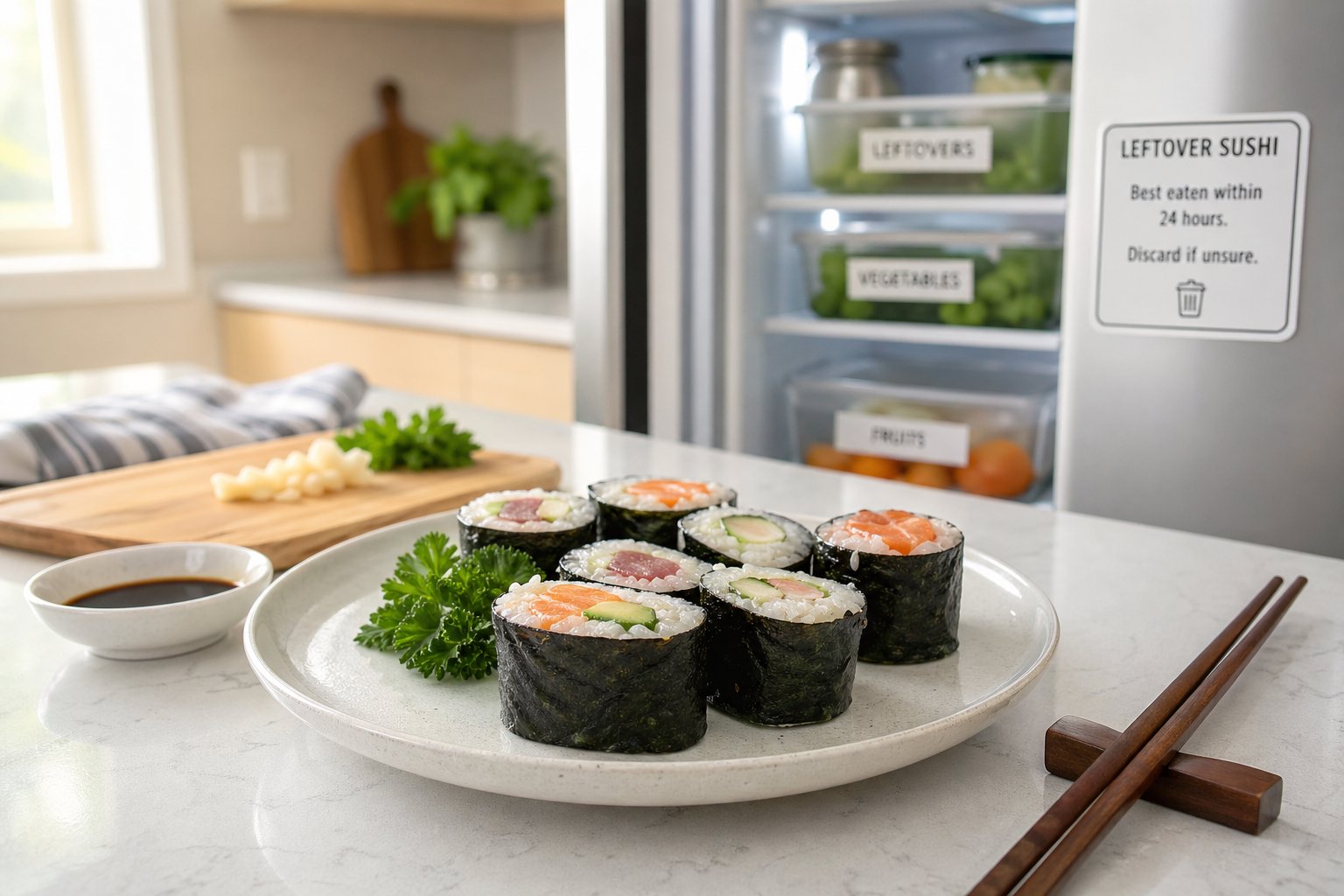
Recognising when leftover sushi has gone bad is essential for avoiding foodborne illness. Spoiled sushi exhibits clear warning signs through changes in appearance, texture, smell, and taste that indicate bacterial growth has made it unsafe to eat.
Visual and Textural Changes
Fresh sushi has vibrant colours and a firm, springy texture. When your leftover sushi starts to spoil, you’ll notice the fish becomes dull and pale instead of bright and glossy.
The texture changes are equally telling. Press the fish gently with your finger—it should feel springy but firm. If it feels overly soft, soggy, or leaves an indent, the sushi has deteriorated. Rice that has become mushy and falls apart or, conversely, dry and crunchy indicates poor quality.
Watch for these visual warning signs:
- Discolouration in the fish or vegetables
- Mould growth on any component
- Slimy film on the surface
- Browning avocado or wilted vegetables
- Separated or falling apart rice
The seaweed wrapper often loses its crispness after storage, but this alone doesn’t mean the sushi is spoiled. However, if you spot any mould or the nori appears slimy rather than simply soft, discard the rolls immediately.
Odours and Flavours Indicating Spoilage
Fresh fish should have little to no smell. A strong, unpleasant odour is the clearest sign your sushi has gone bad and needs to be thrown away.
If you notice an overly fishy smell, sour scent, or any ammonia-like odour coming from your refrigerated sushi, don’t eat it. These smells indicate bacterial growth and decomposition. Even if the sushi looks acceptable, trust your nose—spoiled seafood produces distinctive warning odours.
Never taste sushi that already smells off to confirm spoilage. The smell test alone should guide your decision. Remember that sushi freshness declines rapidly, and odour changes can appear within 24 hours of storage, even when refrigerated properly.
Risks Associated with Consuming Expired Rolls
Eating spoiled sushi can lead to serious foodborne illnesses. Raw fish harbours bacteria like salmonella, listeria, and vibrio that multiply rapidly when sushi sits too long or isn’t stored properly.
Food poisoning from bad sushi causes symptoms including nausea, vomiting, diarrhoea, stomach cramps, and fever. These symptoms can appear within hours or take several days to develop. Certain groups face higher risks, including pregnant women, young children, elderly people, and those with weakened immune systems.
The bacteria that grow on spoiled sushi cannot be killed by refrigeration alone. Even if you remove visibly spoiled portions, harmful bacteria may have spread throughout the roll. When you’re uncertain about how long sushi has been stored or notice any warning signs, discard it rather than risk illness.
Freezing Sushi Rolls: What You Need to Know
You can freeze sushi rolls, but the process significantly affects texture and quality, making it suitable only as a last resort for preventing waste. Cooked and vegetable rolls handle freezing better than raw fish varieties, and proper storage techniques are essential for maintaining the best possible results.
Is It Safe to Freeze Sushi?
Freezing sushi is safe from a food safety perspective when done correctly. The freezing process halts bacterial growth and preserves the food in its current state.
However, you should only freeze sushi that has been properly refrigerated beforehand and hasn’t been left at room temperature for more than two hours. Raw fish sushi can be frozen, though many varieties of sushi-grade fish have already been frozen once before reaching your plate.
Never freeze sushi that:
- Shows any signs of spoilage (off smells, slimy texture, discolouration)
- Has been sitting at room temperature for extended periods
- Contains ingredients that are past their safe consumption window
- Has already been frozen and thawed previously
Cooked rolls and vegetable-only varieties are the most sensible options for freezing. Whilst freezing won’t make spoiled sushi safe to eat, it effectively preserves fresh sushi for up to one month when stored in airtight containers or freezer bags.
Quality Considerations After Freezing
The texture and flavour of frozen sushi deteriorate significantly compared to fresh versions. Rice becomes mushy and loses its characteristic sticky texture when thawed. The nori wrapper turns rubbery and loses its pleasant crispness entirely.
Raw fish can develop an unpleasant, mealy texture after freezing, though this varies depending on the specific type of fish. Vegetables release moisture during the freezing process, making rolls soggy when defrosted.
The longer sushi remains frozen, the more pronounced these quality issues become. Sushi stored for more than one month develops freezer burn and severe texture degradation. For this reason, freezing sushi should only be considered when you cannot consume it within normal refrigeration timeframes and want to prevent complete waste.
How to Freeze and Thaw Sushi Properly
Use airtight freezer bags or sealed containers to minimise air exposure and prevent freezer burn. Wrap individual rolls tightly in cling film before placing them in bags for added protection.
Store sushi in useful portions so you can defrost only what you need. Label containers with the freezing date to track storage time.
Thawing procedure:
- Transfer frozen sushi to the refrigerator
- Allow it to defrost slowly overnight
- Never defrost at room temperature, as this creates unsafe bacterial growth conditions
- Consume immediately after thawing
Small sushi rolls typically defrost within 6-8 hours in the refrigerator. Attempting to speed up the process with a microwave’s defrost function may cook portions of the roll unevenly and further damage texture. Once thawed, eat the sushi straight away and never refreeze it.
Reheating and Repurposing Sushi Leftovers
Leftover sushi doesn’t have to go to waste, even when the rice has dried out or lost its original texture. You can safely reheat certain types of sushi rolls or transform old sushi into entirely new dishes that taste fresh and satisfying.
How to Reheat Sushi Rolls Safely
Reheating sushi works best with cooked rolls rather than raw fish varieties. Never attempt to reheat sushi containing raw seafood, as heating it won’t eliminate bacteria that may have grown during storage.
For cooked rolls like tempura or spicy crab, you have several safe options. The microwave works quickly—place your sushi on a microwave-safe plate, cover it with a damp paper towel, and heat for 30 seconds at medium power. Check the temperature and add another 15-20 seconds if needed.
The oven provides better texture. Preheat to 150°C and wrap your sushi loosely in foil. Heat for 8-10 minutes until warmed through.
A pan offers the most control. Heat a non-stick pan over medium-low heat, add a tiny bit of water, and cover the pan. Steam your sushi for 2-3 minutes, which helps restore moisture to dried rice.
Alternative Ways to Use Old Sushi
Transform leftover sushi into new meals when reheating isn’t ideal. These options work especially well when your sushi has dried out or the texture has declined.
Fried rice makes excellent use of old sushi. Remove the rice from the rolls, break it apart, and stir-fry it with vegetables, soy sauce, and eggs. The high heat refreshes the rice and creates an entirely different dish.
You can make crispy sushi bites by coating pieces in panko breadcrumbs and shallow frying them until golden. This works particularly well with California rolls or vegetable rolls.
Poke bowls offer another solution. Deconstruct your leftover rolls and arrange the ingredients over fresh greens or new rice. Add sesame oil, soy sauce, and fresh toppings like spring onions or sesame seeds to brighten the flavours.
Frequently Asked Questions
Proper storage times vary based on ingredients, with raw fish requiring more caution than cooked or vegetarian options. Knowing how to spot spoilage signs and store sushi correctly helps you avoid food waste whilst staying safe.
What is the safe storage time for homemade sushi kept in the fridge?
You should eat homemade sushi within 24 hours for the best quality and safety. The rice and fish start to lose their texture and flavour after this point.
If your sushi contains cooked seafood or vegetables, it can safely last 3-4 days in the fridge. Raw fish sushi should never be kept longer than 2 days. These timeframes assume you’ve stored the sushi properly at 35-38°F.
How can you tell whether refrigerated sushi has gone off?
Your nose often gives you the first warning sign. Throw away any sushi that smells sour or unpleasant.
Look for changes in colour and texture beyond normal refrigeration effects. Slimy rice, excessive moisture, or very dull-looking fish all signal spoilage.
Never eat sushi with visible mould. Trust your instincts and discard anything that looks or smells suspect.
Does sushi containing raw fish spoil faster than vegetarian or cooked sushi?
Raw fish sushi spoils much faster than cooked or vegetarian options. You should only keep raw fish sushi for up to 2 days in the fridge.
Vegetarian rolls and cooked seafood options like tempura prawns can last 3-4 days when properly stored. The cooking process reduces harmful bacteria, giving these rolls a longer shelf life.
Quality still declines after the first day regardless of ingredients. Your sushi will taste best within 24 hours even if it remains safe to eat longer.
What is the best way to store sushi in the fridge to keep it fresh?
Wrap your sushi rolls tightly in cling film first. Then place the wrapped rolls in an airtight container before refrigerating.
This double protection keeps moisture and air away from your sushi. Store the container on a main shelf rather than the door, where temperatures fluctuate more.
Never leave sushi at room temperature for more than 2 hours. Pack up leftovers quickly to prevent bacterial growth.
Can you eat sushi the next day if it has been refrigerated overnight?
You can safely eat refrigerated sushi the next day if it’s been stored properly. Make sure it was wrapped and refrigerated within 2 hours of making or purchasing it.
The texture and flavour will decline compared to fresh sushi. Rice may harden or become slightly slimy, and avocado can brown.
Check for any signs of spoilage before eating day-old sushi. If it looks, smells, or feels off, throw it away.
Do different fillings (for example, salmon, tuna, crab, or avocado) affect how quickly sushi spoils?
Different fillings do affect spoilage rates. Raw salmon and tuna should only be kept for 1-2 days maximum.
Cooked crab lasts longer at 3-4 days in the fridge. Avocado browns quickly and affects taste after just one day, though it remains safe to eat.
Vegetable fillings generally last the longest at 3-4 days. The key factor is whether ingredients are raw or cooked, with raw seafood requiring the most caution.