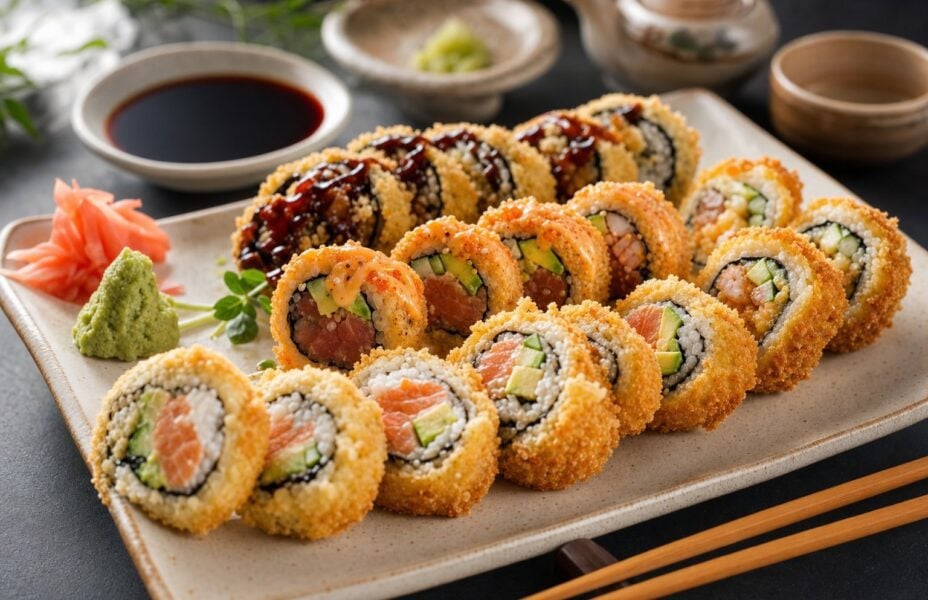
Fried sushi might sound unusual if you’re used to traditional raw fish rolls, but it’s become a beloved variation in restaurants worldwide. Fried sushi, also called tempura maki, is sushi that has been coated in a light batter and deep-fried until crispy, creating a crunchy texture that contrasts with the tender fillings inside. This cooking method transforms familiar sushi rolls into something entirely different.
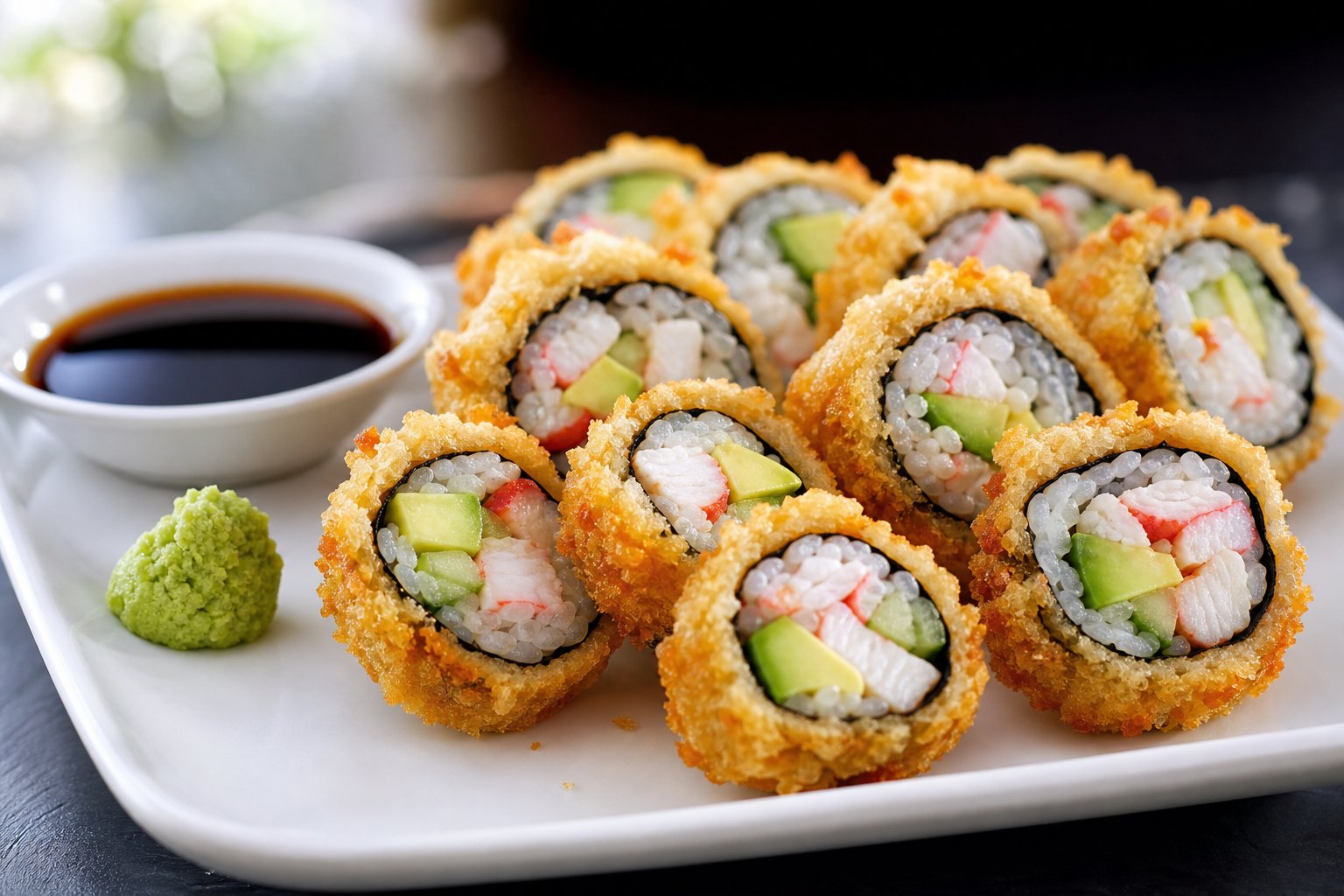
The concept emerged when chefs modified the original Japanese cuisine after sushi gained popularity in America following World War II. They experimented with different techniques and ingredients to create their own versions. The result is a style of sushi that offers the same fresh ingredients you expect but with an added layer of crispy texture.
Popular varieties include California rolls and tempura rolls, both of which feature ingredients like avocado, cucumber, and either imitation crab or fried shrimp. You’ll find these options on menus at sushi restaurants across the globe, and they’re surprisingly easy to make at home once you understand the basic technique.
Key Takeaways
- Fried sushi combines traditional sushi ingredients with a crispy battered coating for added texture
- Popular types include tempura rolls, California rolls, and spider rolls with various cooked fillings
- You can make fried sushi at home using tempura batter or panko breadcrumbs with your favourite ingredients
Key Varieties of Fried Sushi
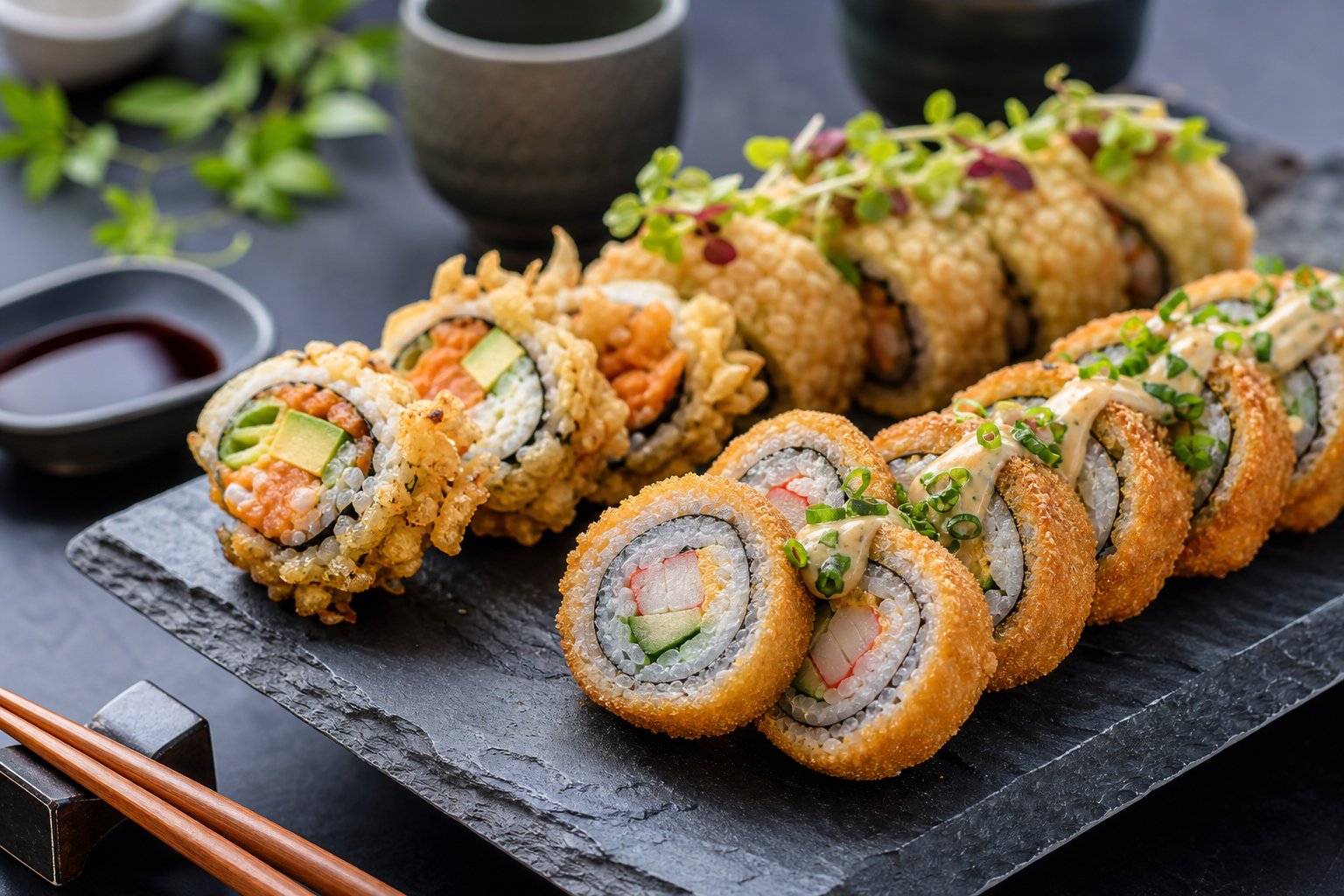
Fried sushi comes in several distinct forms, each offering a unique texture and preparation method. From light tempura batters to crunchy panko coatings, these varieties transform traditional sushi into crispy, golden creations.
Tempura Rolls and Tempura Sushi
Tempura sushi uses a light batter made from wheat flour, cold water, and egg to coat your sushi rolls. This Japanese technique creates a delicate, crispy exterior whilst keeping the ingredients inside moist and flavourful.
You’ll find tempura rolls cooked quickly, typically fried for no more than two minutes per side. The brief cooking time preserves the original texture and taste of the fish and vegetables inside.
Vegetable tempura rolls are amongst the most common varieties you’ll encounter. These rolls combine carrots, cucumbers, and avocados wrapped in rice and seaweed before receiving their golden tempura coating.
Shrimp tempura rolls rank as another popular choice. The battered shrimp pairs with vegetables like carrots and cucumber to create a satisfying contrast between the crispy coating and tender filling.
Panko-Crusted Sushi Rolls
Panko breadcrumbs give fried sushi rolls an extra-crunchy texture that differs from tempura-style preparation. You’ll notice panko creates a rougher, more substantial coating compared to the lighter tempura batter.
The preparation involves coating your sushi roll first in flour, then egg wash, and finally the panko crumbs before deep-frying. This triple-layer technique ensures maximum crispiness.
A fried California roll works particularly well with panko coating. The combination of crab meat, avocado, and cucumber becomes even more indulgent when wrapped in the crunchy golden crust.
Popular variations include spicy tuna rolls with panko coating. The heat from the spicy tuna filling complements the crispy exterior perfectly.
Deep-Fried Nigiri and Fried Sushi Balls
Deep-fried nigiri takes the traditional hand-pressed sushi and transforms it through complete submersion in hot oil. Unlike tempura-style frying, this method uses thicker batters that create an ultra-crispy result.
You might encounter deep-fried sushi wrapped in nori before battering, which helps hold everything together during cooking. The seaweed adds an extra layer of flavour to the finished product.
Fried sushi balls offer a playful alternative to traditional roll shapes. These spherical creations contain the same ingredients as standard rolls but are formed into balls and coated before frying.
The cooking process for deep-fried varieties takes slightly longer than tempura, allowing the thicker batter to achieve a golden-brown colour and maximum crunch.
Popular Fried Sushi Variations
Dragon rolls become even more impressive when fried, with their eel sauce and sesame seed toppings complementing the crispy texture. The combination of flavours creates a rich, savoury experience.
Spicy tuna rolls gain additional appeal through frying, as the quick-cooking tuna and crunchy vegetables like celery and cucumber develop new dimensions of taste and texture when flash-fried.
Philadelphia rolls featuring smoked salmon and cream cheese work brilliantly as crispy sushi when coated and fried. The cream cheese becomes warm and slightly melted whilst the exterior stays crunchy.
California rolls remain one of the most frequently fried varieties you’ll find in restaurants. Their familiar ingredients of crab meat, avocado, and cucumber appeal to those new to fried sushi whilst offering a satisfying crunch to experienced diners.
Fried Sushi Ingredients and Fillings
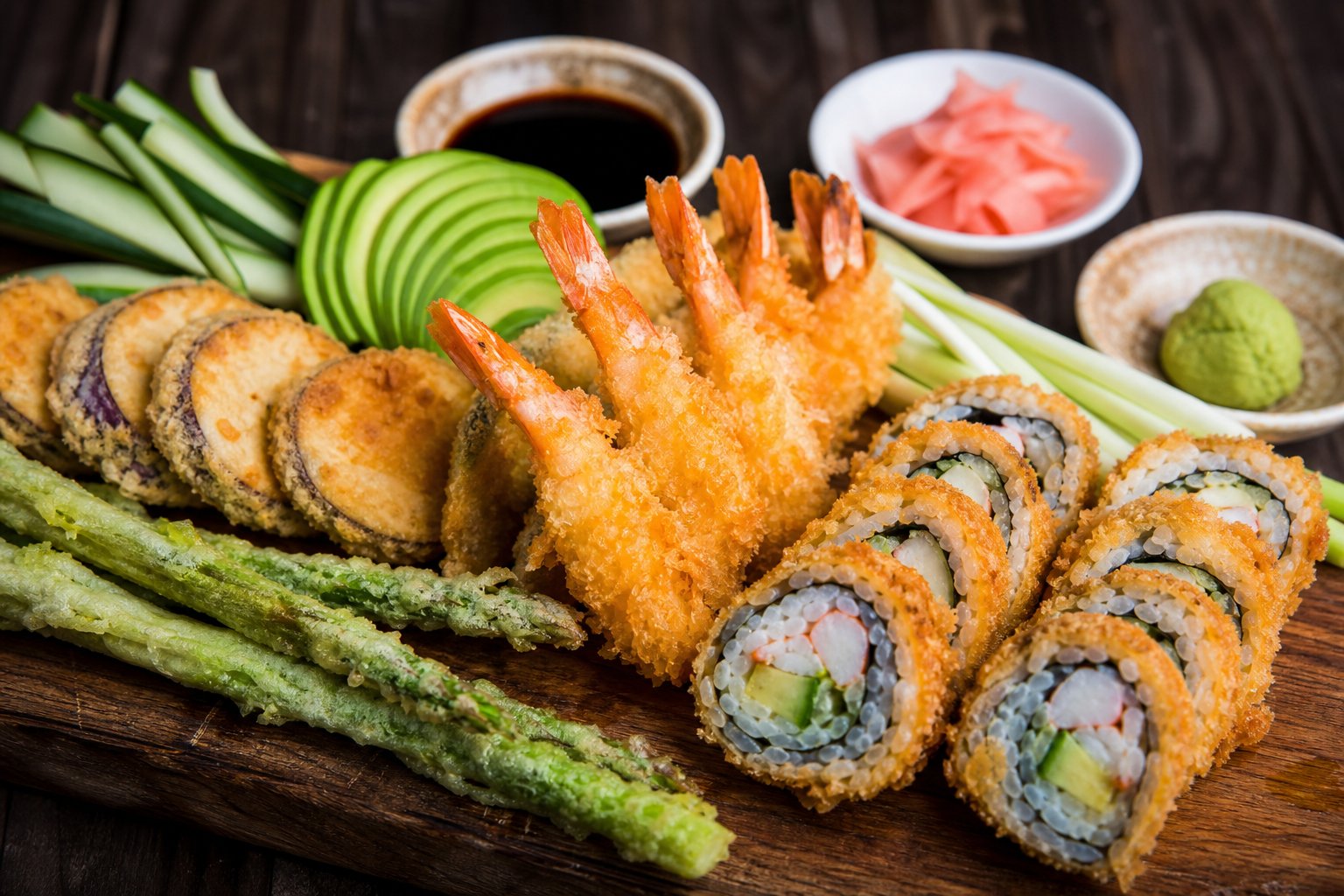
Making fried sushi requires the same foundational components as traditional rolls, but you’ll need ingredients that hold up well to high heat and create a satisfying texture contrast. The rice forms the base, whilst fresh vegetables, proteins, and bold sauces bring flavour and structure to every bite.
Sushi Rice and Seasonings
Sushi rice serves as the foundation for your fried rolls. You’ll need short-grain Japanese rice cooked until sticky and tender.
After cooking, mix rice vinegar with sugar and salt to create the seasoning mixture. Pour this over your warm rice and fold it in gently. The vinegar adds tanginess whilst helping the rice stick together when you roll it.
For fried sushi recipes, you’ll typically use about one cup of cooked rice per roll. The rice should be slightly cooler than body temperature before you spread it on the nori. This prevents the seaweed from becoming soggy and falling apart during frying.
Some recipes call for spreading the rice thinly across your bamboo mat before adding the nori seaweed sheets on top. This creates an inside-out roll that fries more evenly.
Seaweed and Vegetables
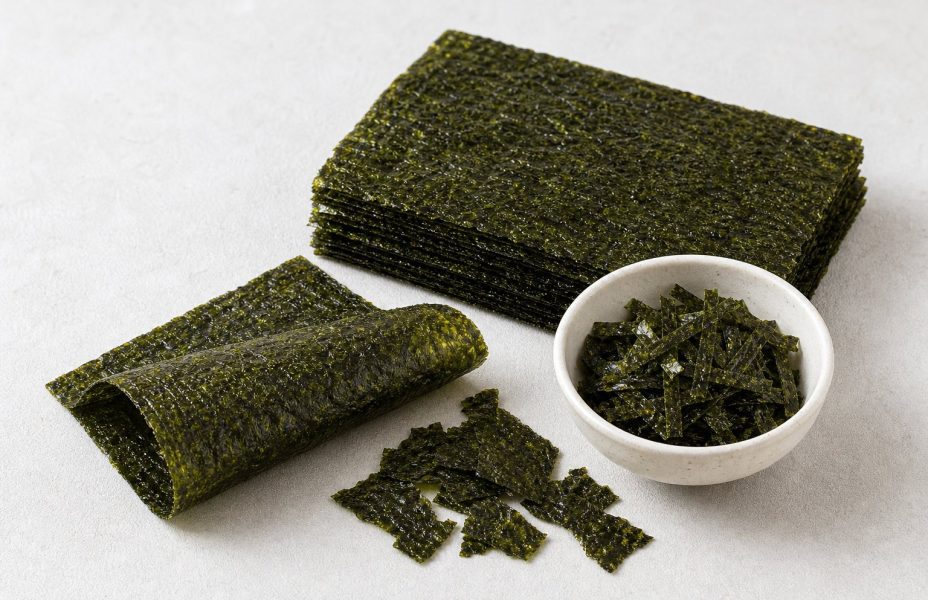
Nori seaweed sheets wrap around your fillings and provide structure to the roll. Place the shiny side facing the direction you prefer based on your rolling technique.
Common vegetables include:
- Avocado: Adds creaminess and holds its texture when fried
- Cucumber: Provides a cool, crisp contrast to the hot exterior
- Asparagus: Offers a firmer bite and earthy flavour
You’ll want to slice vegetables into thin sticks so they distribute evenly throughout the roll. Cut them roughly the same size as your protein pieces.
Some rolls incorporate tobiko (flying fish roe) for a pop of colour and briny flavour. The small eggs add textural interest that complements the crispy coating.
Seafood, Meat, and Alternative Fillings
Surimi (imitation crab) is one of the most popular fillings for fried sushi rolls. It’s affordable, widely available, and its mild flavour works well with bold sauces.
Cooked prawns are another excellent choice. Leave the tail on for visual appeal, or remove it for easier eating. The sweet prawn meat pairs beautifully with avocado and spicy mayo.
Real crab meat, cooked salmon, or tinned tuna offer authentic seafood flavours. Make sure any raw fish is sushi-grade quality, though cooking it slightly before frying reduces food safety concerns.
Cream cheese has become a standard ingredient in many fried rolls. It melts slightly during frying, creating a rich, creamy centre.
For plant-based options, try marinated tofu, shiitake mushrooms, or sweet potato tempura as your main protein.
Essential Sauces and Garnishes
Spicy mayonnaise combines regular mayo with sriracha to create a creamy, spicy spread. You can also use Kewpie mayo for a richer, slightly sweeter flavour. Spread this through the centre of your roll before adding other ingredients.
Eel sauce (unagi sauce) is a sweet and savoury glaze that you drizzle over the finished fried pieces. Its thick consistency clings to the crispy exterior perfectly.
Oyster sauce adds umami depth when mixed into your filling. Use about half a tablespoon per roll.
For serving, offer wasabi paste for those who want extra heat. Sushi ginger cleanses the palate between bites.
Toasted sesame seeds sprinkled on top add nutty flavour and visual appeal. You can also garnish with spring onions or additional sriracha for colour and taste.
Techniques for Perfect Fried Sushi
Getting crispy, golden fried sushi right requires mastering a few key techniques. The way you prepare your batter, choose your coating, control your oil temperature, and time your frying will determine whether you end up with soggy rolls or perfectly crunchy bites.
Tempura and Panko Breading Methods
You have two main coating options when making deep fried sushi: tempura batter or panko breadcrumbs. Each creates a different texture and flavour.
Tempura coating gives you a light, delicate crunch. You apply it directly to the sushi roll without any intermediate steps. This method works well for traditional tempura rolls and keeps the crispy exterior thin.
Panko breadcrumbs create a thicker, crunchier coating. You need to follow a three-step process: dust the roll with flour, dip it in beaten egg, then coat it completely with panko. This approach is popular for fried California sushi rolls because the extra crunch contrasts nicely with the creamy fillings inside.
Press the panko firmly onto your rolls to help it stick. Any loose crumbs will fall off during frying and burn in the oil.
Batter Preparation and Tempura Coating
A proper tempura batter needs cold ingredients to work correctly. Mix one cup of plain flour with one cup of cold water, one egg, and half a teaspoon of salt. The cold water creates a light and crispy batter that doesn’t absorb too much oil.
Key batter tips:
- Don’t overmix the batter
- Leave small lumps in the mixture
- Keep the bowl in an ice bath whilst working
- Use the batter immediately after mixing
Whisk the ingredients together just until combined. Overmixing develops gluten, which makes the coating tough and chewy instead of crispy. Small lumps are fine and actually help create texture.
Coat each roll completely but don’t let excess batter drip back into the bowl. Too much batter makes the coating heavy and greasy. Hold the roll over the oil for a moment to let extra batter drip off before frying.
Deep-Frying Tips and Equipment
You need a deep pan or wok with enough oil to submerge your rolls completely. Pour in vegetable oil until it’s at least 7-8 centimetres deep. This depth lets the rolls float and cook evenly on all sides.
Temperature control is essential for crispy results. Heat your oil to 175°C (350°F) before adding any rolls. Use a cooking thermometer to check the temperature accurately.
Fry only 2-3 rolls at a time. Adding too many at once drops the oil temperature, which leads to greasy, soggy coating. Each roll needs 2-3 minutes per side to turn golden brown.
Turn the rolls gently with tongs or a slotted spoon. Rough handling can break the coating or split the roll open. Remove the fried rolls when they’re golden all over and drain them on kitchen paper.
Ensuring the Right Texture and Crunch
The coating should be crispy on the outside whilst the rice and fillings inside stay soft. Getting this contrast right depends on proper timing and temperature.
If your coating browns too quickly but feels soft, your oil is too hot. Lower the heat and let the temperature drop to 175°C. If the coating takes more than 4 minutes to brown and feels greasy, your oil is too cold.
Cut your fried sushi with a sharp, clean knife after a brief cooling period. Slice in one smooth motion without sawing back and forth. This keeps the crispy coating intact and prevents the filling from squishing out.
Serve fried sushi immediately for the best texture. The coating starts to soften within 15-20 minutes as steam from the warm rice inside makes it soggy.
Homemade Fried Sushi: Step-by-Step Guide
Making fried sushi at home requires proper preparation of the roll, a three-layer coating system, and precise oil temperature control to achieve a crispy exterior whilst keeping the interior tender. The process involves rolling your sushi tightly, coating it in flour, batter, and panko breadcrumbs, then frying at 190°C for 60 to 90 seconds.
How to Make Fried Sushi at Home
You’ll need sushi rice, nori sheets, your choice of fillings, plain flour, cornflour, ice-cold sparkling water, one egg yolk, and panko breadcrumbs. Start by preparing 2 cups of sushi rice and seasoning it with rice vinegar, sugar, and salt whilst still warm.
Popular fillings include smoked salmon with cream cheese, tinned crab with avocado, or cooked prawns with cucumber. Keep your cream cheese chilled until you’re ready to roll, as this prevents it from melting before the coating sets.
For the batter, mix 1 cup of flour, half a cup of cornflour, 1 cup of ice-cold sparkling water, and 1 egg yolk. The cold temperature creates air pockets when it hits the hot oil, giving you a light and crispy crust.
You’ll also need a bamboo rolling mat wrapped in cling film, a deep-fry thermometer, and a wire cooling rack. These tools help you create tight rolls and maintain the proper oil temperature throughout the frying process.
Rolling, Breading, and Frying Processes
Place a nori sheet on your bamboo mat and spread a thin, even layer of rice over it, leaving a 2.5 cm border at the top. Arrange your fillings in a horizontal line across the lower third of the rice.
Use the mat to lift the bottom edge over the fillings and roll tightly, applying firm pressure. Seal the top border with a small dab of water. The tighter your roll, the less likely it will fall apart during frying.
Dust each roll lightly with plain flour to create a dry surface for the batter to grip. Dip the floured roll into your cold batter until completely covered, then immediately roll it in panko breadcrumbs, pressing gently so they stick.
Heat your oil to exactly 190°C in a heavy-bottomed pot. Lower two rolls at a time into the oil using a slotted spoon. Fry for 60 to 90 seconds until the panko turns golden brown and the bubbling sound slows down.
Transfer the fried sushi rolls to a wire rack for 3 minutes. Never use paper towels, as trapped steam will make the bottom soggy.
Serving and Presentation Tips
Slice each roll into 6 to 8 pieces using a sharp knife dipped in water mixed with a splash of rice vinegar. This prevents the rice from sticking to your blade and ensures clean cuts that show off the layers inside.
Arrange the pieces on a serving plate with the cut sides facing up so guests can see the colourful fillings. Serve immediately whilst still warm for the best texture contrast between the crispy coating and tender interior.
Pair your fried sushi with spicy mayonnaise, soy sauce, eel sauce, or sweet chilli sauce for dipping. You can also sprinkle sesame seeds or chopped spring onions on top for added flavour and visual appeal.
For a complete presentation, add pickled ginger and wasabi on the side. The acidity from the ginger helps cut through the richness of the fried coating between bites.
Popular Types and Regional Variations
Tempura and California rolls are the most famous fried sushi, though chefs have created numerous variations across different cultures. You’ll find both traditional Japanese preparations and Western innovations when exploring fried sushi options.
Fried Sushi in Japanese and Western Cuisine
Tempura rolls represent the traditional Japanese approach to fried sushi. These feature ingredients battered in a mixture of wheat flour, cold water, and egg before frying. The light, crispy coating distinguishes tempura-style from deep-fried versions.
Western variations took off after World War II when American chefs began experimenting with traditional recipes. The fried California roll includes avocado, cucumber, and imitation crab wrapped inside-out with rice on the exterior. Dragon rolls combine shrimp tempura and cucumber inside, topped with sliced avocado, tobiko, unagi sauce, and spicy mayonnaise.
Spider rolls feature deep-fried soft-shell crab alongside avocado, cucumber, roe, and daikon sprouts. You can also find spicy tuna rolls that mix raw tuna with spiced mayonnaise before wrapping and frying.
Creative Twists and Vegetarian Options
Vegetable tempura sushi offers plant-based alternatives using asparagus, sweet potato, or courgette. Many restaurants prepare these with the same light batter used for seafood versions.
You can even transform leftover sushi into fried versions at home. Simply coat existing rolls in panko breadcrumbs or tempura batter and fry until golden. This method works particularly well with vegetarian rolls containing avocado and cucumber.
Panko, the Japanese breadcrumb shaped like flakes rather than standard crumbs, creates an especially light and crispy coating. Some chefs use it instead of traditional tempura batter for a different texture.
Serving and Pairing Suggestions
Fried sushi requires specific accompaniments that complement its crispy texture and rich flavours. The right dipping sauces enhance each bite, while carefully chosen side dishes create a balanced meal.
Dipping Sauces and Condiments
Traditional soy sauce remains the most popular choice for fried sushi. You can dip your tempura rolls lightly to avoid making the crispy coating soggy. Eel sauce, also called unagi sauce, offers a sweet and savoury glaze that pairs exceptionally well with California rolls and spider rolls.
Wasabi paste adds a sharp, spicy kick that cuts through the richness of fried ingredients. Mix a small amount into your soy sauce or place it directly on the roll. Sushi ginger serves as a palate cleanser between different types of fried rolls.
Nitsume sauce works particularly well with seafood-based fried sushi. This thick, sweet sauce is made from fish stock and complements the oceanic flavours. Spicy mayonnaise appears frequently as both a filling and dipping sauce for fried varieties. You’ll find it especially popular with spicy tuna rolls and dragon rolls.
Recommended Side Dishes and Beverages
Miso soup and edamame make excellent starters before serving fried sushi. The light, warm soup balances the heavier fried elements of your meal.
Cucumber sesame salad provides contrasting flavours and textures that refresh your palate. The cool, crisp vegetables offset the warm, crunchy coating of tempura rolls. Green tea remains the traditional beverage choice as it cleanses your palate between bites.
You can also serve pickled vegetables alongside your fried sushi. These tangy sides cut through rich, oily flavours. Japanese beer offers another popular pairing option that complements the deep-fried coating without overwhelming the delicate fish flavours inside.
Frequently Asked Questions
People often have questions about the preparation methods, serving temperatures, and cultural origins of fried sushi varieties. Menu descriptions can sometimes be unclear about which rolls are actually fried versus simply containing crispy ingredients.
Which sushi rolls are typically deep-fried or tempura-battered?
You’ll commonly find spider rolls deep-fried, which feature soft-shell crab coated in tempura batter. Las Vegas rolls are another popular choice that gets fully fried after being assembled with cream cheese and salmon or tuna.
Dynamite rolls often receive tempura treatment, containing shrimp tempura as a primary ingredient. California rolls can be coated in tempura batter before frying to create a crispy exterior whilst keeping the surimi and avocado filling intact.
Crunchy rolls may contain tempura flakes rather than being fully fried themselves. Philadelphia rolls are sometimes deep-fried to create a warm, crispy version of the cream cheese and salmon combination.
What is the difference between tempura sushi and a fully fried sushi roll?
Tempura sushi typically refers to rolls that contain tempura-battered ingredients like prawns or vegetables inside them. The tempura components are fried separately before being rolled into the sushi.
A fully fried sushi roll means the entire assembled roll gets wrapped in seaweed, coated in batter, and deep-fried. You’ll get a crispy exterior on every bite with this preparation method.
The distinction affects both texture and temperature throughout the roll. Tempura sushi has crispy elements mixed with cool rice and raw ingredients, whilst fully fried rolls are warm all the way through.
Are fried sushi rolls served hot, cold, or at room temperature?
Fully fried sushi rolls arrive at your table hot, straight from the fryer. The crispy coating needs to be served immediately to maintain its crunch and golden texture.
Rolls containing tempura ingredients but not fully fried themselves are typically served at room temperature. The tempura elements inside may be slightly warm, but the rice and other components remain cool.
You should eat fried rolls quickly before they lose their crispy texture. The contrast between the hot, crunchy exterior and any cool fillings inside creates part of the appeal.
What ingredients are most commonly used in crispy or fried sushi rolls?
Cream cheese appears frequently in fried rolls because it becomes wonderfully melted and creamy when heated. Surimi, avocado, and cucumber work well in fried preparations as they hold their texture during frying.
Prawns are popular both as tempura inside rolls and in fully fried versions. Salmon and tuna also feature commonly, particularly in spicy variations.
Soft-shell crab is a premium choice for deep-fried sushi applications. Vegetables like sweet potato, courgette, and peppers provide lighter options whilst still delivering satisfying crunch.
How can you tell from a menu description whether a roll is fried?
Look for the words “tempura,” “crispy,” or “crunchy” in the roll name or description. These terms usually indicate some form of frying or battered ingredients.
Menu items described as “hot” rolls often mean they’re fully deep-fried. Phrases like “lightly battered” or “golden fried” clearly signal fried preparation methods.
Words such as “panko-crusted” or “katsu-style” also indicate breading and frying. If you’re unsure, simply ask your server whether the roll is served hot or contains fried elements.
Are fried sushi rolls considered traditional Japanese sushi or a modern variation?
Fried sushi rolls are primarily a Western innovation rather than traditional Japanese cuisine. They gained popularity in American sushi restaurants during the fusion food movement.
Traditional Japanese sushi focuses on showcasing fresh, raw fish with minimal manipulation. Whilst tempura exists as a separate Japanese dish, combining it with sushi rolls is largely a contemporary adaptation.
You’ll find fried rolls more commonly in Western sushi restaurants than in Japan itself. They represent creative interpretation rather than authentic Japanese preparation methods.