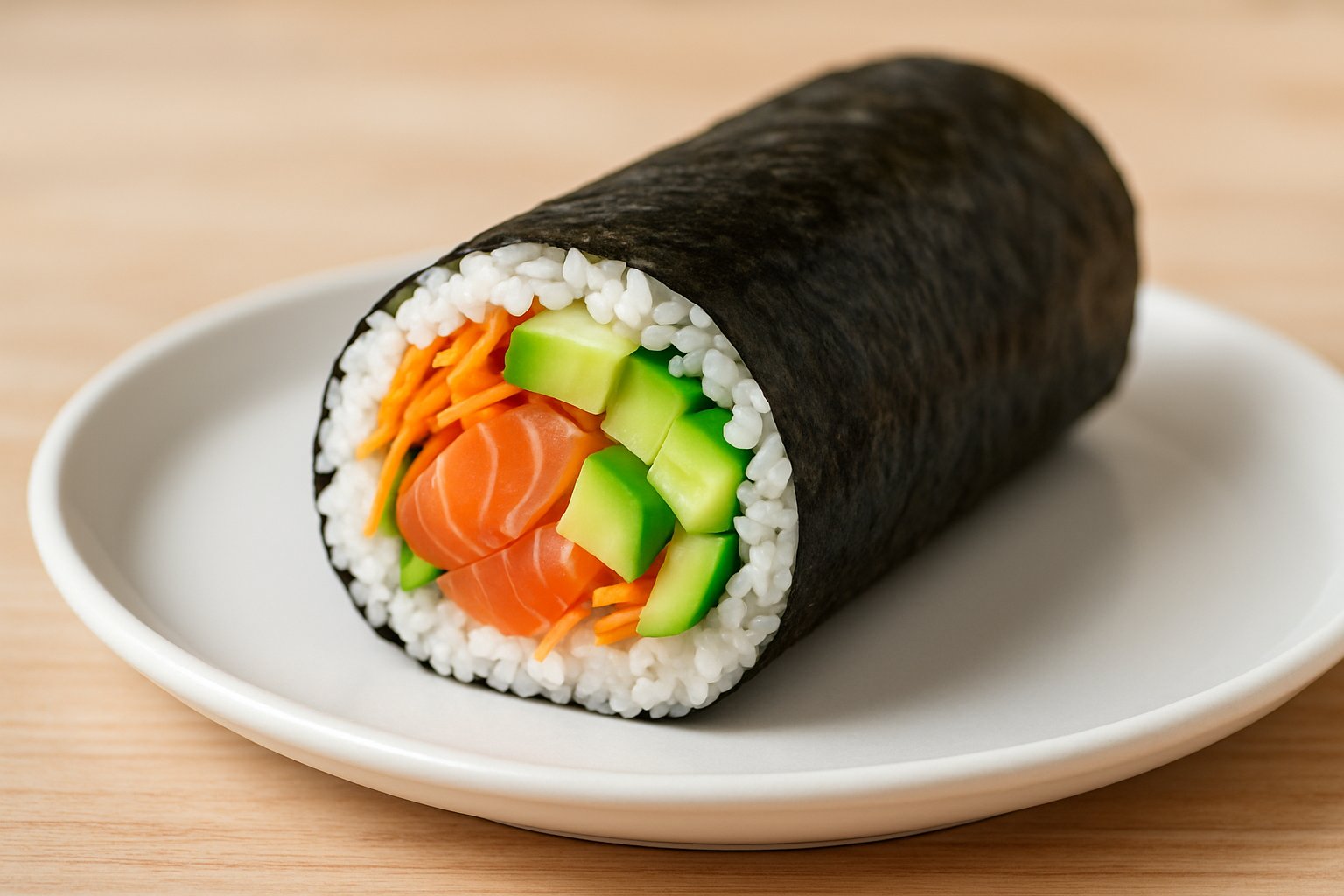
Picture holding a classic sushi roll, but it’s way bigger—think burrito-sized and wrapped up to eat with your hands. A sushi burrito is a large, hand-held fusion dish that combines traditional sushi ingredients like raw fish, rice, and vegetables wrapped in seaweed or soy paper instead of a tortilla.
This Japanese-Mexican fusion creation really does bring together the best of both worlds. It’s all in one tidy package, easy to eat on the go.
Restaurants across America have jumped on this trend since 2008. The sushi burrito was invented by Peter Yen at his San Francisco spot, Sushirrito, and it quickly caught on as a popular grab-and-go meal.
People love sushi burritos for their portability and the endless ways you can customize them. Unlike regular sushi rolls that need chopsticks, these burrito-sized rolls are made for eating with your hands—perfect for anyone in a hurry but still craving fresh sushi flavors.
Key Takeaways
- Sushi burritos combine traditional Japanese sushi ingredients wrapped in a large, portable burrito format.
- This fusion dish was created in 2008 in San Francisco and has become widely popular across American restaurants.
- They offer endless customization possibilities with various proteins, vegetables, and wrapping options to suit different dietary needs.
Defining the Sushi Burrito
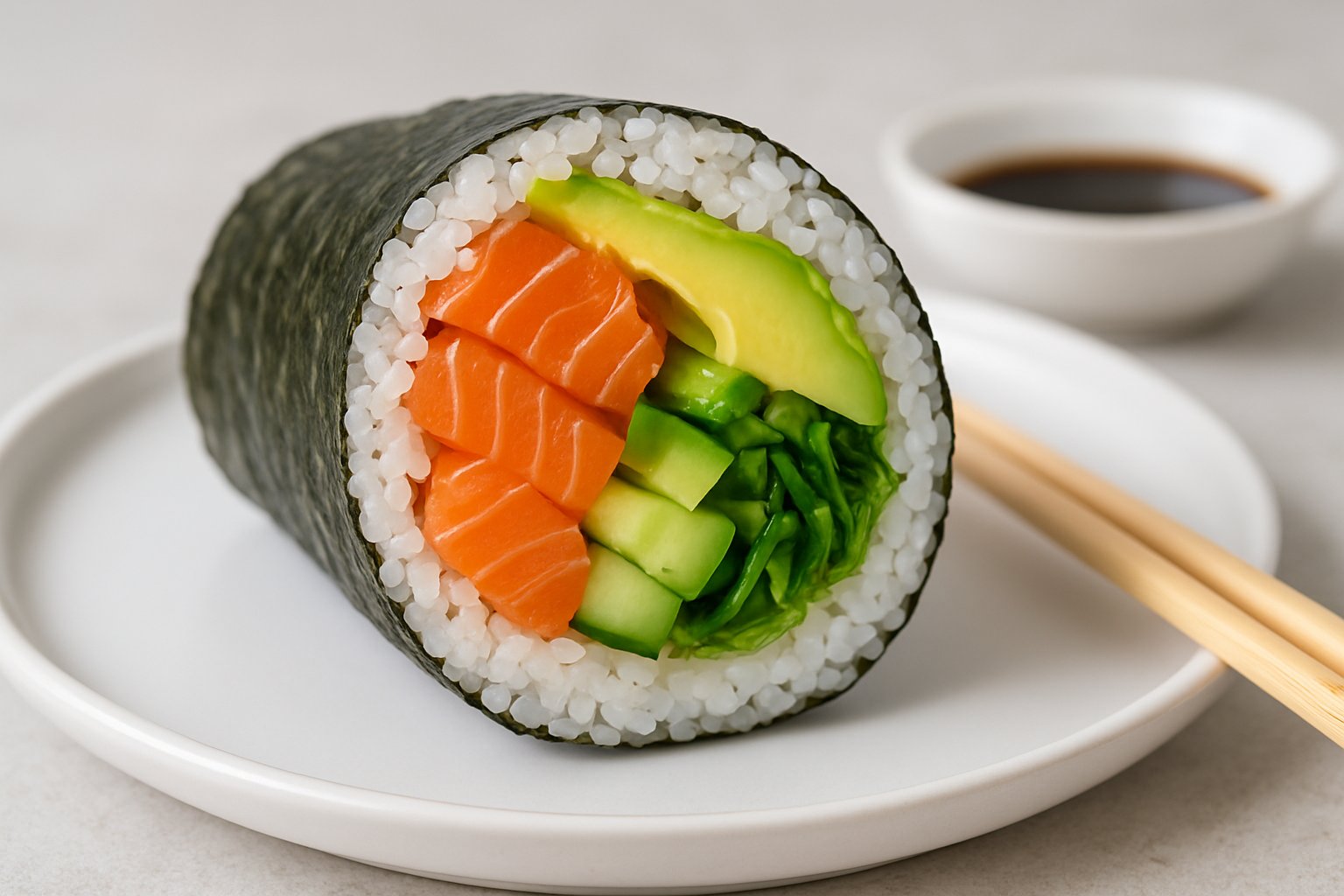
A sushi burrito combines Japanese sushi ingredients with Mexican burrito-style wrapping. It’s a handheld fusion meal, bigger than any traditional sushi roll you’ve likely seen.
This dish wraps sushi rice, fish, veggies, and sauces in seaweed sheets, making it portable and easy to customize for modern eaters.
Key Characteristics and Differences from Sushi Rolls
The most obvious difference? Size. Where regular sushi rolls are bite-sized, a sushi burrito is basically a giant sushi roll wrapped in a big sheet of seaweed, shaped like a burrito.
Traditional sushi rolls are usually sliced into 6-8 pieces. A sushi burrito stays whole and can stretch 8-10 inches long.
Key Physical Differences:
- Size: 3-4 times larger than regular rolls
- Shape: Cylindrical like a burrito, not sliced
- Wrapper: Large nori sheet or soy paper
- Eating method: Handheld, no chopsticks needed
The fillings get creative, too. Sushi burritos invite a medley of fillings—cooked proteins, tempura, and veggies you’d never find in classic sushi.
Forget the delicate sushi presentation. Sushi wraps are all about convenience. You can eat them on the go, no utensils or fuss required.
Origins of the Name and Cultural Significance
The name “sushi burrito” says it all—it’s got that dual cultural vibe. The origins go back to San Francisco, where a Japanese-Mexican chef first created it in the early 2010s.
The word “sushirrito” mashes up “sushi” and “burrito,” really driving home the fusion idea. Some restaurants stick with that, while others go for “sushi burrito” or “sushi wrap.”
This isn’t just about clever names. It’s a symbol of how American food culture builds bridges between traditions. Fusion cuisine was just starting to get big when the sushi burrito came along.
Born in the heart of fast-casual dining, the sushi burrito feels like a response to modern life. We want fresh ingredients, tons of options, and portability—all at once.
The cultural significance goes deeper than just convenience. It shows how immigrant communities tweak traditional foods for new audiences, but still keep those authentic flavors alive.
Fusion of Japanese and Mexican Cuisines
The sushi burrito is a true Japanese-Mexican fusion, taking the best from both sides. From Japan, you get sushi rice, nori, raw fish, and those umami-packed seasonings.
Mexican influence shows up in the rolling method and the big, hearty portions. Wrapping it burrito-style means you can stuff in more fillings and eat it with your hands.
Japanese Elements:
- Sushi rice with rice vinegar seasoning
- Nori (seaweed) wrapping
- Raw fish like tuna and salmon
- Traditional vegetables like cucumber and avocado
Mexican Influence:
- Large, wrapped presentation
- Abundant filling quantities
- Portable, handheld format
- Customizable ingredient options
This fusion makes something totally new. The sushi burrito blends the art of sushi-making with the grab-and-go convenience of a burrito, so it appeals to both sushi fans and burrito lovers.
You get the clean, fresh flavors of Japanese food, but also the hearty, filling bite you expect from Mexican cuisine. Honestly, it’s kind of genius.
History and Evolution of the Sushi Burrito
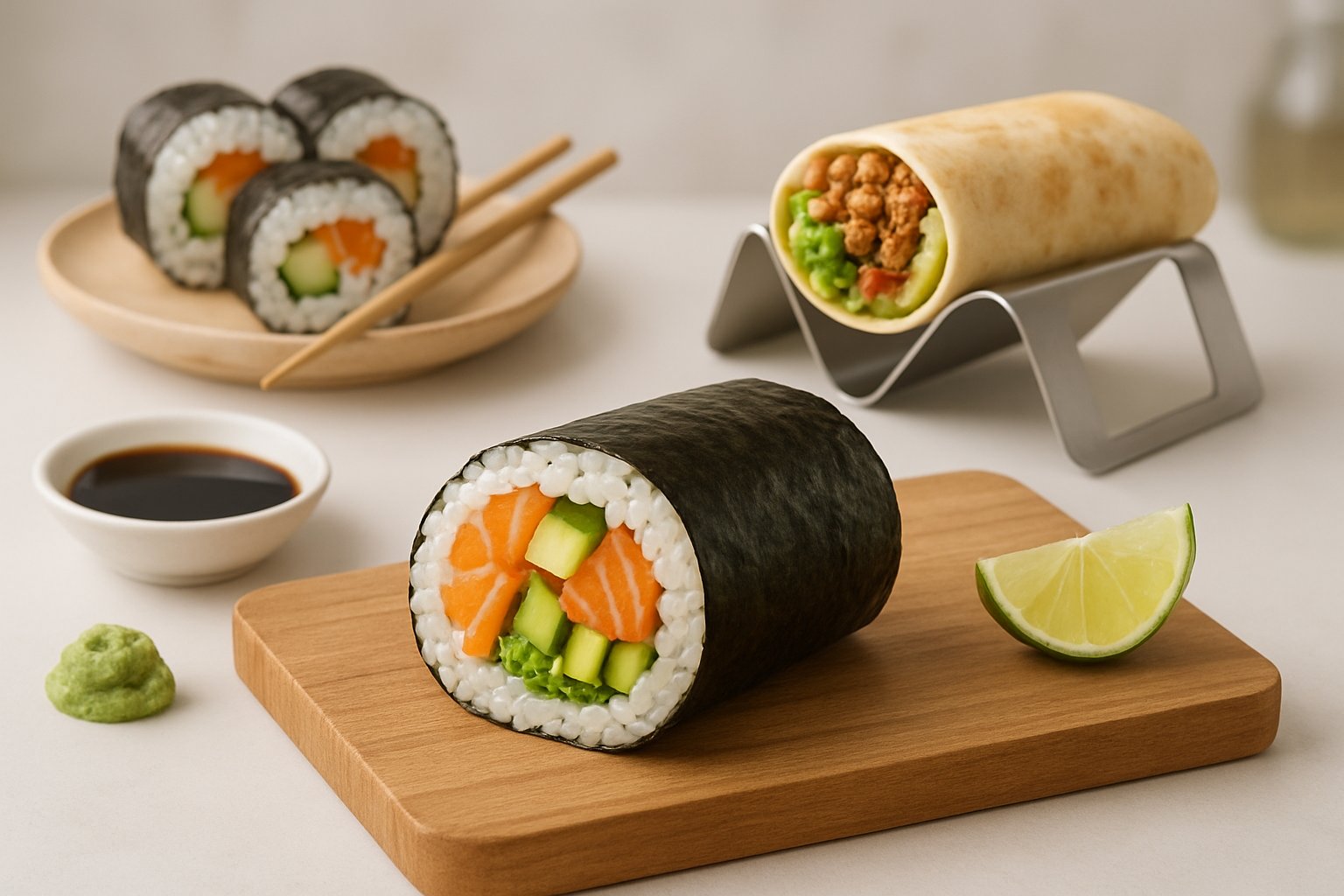
The sushi burrito popped up as a modern fusion dish in 2008, shaking up how people think about portable sushi. Social media gave it a big boost, and it’s now part of the bigger East-meets-West fusion trend.
Creation by Peter Yen and the Rise of Sushirrito
Peter Yen came up with the sushi burrito in 2008 at his San Francisco restaurant, Sushirrito. He’d gotten tired of boring lunch options back in 2004 while working downtown.
Yen craved sushi, but his choices were either quick and low-quality grocery store sushi or expensive, slow sit-down spots. Neither hit the spot.
He started wondering what would happen if he made a giant sushi roll that could be prepped fast. He thought about adding Latin flavors, too. The idea stuck with him until business school in 2008.
He teamed up with executive chef Ty Mahler in 2010. Mahler was skeptical about putting chicken in sushi at first, but he adapted and started experimenting with all kinds of recipes.
Their first tasting had 30 different sauces. Mahler focused on nailing the sauces before moving on to rice, proteins, and veggies. He wanted every roll to have balanced flavors and textures.
Global Popularity and Influence of Social Media
Since 2008, sushi burritos have exploded in popularity and now show up on menus all over the U.S. Social media played a huge role—their colorful, oversized look made them Instagram gold.
Food bloggers and Instagrammers posted tons of photos. That visual appeal helped sushi burritos catch on fast in new places.
Fast-casual restaurants loved the format because it worked well for busy lunch crowds. Food halls started adding sushi burrito vendors to keep up with demand. Office workers liked having a quick, healthy option that didn’t require utensils.
More and more restaurants started creating their own takes on the sushi burrito. Each place added unique ingredients and flavors, keeping things interesting and expanding the market.
Evolution of Fusion Dishes
The sushi burrito sits at the crossroads of Japanese and Mexican food. It’s part of a bigger movement where chefs blend different culinary traditions.
Key fusion elements include:
- Japanese sushi techniques and ingredients
- Mexican burrito wrapping style
- American fast-casual service model
- Global flavor influences
Sushi burritos inspired all sorts of other fusion dishes. Restaurants started to mash up Korean and Mexican, Mediterranean wraps, Asian tacos—you name it.
This fusion dish shows how chefs tweak traditional foods for modern life. Familiar formats meet new ingredients, and diners get a fresh experience.
Restaurants keep experimenting with new proteins, sauces, and veggies. Vegetarian and vegan options are now everywhere, and regional twists reflect local tastes.
Signature Sushi Burrito Ingredients
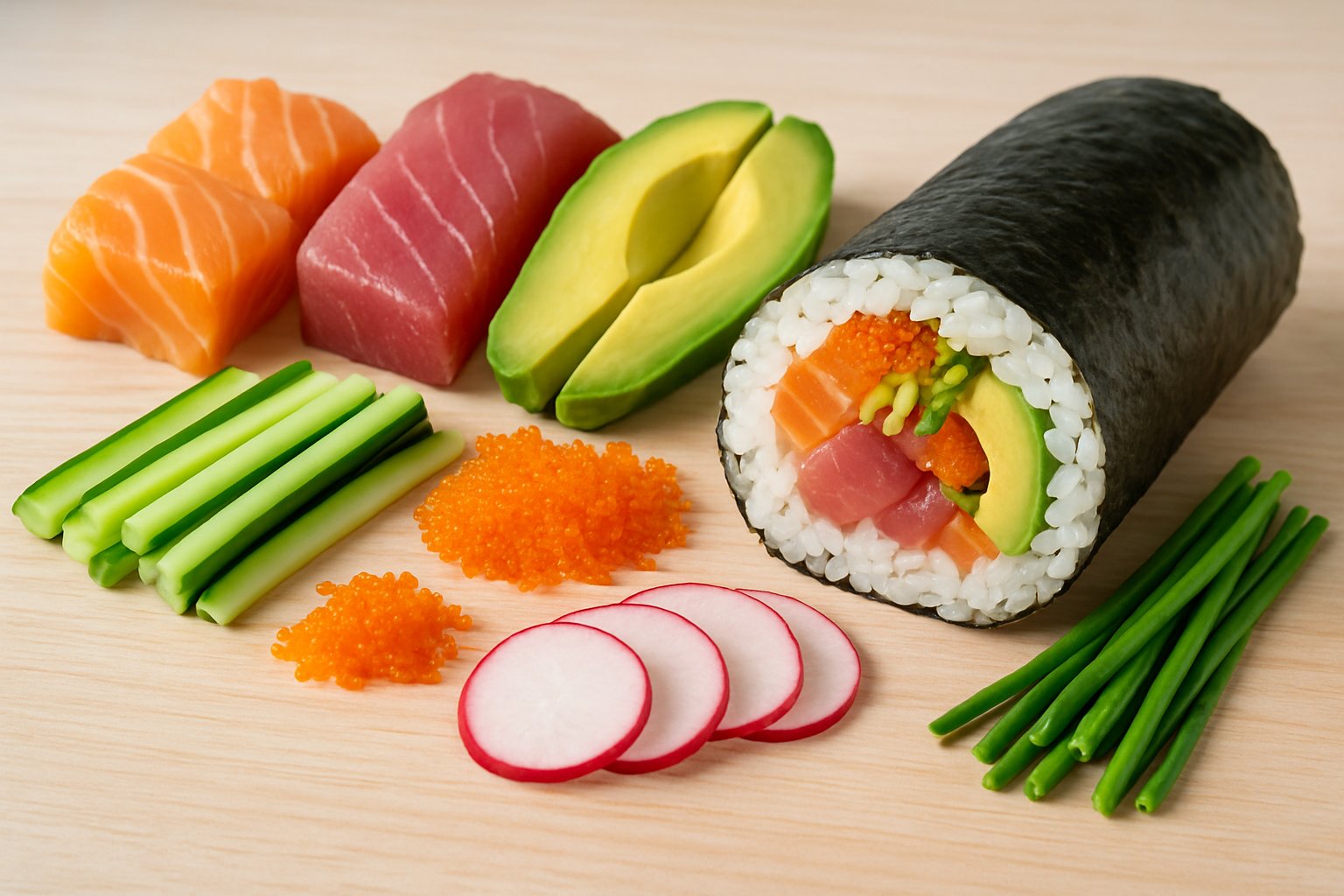
The heart of a great sushi burrito is three things: perfectly seasoned sushi rice to hold everything together, high-quality proteins (from sushi-grade fish to plant-based alternatives), and fresh veggies with bold sauces that balance taste and texture.
Sushi Rice and Its Role
Sushi rice really is the backbone here. We use short-grain Japanese rice because it gets nice and sticky when cooked right.
The rice needs special seasoning for that signature sushi flavor. We mix rice vinegar, sugar, and salt into the warm rice, creating that slightly sweet and tangy taste that sets sushi rice apart.
Perfect Rice Ratios:
- 1 cup rice to 1¼ cups water
- 2 tablespoons rice vinegar per 2 cups cooked rice
- 1 tablespoon sugar per 2 cups cooked rice
- ½ teaspoon salt per 2 cups cooked rice
Let the rice cool completely before using it. If it’s warm, the nori gets soggy and the burrito falls apart—nobody wants that.
Essential Proteins and Fish Options
Raw Fish Options need to be sushi-grade for safety. Salmon and tuna stand out for their flavor and smoothness.
Spicy tuna mixes raw tuna with sriracha mayo for a creamy, spicy bite. You can always tweak the heat by adjusting the sriracha.
Cooked Proteins are a solid pick if raw fish isn’t your thing. Tempura shrimp brings crunch, while teriyaki chicken is sweet and savory.
Plant-Based Alternatives make vegan sushi burritos shine. Firm tofu, when marinated in soy or teriyaki, soaks up flavor nicely. Tempura veggies add another layer of texture.
| Protein Type | Preparation | Flavor Profile |
|---|---|---|
| Raw Salmon | Sliced thin | Rich, buttery |
| Spicy Tuna | Mixed with sriracha | Creamy, spicy |
| Teriyaki Chicken | Grilled, sliced | Sweet, savory |
| Marinated Tofu | Pan-fried | Umami, mild |
Vegetables, Sauces, and Toppings
Fresh Vegetables bring crunch and nutrition. Avocado adds creamy richness and healthy fats. Cucumber gives a crisp, refreshing bite.
Julienned carrots add sweetness and a pop of color. Raw carrots keep things extra crunchy.
Sauce Selection really changes the game. Wasabi mayo brings heat, while soy sauce adds that classic umami punch.
Spicy mayo is a crowd-pleaser for anyone craving a kick. Teriyaki sauce brings a sweet note, especially with cooked proteins.
Finishing Touches can’t be skipped:
- Pickled ginger cuts through rich flavors
- Sesame seeds offer nutty flavor and a little visual flair
- Nori sheets should be fresh and crisp
Line up your veggies in a neat row over the rice. This helps the burrito roll up without turning into a mess.
Sushi Burrito Construction and Preparation
Building a sushi burrito isn’t rocket science, but you’ll want the right wrapper, a decent rolling technique, and some thought about where each filling goes. Quality seaweed sheets help, and balancing flavors makes all the difference.
Seaweed Sheets: Nori and Alternatives
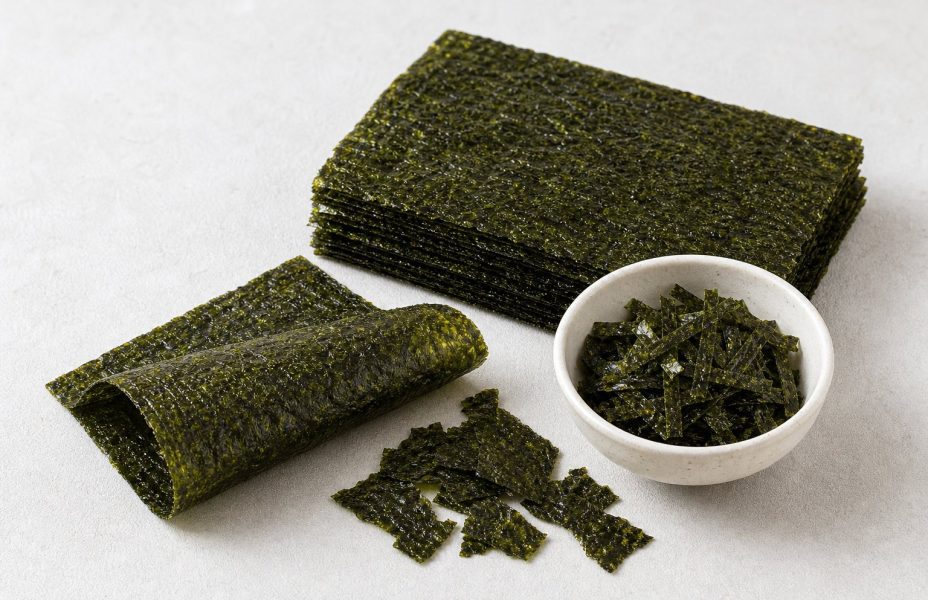
Nori seaweed is the backbone of a real sushi burrito. Those dark green sheets hold everything together and bring a salty, ocean flavor.
Good nori feels crisp and snaps cleanly. If it bends or looks torn, it probably picked up too much moisture somewhere along the way.
Standard nori sheets are about 8×7 inches. Bigger burritos sometimes call for jumbo sheets or just overlapping two regular ones.
Alternative wraps if you’re feeling adventurous:
- Soy paper – neutral taste, lots of color options
- Rice paper – see-through, needs a quick soak in water
- Kelp sheets – thicker, with a bolder sea flavor
Keep leftover nori in airtight containers with a silica packet. Humidity turns it chewy and tough to handle.
Making sushi burritos at home really gets easier when you start with fresh, crisp seaweed sheets.
Assembly Techniques and Rolling Tips
Lay the nori shiny side down on a clean, dry surface. The rough side grabs the rice better—trust me.
Wet your hands before touching the rice. It keeps things from sticking and makes spreading way less frustrating.
Rice placement tips:
- Spread rice thin and even
- Leave about an inch at the top edge
- Press gently—just enough to make shallow spots for fillings
Put fillings in the lower third of the rice. Don’t overstuff, or you’ll end up with tears and fillings everywhere.
Start rolling from the bottom, tucking the first fold in tight. Keep the pressure gentle so you don’t squeeze out all the good stuff.
Moisten the empty nori border at the top—it seals the roll naturally. Press it down to finish.
Professional rolling techniques focus on even pressure and spreading ingredients out just right.
Customizing with Fillings and Sauces
Protein choices drive most sushi burritos. Salmon or tuna work great raw, but tempura shrimp or grilled chicken are awesome cooked options.
Layer by texture and weight—heavier stuff like protein goes close to the rice, lighter veggies on top.
Popular combos:
- Spicy tuna, cucumber, avocado, sprouts
- Salmon, cream cheese, cucumber, pickled radish
- Tempura shrimp, lettuce, carrots, spicy mayo
Sauce is a “less is more” situation. Too much and the nori gets soggy fast.
Drizzle thick sauces like spicy mayo in thin lines. Save watery sauces for dipping on the side.
Vegetarian options might use marinated tofu, mushrooms, or a medley of veggies. These usually need a little more seasoning to stand up to the seafood versions.
Try mixing textures—creamy avocado with crunchy veggies, or toss in toasted sesame seeds for a little crunch.
Popular Variations and Dietary Adaptations
Sushi burritos are basically a playground for customization. You’ve got traditional Japanese flavors, but plenty of creative fusion ideas too. Modern spins cover plant-based and allergen-free needs without much trouble.
Traditional and Fusion Filling Ideas
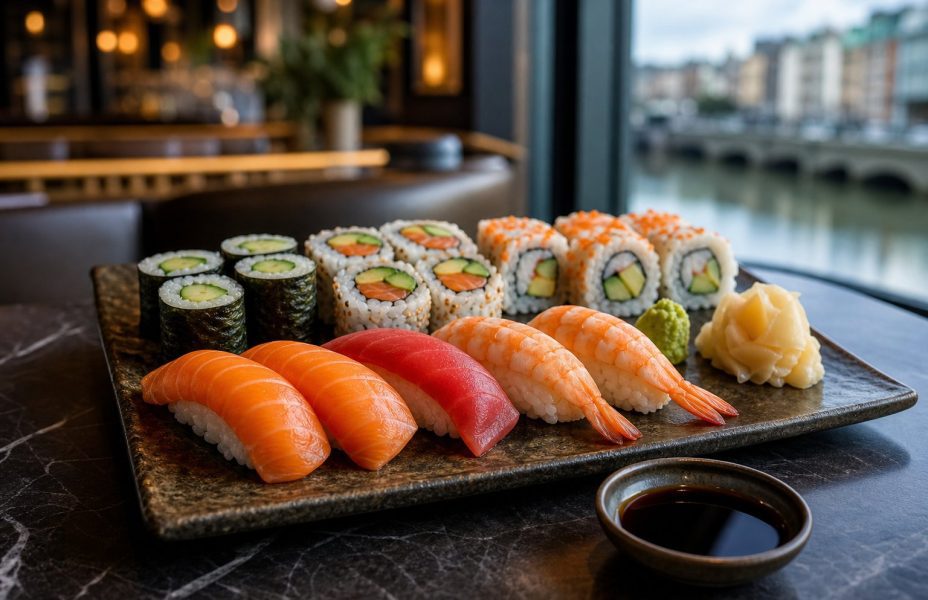
Classic sushi fillings anchor most sushi burritos. Spicy tuna with sriracha mayo, fresh salmon, and cooked shrimp are all favorites. Cucumber, avocado, and seasoned sushi rice round out the basics.
Fusion combos bring in other cuisines. You’ll see Korean twists with bulgogi and kimchi, or Mexican-inspired burritos with jalapeños, cilantro, and spicy mayo.
Cooked options are great if you’re not into raw fish. Tempura shrimp brings crunch, and teriyaki chicken is just plain comforting.
Vegetable-forward options like roasted sweet potato, pickled carrots, and lettuce add color and nutrition. They give each bite a different texture too.
Vegan, Vegetarian, and Dietary Options
Plant-based proteins make vegan burritos surprisingly filling. Marinated tofu soaks up flavor and brings protein. Tempura veggies like sweet potato or mushrooms add heft.
Vegan sushi burritos often use avocado as the main protein. Cucumber, sprouts, and shredded carrots keep it fresh and crunchy.
Gluten-free adaptations swap in tamari for soy sauce, and rice flour for tempura batter. Soy paper wraps are a good nori alternative if seaweed isn’t your thing.
Low-carb versions use cauliflower rice instead of regular sushi rice. You’ll want to add more veggies and protein to keep it satisfying.
Nutrition and Health Benefits
Sushi burritos pack fresh fish, veggies, and rice into one meal. The fish brings protein and omega-3s that support your heart and brain.
Nutritional Profile and Key Nutrients
A typical sushi burrito lands somewhere between 300 and 600 calories, depending on what you put inside. Each part brings something different to the table.
Sushi-grade fish is the main protein—salmon and tuna have about 20-25 grams per serving. That’s great for muscle recovery.
Sushi rice gives you energy with about 45 grams of carbs per cup, plus a few B vitamins.
Nori seaweed adds iodine for thyroid health, and a bit of vitamins A, C, and K.
Veggies like cucumber, avocado, and carrots boost fiber, potassium, and antioxidants. They help with digestion and your immune system.
Health Advantages: Omega-3, Protein, and More
Fish in sushi burritos delivers omega-3s that help repair brain cells. These fats cut inflammation and keep your heart happy.
Omega-3 perks:
- Lower blood pressure
- Less risk of heart disease
- Sharper brain function
- Improved mood
High-quality protein keeps blood sugar steady. It can also boost focus and alertness during the day.
Sushi burritos are legit brain food thanks to those omega-3s and B vitamins. They help with memory and thinking.
The mix of protein and healthy fats makes sushi burritos more filling than a lot of fast food. That’s a win for portion control and maybe even your waistline.
Serving, Pairing, and Enjoyment Tips
There are ways to make sushi burritos even better. Serving them right and picking good sides or drinks can really elevate the experience. Plus, a few eating tricks help keep things neat.
How to Eat and Serve Sushi Burritos
Hold your sushi burrito at both ends, not the middle. That way, fillings stay put instead of falling out.
Chopsticks work if you’re not into eating with your hands. You can also slice the burrito into smaller pieces for less mess.
Must-have condiments:
- Soy sauce – brush a little on top instead of dunking
- Wasabi – mix with soy or dab it right on
- Pickled ginger – refreshes your palate between bites
Skip over-dipping in soy sauce—it’ll make the seaweed soggy. Serve traditional sides separately so everyone can customize.
Sushi burritos taste best fresh. If you need to save some, wrap it tight in plastic and stash it in the fridge for up to a day.
Best Pairings with Drinks and Sides
Beer goes surprisingly well with sushi burritos. Light lagers and wheat beers won’t bulldoze those delicate fish flavors, and the bubbles help reset your palate between bites.
Green tea is a classic—can’t really argue with tradition. It brings out the rice and seaweed notes without making things too heavy.
Sake is another solid choice if you want something boozy but still true to Japanese roots.
Ideal side dishes include:
- Edamame with sea salt
- Miso soup for warmth
- Seaweed salad for additional ocean flavors
- Cucumber salad with rice vinegar
Skip heavy sides that might overpower the sushi burrito’s freshness. Light, crisp textures just work better here.
Sparkling water with a squeeze of citrus keeps things clean and bright. Sugary drinks? Not so much—those tend to drown out the subtle fish and veggie flavors.
Frequently Asked Questions
What are the typical ingredients found in a sushi burrito?
The base is always sushi rice and a nori seaweed wrap. Soy paper is also commonly used as a wrap if you want something different.
Fish choices range from salmon and tuna to yellowtail or cooked shrimp. If you don’t eat fish, tofu or extra veggies totally work.
You’ll usually find cucumber, avocado, lettuce, and shredded carrots inside. Some folks throw in tempura veggies for that satisfying crunch.
Sauces can be spicy mayo, eel sauce, sriracha, or just plain soy sauce. Some variations include Mexican American ingredients typical of burritos.
What is the nutritional value of a sushi burrito?
Most sushi burritos clock in at 400-600 calories, depending on what you put inside. The fish versions usually have 20-30 grams of protein.
Rice is the main carb source—expect about 45-60 grams per burrito. Avocado and sauces bump up the healthy fats, but they also add calories.
Veggies bring fiber, vitamins, and minerals to the table. Soy sauce and other seasonings can send the sodium count up, though.
How does a fried sushi burrito differ from a regular sushi burrito?
Regular sushi burritos are fresh and cold, kind of like a giant sushi roll. The nori stays soft and flexible.
Fried sushi burritos get dipped in tempura batter and deep-fried until golden and crispy. The outside crunches, and the inside gets warm.
Frying totally changes the texture—the seaweed crisps up and the rice gets cozy. Fried versions usually stick to cooked fillings, not raw fish.
They’re best eaten right away while they’re still hot and crunchy.
Are sushi burritos related to sushi burgers, and if so, how?
They’re both fusion foods, mixing Japanese sushi with other cuisines. Honestly, it’s just a fun twist on classic sushi, isn’t it?
Sushi burgers use compressed sushi rice as “buns” with fillings tucked in between. Sushi burritos wrap ingredients in nori, kind of like a giant maki roll.
The big difference comes down to shape and how you eat them. Sushi burgers get picked up like hamburgers, while sushi burritos are more like a hefty handheld wrap.
Both popped up thanks to the whole fusion food craze. They make sushi way easier to eat on the go—pretty handy for a quick lunch.