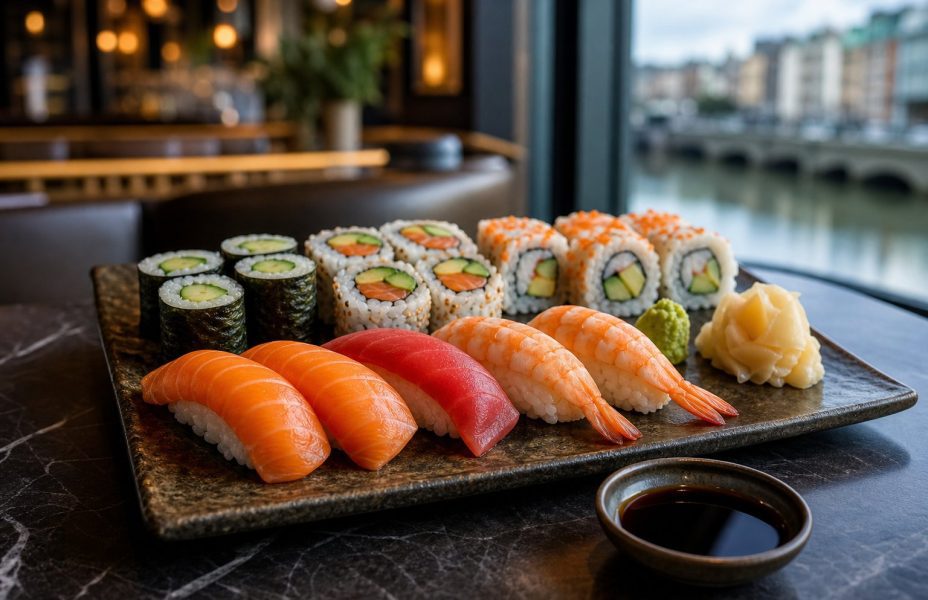
Many people think sushi is a purely Japanese invention, but this popular dish has a much more complex history than most realize. The earliest form of sushi, called narezushi, originated in Southeast Asia around the 4th century as a method of preserving freshwater fish in the Mekong River basin of modern-day Laos, Cambodia, and Thailand. This ancient preservation technique eventually spread to China and later to Japan, where it transformed into the sushi we know today.
What started as a simple way to keep fish fresh without refrigeration has become one of the world’s most beloved cuisines. The journey from fermented fish preservation to delicate raw fish artistry spans over 1,500 years and crosses multiple continents. We’ll explore how this dish evolved from its humble Southeast Asian roots, developed its distinct Japanese character, and eventually conquered dining tables worldwide.
Understanding sushi’s true origins reveals fascinating stories about cultural exchange, culinary innovation, and how local ingredients shaped regional variations. From the birth of hand-pressed nigirizushi in 1800s Tokyo to the modern conveyor belt restaurants that made sushi accessible to millions, this dish continues to adapt while honoring its ancient preservation roots.
Key Takeaways
- Sushi began as a fish preservation method in Southeast Asia before spreading to Japan through cultural exchange
- Japanese chefs transformed the original fermented dish into the fresh, vinegared rice and fish combinations we recognize today
- Modern sushi has adapted globally while maintaining its core techniques, becoming one of the world’s most popular cuisines
Early Origins of Sushi
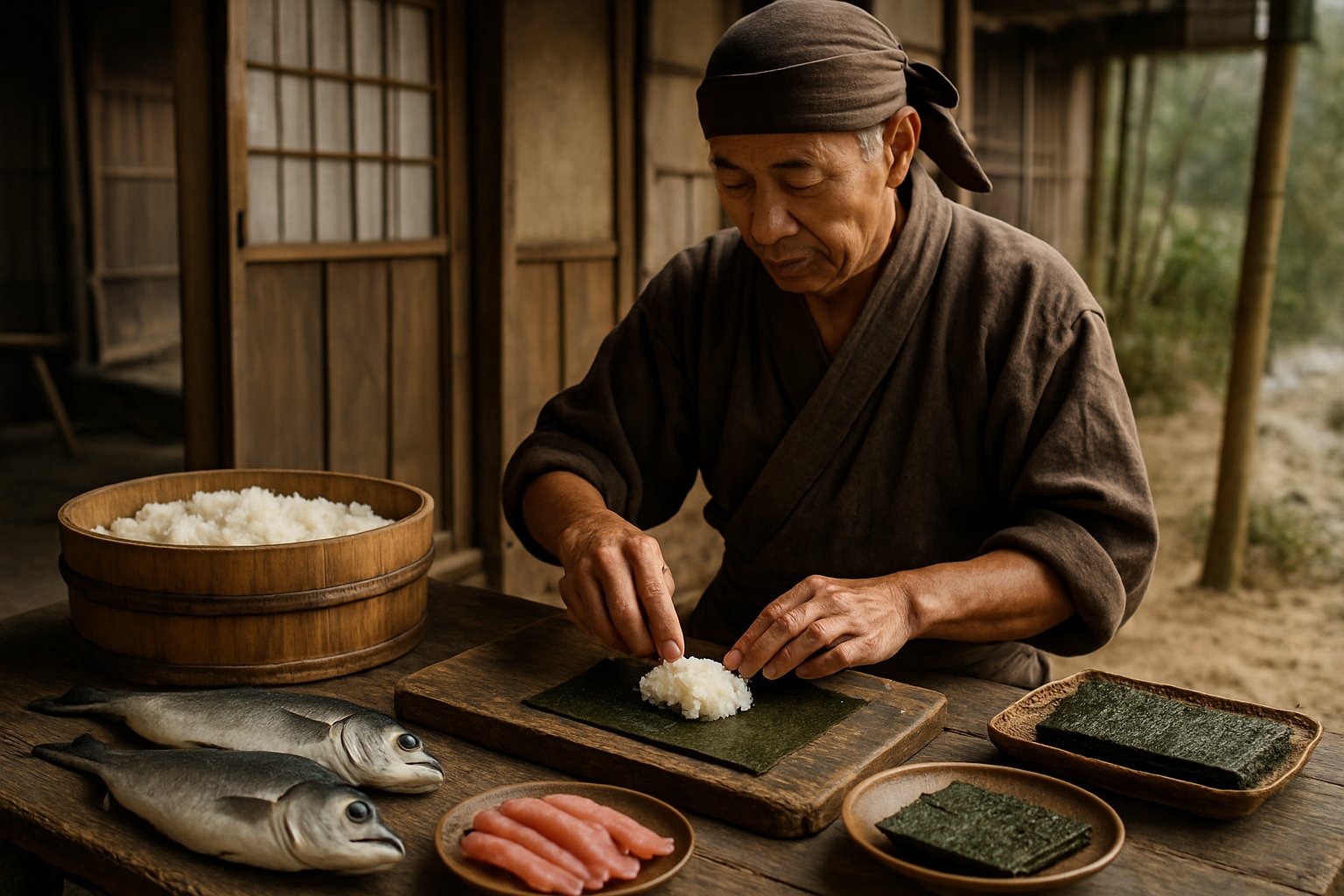
The story of sushi begins not in Japan, but in the river basins of Southeast Asia during the 4th century, where communities developed fermentation techniques to preserve freshwater fish using salt and rice. This ancient preservation method, known as narezushi, eventually traveled to Japan during the Yayoi period, transforming from a simple food storage solution into the foundation of modern Japanese cuisine.
Southeast Asian Preservation Methods
We can trace sushi’s earliest roots to Southeast Asia around the 4th century, specifically in the Mekong and Irrawaddy river basins. These regions encompass modern-day Laos, Cambodia, Thailand, and Myanmar.
The technique emerged as a practical solution for preserving freshwater fish in tropical climates. Local communities would gut and clean fish, then pack them with salt and cooked rice.
This method allowed fish to remain edible for extended periods without refrigeration. The process relied on natural fermentation that occurred when beneficial bacteria converted sugars in the rice into lactic acid.
Key characteristics of early preservation:
- Used freshwater fish from local rivers
- Required cooked rice as the fermentation medium
- Salt acted as both preservative and flavor enhancer
- The rice was typically discarded after fermentation
The Han Chinese documented this technique around the 4th century CE after migrating south and adopting it from the Baiyue people. They recorded it using the character sa (鮓), meaning pickled fish with salt and rice.
Fermentation and Narezushi
The fermentation process that created narezushi was fundamentally different from modern sushi preparation. We see this ancient technique focused entirely on preservation rather than immediate consumption.
Fish were packed tightly with salt and rice, then weighted down to eliminate air pockets. The fermentation process took several months to complete, during which beneficial bacteria broke down the rice starches.
The fermentation timeline:
- Month 1-2: Initial salt curing and bacterial growth
- Month 3-6: Active fermentation and acid development
- Month 6+: Full preservation achieved
The resulting product had a strong, cheese-like flavor and firm texture. The fermented rice formed a protective barrier around the fish, creating an anaerobic environment that prevented harmful bacteria growth.
This lacto-fermentation process produced lactic acid, which lowered the pH and created conditions hostile to dangerous microorganisms. The rice itself became inedible and sour, serving purely as a preservation medium.
Communities would prepare large batches during peak fishing seasons, ensuring protein availability throughout the year.
Spread Into Japan
Narezushi arrived in Japan during the Yayoi period (300 BCE – 300 CE) alongside the introduction of wet-field rice cultivation. This timing was crucial, as rice farming provided the necessary ingredient for fermentation.
The Japanese adapted the technique to their local fish varieties and cultural preferences. By 718 CE, the Yōrō Code included characters for sushi (鮨 and 鮓) as tribute items to the imperial court.
Japanese adaptations included:
- Using local freshwater and coastal fish species
- Developing regional variations based on available ingredients
- Integrating the technique with existing food preservation methods
- Creating formal documentation and recipes
We find that Japan’s island geography and abundant fish populations made this preservation method particularly valuable. Coastal communities could preserve both freshwater and saltwater fish using the same basic technique.
The method spread throughout Japan’s main islands, with each region developing slight variations based on local fish species and rice varieties. This regional diversity laid the groundwork for the many sushi styles that would emerge in later centuries.
Evolution of Sushi in Japan

When sushi arrived in Japan, it underwent dramatic changes that transformed it from a simple preservation method into the refined cuisine we know today. The Japanese developed faster fermentation techniques, introduced vinegar as a key ingredient, and created the hand-pressed style that became synonymous with Japanese culture.
Rise of Seisei-Zushi and Haya-Zushi
During the Muromachi period (1336-1573), Japanese chefs invented namanare or namanari, which means “partially fermented.” This innovation marked a turning point in sushi’s evolution.
The fermentation period became much shorter than the original narezushi. For the first time, people ate both the fish and the rice together instead of throwing away the fermented rice.
Japanese cooks began using sake and sake lees to speed up fermentation. This made sushi more accessible and practical for daily consumption.
The Edo period (1603-1867) brought the creation of haya-zushi, meaning “fast sushi.” This revolutionary approach eliminated fermentation entirely by mixing vinegar directly with rice.
Vinegar gave the rice its characteristic sour taste without waiting for natural fermentation. This innovation transformed sushi from a preserved food into true fast food for busy Edo residents.
Transition to Edomae-Style Sushi
Modern nigirizushi emerged in Edo (contemporary Tokyo) during the 1820s and 1830s. Chef Hanaya Yohei is credited with perfecting this technique at his Ryōgoku shop in 1824.
Early nigirizushi looked quite different from today’s version. The rice portions were three times larger than modern sushi. Chefs used half the amount of vinegar we use today.
A special red vinegar called aka-su was made from fermented sake lees. This gave the rice a distinctive flavor and color that set it apart from earlier styles.
The seafood preparation varied widely. Chefs often marinated, cooked, or cured the fish rather than serving it completely raw as we commonly see today.
Nori and Rice Innovations
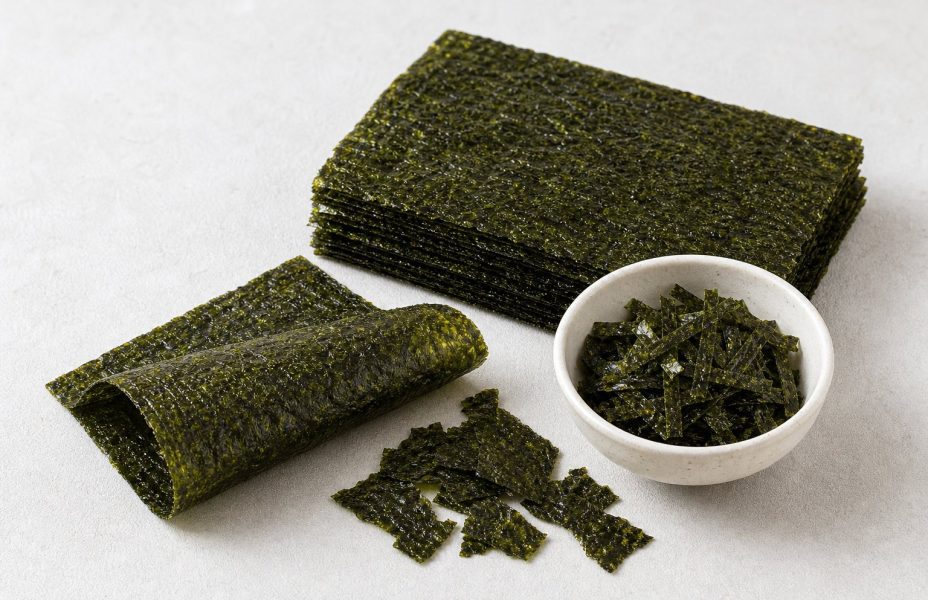
The invention of sheet-form nori seaweed around 1750 revolutionized sushi making. This development made makizushi or rolled sushi possible for the first time.
The term makizushi first appeared in 1749, though early versions used bamboo mats to roll seafood without nori. Modern rolled sushi with nori sheets emerged in 1776.
Early makizushi recipes called for spreading rice on asakusa-nori sheets, adding ingredients like sea bream and shiitake mushrooms, then rolling everything tightly. This technique created the foundation for countless regional variations.
Rice preparation also evolved significantly during this period. Cooks learned to balance vinegar, salt, and eventually sugar to create the perfect sushi rice that complemented rather than overwhelmed the fish flavors.
The Birth of Nigirizushi
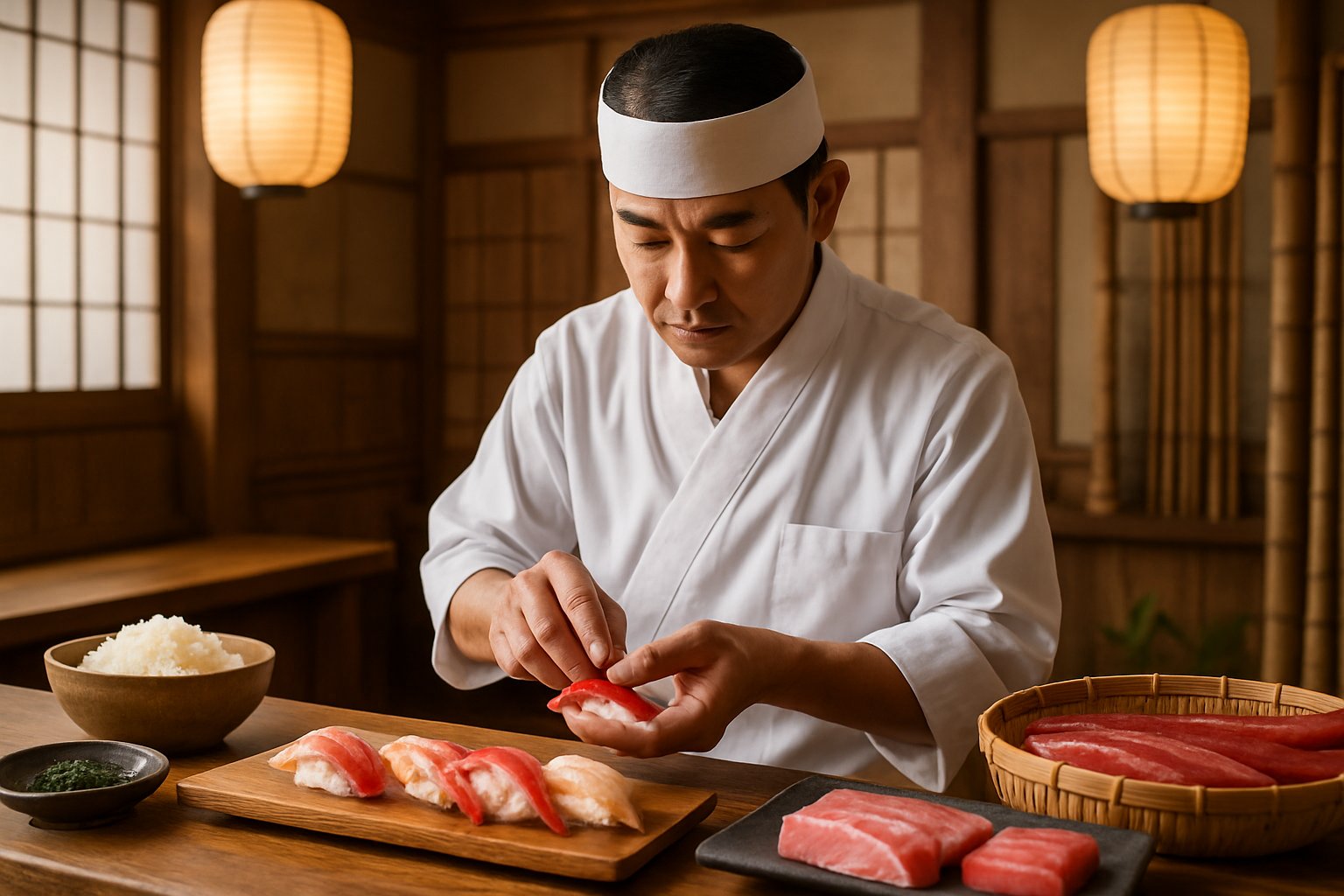
Nigiri sushi originated in Edo during the early 1800s as a fast alternative to fermented sushi. A sushi chef named Hanaya Yohei revolutionized the craft by developing hand-pressed techniques, while tuna became a defining ingredient of this new style.
Hanaya Yohei and Sushi Shops
Hanaya Yohei is widely credited as the inventor of Edomae-zushi. Born in Fukui prefecture in 1799, he arrived in Edo in 1818 with big plans for changing how people ate sushi.
Yohei wanted to serve sushi without the long wait times that fermented sushi required. The old style called narezushi took months to prepare through fermentation.
He developed the nigiri-zushi method around 1824. This new approach let various seafood flavors shine alongside freshly cooked and vinegared rice.
Yohei first sold his sushi from a box he carried on his back. As his business grew, he moved to a stand and then opened a restaurant called Yohei Zushi in the Ryogoku area. His restaurant stayed open until 1932, proving the lasting appeal of his innovation.
Hand-Pressed Sushi Techniques

The word “nigiri” literally means “hand-formed” or “gripped”. This name describes exactly how we make this type of sushi today.
The technique involves placing sliced seafood directly on top of vinegared rice balls. The chef then hand-molds and squeezes them together at once. This creates the classic nigiri shape we know today.
This method appeared as “hayazushi” or fast sushi during the mid-Edo period. It allowed freshly caught fish from local markets to be eaten right away.
The hand-pressing technique was perfect for busy Edo workers. They could order whatever seafood they wanted and eat it quickly, like fast food. This made nigiri much more practical than the slow fermentation methods used before.
The Role of Tuna in Sushi
Tuna became one of the most important fish in the development of nigirizushi. During the Edo period, Tokyo Bay provided fresh tuna that sushi chefs could use immediately.
The fish came directly from Edo Bay, which is why early nigiri was called “edomae sushi”. “Edo” referred to the old name for Tokyo, and “mae” meant “in front of.”
Tuna worked perfectly with the new hand-pressed technique. Its firm texture held well on rice, and its rich flavor paired beautifully with vinegared rice. The fish didn’t need long preparation times like fermented sushi required.
Different cuts of tuna became popular as sushi chefs learned to work with the fish. The belly, back, and other parts each offered unique textures and flavors that customers loved.
Regional and Cultural Variations in Japan
Different regions across Japan developed their own unique approaches to sushi preparation and presentation. Regional sushi dishes are deeply rooted in their regions, with makizushi becoming central to seasonal celebrations and tempura adding innovative textures to traditional preparations.
Makizushi and Ehomaki Traditions
Makizushi represents one of Japan’s most distinctive regional sushi variations. We see this rolled sushi form wrapped in nori seaweed, creating portable meals that differ significantly across prefectures.
The Kansai region developed ehomaki, thick sushi rolls eaten during Setsubun festival. These rolls contain seven ingredients for good luck. People eat them whole while facing the year’s lucky direction.
Traditional ehomaki ingredients include:
- Kampyo (dried gourd strips)
- Cucumber
- Shiitake mushrooms
- Tamago (sweet egg)
- Eel
- Sakura denbu (pink fish flakes)
- Kanpyo
Osaka perfected the futomaki style with colorful, thick rolls. Tokyo developed hosomaki, featuring single ingredients in thin rolls. Each region’s makizushi reflects local tastes and available ingredients.
Innovation with Tempura and Other Ingredients
Regional innovation brought unexpected ingredients into sushi preparation. Tempura integration created entirely new sushi categories that we now consider traditional.
Edo period chefs began incorporating tempura shrimp into rolls. This created a contrast between crispy, warm tempura and cool, vinegared rice. The technique spread throughout Japan’s coastal regions.
Modern tempura sushi variations include:
- Ebi tempura rolls
- Soft shell crab tempura
- Vegetable tempura nigiri
- Tempura flakes as toppings
Different prefectures added their specialties. Hokkaido introduced sea urchin and crab. Kyushu regions featured local fish varieties. These innovations maintained sushi’s core principles while embracing local ingredients and cooking methods.
The Global Spread of Sushi
Sushi’s international journey began in 1960s America, where innovative adaptations like the California roll made raw fish more appealing to Western palates. The introduction of conveyor belt systems later revolutionized how we experience and consume this traditional Japanese cuisine worldwide.
Introduction to America and Los Angeles
Sushi first arrived in America during the 1960s as Japanese restaurants began opening across the country. Los Angeles became the epicenter of this culinary revolution, particularly in the Little Tokyo district.
The 1964 Tokyo Olympics sparked global interest in Japanese culture, creating the perfect conditions for sushi’s American debut. We saw the establishment of Kawafuku in 1966, one of the first authentic sushi bars in Little Tokyo, Los Angeles.
This restaurant introduced the classic counter-style service that became standard in American sushi establishments. The setup allowed diners to watch chefs prepare their food, turning dining into an interactive experience.
Glass display cases showcased fresh seafood while chefs worked behind the counter. This presentation style helped bridge cultural gaps by making the preparation process transparent and engaging.
By the 1970s, establishments like Eikyu began adapting their menus specifically for Western tastes. These early pioneers laid the groundwork for sushi’s explosive growth across America.
California Roll and American Influences
The California roll represents our most significant adaptation of traditional sushi for American palates. Sushi chef Ichiro Mashita created this innovation in Los Angeles during the late 1960s.
This inside-out roll addressed two major barriers Americans faced with traditional sushi:
- Hidden seaweed: Nori was wrapped inside rather than outside
- Familiar ingredients: Crab and avocado replaced raw fish
- Mild flavors: Less intimidating than traditional options
The California roll’s success was immediate and transformative. It significantly lowered the psychological barrier for Americans trying sushi, making the cuisine approachable for first-time diners.
This innovation sparked creativity in American sushi kitchens. We began seeing fusion rolls like the Dragon roll with eel and avocado, and eventually regional variations across different states.
The roll’s popularity spread beyond California to become a gateway food nationwide. It proved that adapting traditional recipes for local tastes could preserve the essence while expanding accessibility.
Conveyor Belt Sushi Phenomenon
Conveyor belt sushi, also known as sushi train or kaiten sushi, revolutionized how we consume sushi globally. This system originated in Japan but found particular success in international markets.
The concept places small plates of sushi on a moving conveyor belt that travels past diners seated at a counter. Customers simply pick plates as they pass by, with different colored plates indicating different prices.
This system offered several advantages for global expansion:
| Benefit | Impact |
|---|---|
| Lower costs | Made sushi affordable for everyday dining |
| Faster service | Eliminated wait times for food preparation |
| Visual appeal | Diners could see options before choosing |
| Reduced barriers | No need to read menus or speak Japanese |
Conveyor belt sushi became particularly popular in Australia, the UK, and parts of Asia. The format made sushi accessible to families and casual diners who might find traditional sushi bars intimidating.
We see this model continuing to evolve with modern technology, including touch-screen ordering and high-speed delivery tracks that bring specific orders directly to tables.
Modern Sushi: Adaptation and Influence Worldwide
Sushi transformed from Japan’s traditional preservation method into a global culinary phenomenon through creative adaptations and cultural exchange. American innovations like the California roll pioneered new ingredients, while diverse international variations now reflect local tastes worldwide.
Expansion Beyond Japan
Sushi’s global spread began in the 1960s when Japanese immigrants opened restaurants in major American cities. Early establishments faced challenges convincing Western diners to eat raw seafood.
The breakthrough came with fusion creations designed for American palates. Chefs developed the California roll using cooked crab, avocado, and cucumber with rice on the outside to hide the seaweed.
This adaptation strategy proved successful across different cultures. We see unique regional variations emerging globally:
- Brazil: Incorporated tropical fruits and cream cheese
- Mexico: Added spicy elements and local chilies
- Europe: Featured local fish varieties and vegetarian options
Cultural exchange through sushi demonstrates how traditional foods adapt to survive in new markets. Each country modified ingredients and techniques to match local preferences while maintaining sushi’s core identity.
Modern transportation and refrigeration made fresh seafood available worldwide. This technological advancement allowed authentic sushi to flourish outside coastal Japan.
Contemporary Sushi Styles
Today’s sushi landscape includes both traditional and innovative approaches. We observe three main categories defining modern sushi culture.
Traditional Edomae maintains strict Japanese techniques and seasonal ingredients. Master chefs still follow centuries-old preparation methods and sourcing standards.
Fusion styles blend international ingredients with sushi techniques. Popular examples include tempura rolls, spicy mayo variations, and cooked protein options that appeal to broader audiences.
Contemporary innovations push creative boundaries further. Modern sushi trends include plant-based alternatives, molecular gastronomy techniques, and Instagram-worthy presentations.
| Style Type | Key Features | Popular Examples |
|---|---|---|
| Traditional | Raw fish, minimal ingredients | Nigiri, sashimi |
| Fusion | Cooked elements, Western ingredients | California roll, Philadelphia roll |
| Contemporary | Creative presentations, alternative proteins | Sushi burritos, vegan options |
America particularly influenced sushi’s evolution by introducing inside-out rolls and cooked seafood options. These modifications made sushi accessible to diners uncomfortable with raw fish or seaweed textures.
We now see sushi’s global journey continuing through food trucks, fast-casual chains, and high-end omakase experiences that cater to diverse preferences and budgets.
Frequently Asked Questions
Sushi’s journey from Southeast Asian fish preservation to modern Japanese cuisine spans over 1,000 years. The dish evolved through multiple forms before reaching today’s popular varieties served worldwide.
What is the history of sushi and how did it evolve?
Sushi began as narezushi in Southeast Asia around the 4th century as a way to preserve fish. Fish was packed with salt and rice, then left to ferment for months.
The technique spread to Japan during the Yayoi period. Japanese cooks gradually shortened the fermentation time and began eating the rice along with the fish.
During the Muromachi period (1336-1573), people invented namanare, which was only partially fermented. This marked the first time rice and fish were eaten together as a complete dish.
The Edo period (1603-1867) brought haya-zushi or “fast sushi.” Cooks replaced fermentation with rice vinegar, creating the sour taste we know today.
Modern nigiri sushi was invented around 1824 by Hanaya Yohei in Edo (now Tokyo). He placed fresh fish on hand-pressed vinegared rice, creating today’s most popular sushi style.
When did sushi first become a popular dish outside of Japan?
Sushi was being served in the United States by the early 1900s following Japanese immigration after the Meiji Restoration. The first sushi shop in America opened in 1906 in Los Angeles’s Little Tokyo.
American high society embraced Japanese food around 1905. Sushi appeared at social gatherings across the country, including in Minneapolis, St. Louis, and Bismarck.
Anti-Japanese sentiment starting with the 1907 Gentlemen’s Agreement caused sushi’s popularity to decline. World War II internment orders forced most Japanese restaurants to close.
The Kawafuku restaurant in Little Tokyo became known as the first true sushi bar in America. It featured trained sushi chefs rather than mass-produced sushi.
Can you describe the different traditional types of sushi?
Narezushi was the original fermented fish and rice dish. Fish was packed with salt and rice for months until it developed a strong, cheese-like flavor.
Namanare appeared during the Muromachi period as partially fermented sushi. The fermentation time was shorter, and people ate both the fish and rice together.
Haya-zushi eliminated fermentation entirely by using rice vinegar. This “fast sushi” included chirashizushi (scattered sushi), inarizushi (rice in seasoned tofu pockets), and makizushi (rolled sushi).
Nigiri consists of hand-pressed vinegared rice topped with fish. This became the most recognizable sushi style worldwide.
Makizushi or norimaki appeared around 1750 when sheet nori seaweed was invented. Rice and ingredients are rolled inside seaweed sheets.
What are some key facts about sushi that everyone should know?
The word “sushi” refers to the vinegared rice, not the fish. Raw fish by itself is called sashimi.
Traditional sushi rice was three times larger than today’s portions. It used less vinegar and more salt than modern versions.
Salmon sushi is relatively new to Japan. Raw salmon only became popular in the late 1980s when Norwegian companies introduced parasite-free farmed salmon.
Conveyor belt sushi restaurants started in 1958 when Yoshiaki Shiraishi opened Genroku Zushi in Higashi-Osaka. This innovation made sushi more affordable and accessible.
The red vinegar used in traditional sushi was made from fermented sake lees. This gave the rice a different color and flavor than modern white vinegar.
How does the concept of narezushi differ from modern sushi?
Narezushi was purely a preservation method, not a fresh food. Fish could be stored for months or even years without spoiling.
The fermentation process took 6 months to 4 years. Lactic acid bacteria broke down the rice and created a strong, pungent flavor.
People originally threw away the fermented rice and ate only the preserved fish. The rice served only as a preservation medium.
Funazushi near Lake Biwa represents one of the few remaining narezushi traditions. The Kitamura family has prepared this dish since 1619 using wild goldfish aged up to four years.
Modern sushi focuses on fresh ingredients and immediate consumption. The rice is seasoned with vinegar but not fermented.
What are the typical fish used in traditional sushi?
Traditional Edo-period sushi used local fish from Tokyo Bay. Kohada (gizzard shad), anago (sea eel), and maguro (tuna) were common choices.
Many fish were cured, marinated, or cooked rather than served completely raw. This helped preserve them before refrigeration existed.
Sea bream, abalone, and various shellfish appeared in early sushi recipes. These were often prepared with salt or vinegar treatments.
Freshwater fish like the nigorobuna used in funazushi came from specific regions. This wild goldfish subspecies is found only in Lake Biwa.
Modern sushi expanded to include fish from around the world. Salmon, yellowtail, and other species became popular as transportation improved.