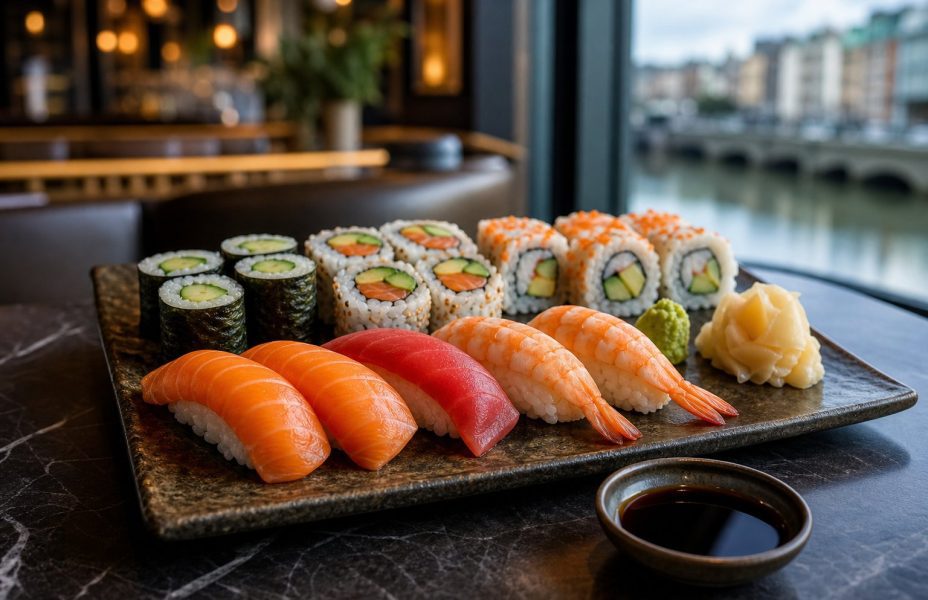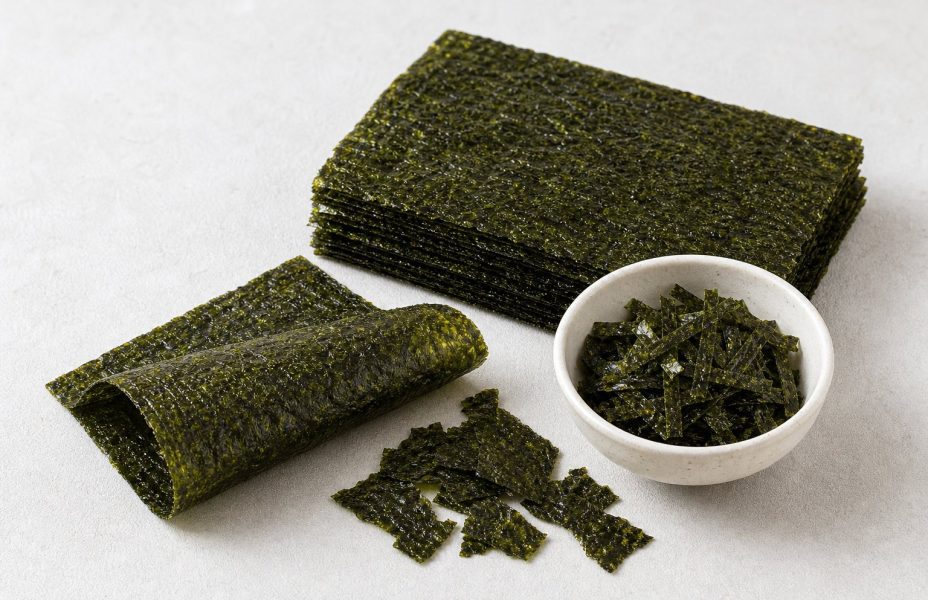
Yes, you can eat sushi nori straight from the packet. Those dark green sheets wrapped around your maki rolls are dried seaweed, and almost every packet sold in Irish supermarkets has already been toasted before it reaches the shelf. No cooking, soaking, or extra prep is needed.
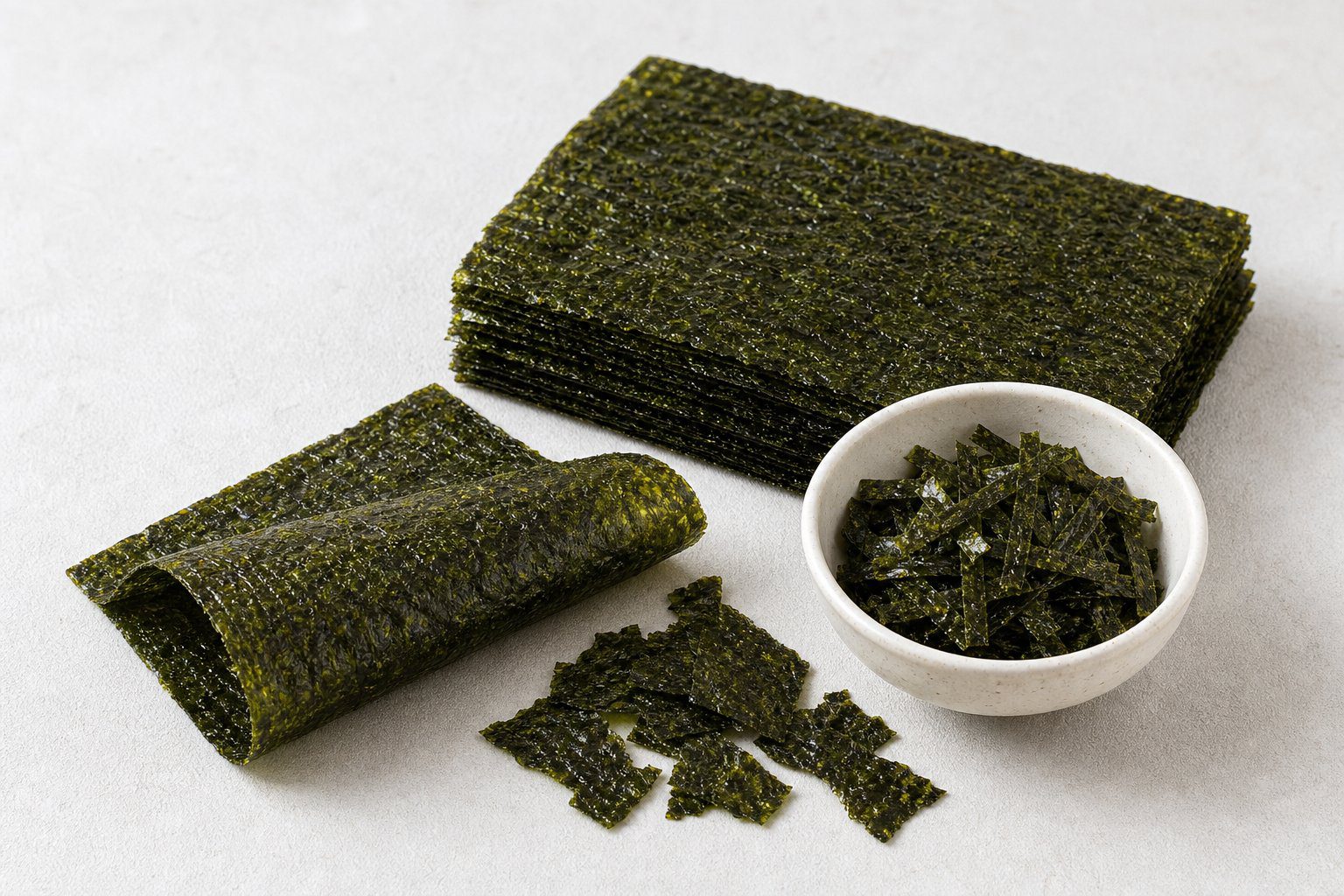
The word “raw” causes most of the confusion here. People associate raw sushi with raw fish, which carries real handling rules. Nori is a different story entirely: it is a sea vegetable that has been harvested, washed, pressed into sheets and dried at low heat, which removes the moisture bacteria need to grow.
A sheet of nori from a sealed packet is one of the safest things on a sushi plate, and the sensible limits relate to iodine and portion size, not to bacteria. That distinction shapes almost every practical decision you will make about buying, storing and eating it.
Key Takeaways
-
Nori sheets are dried and usually toasted, so they are ready to eat with no cooking required.
-
Iodine content is the main reason to keep portions moderate, especially if you have a thyroid condition.
-
Store sheets sealed and dry, and use leftovers in soups, salads or as a rice topping.
What Sushi Nori Is and Why It Is Ready to Eat
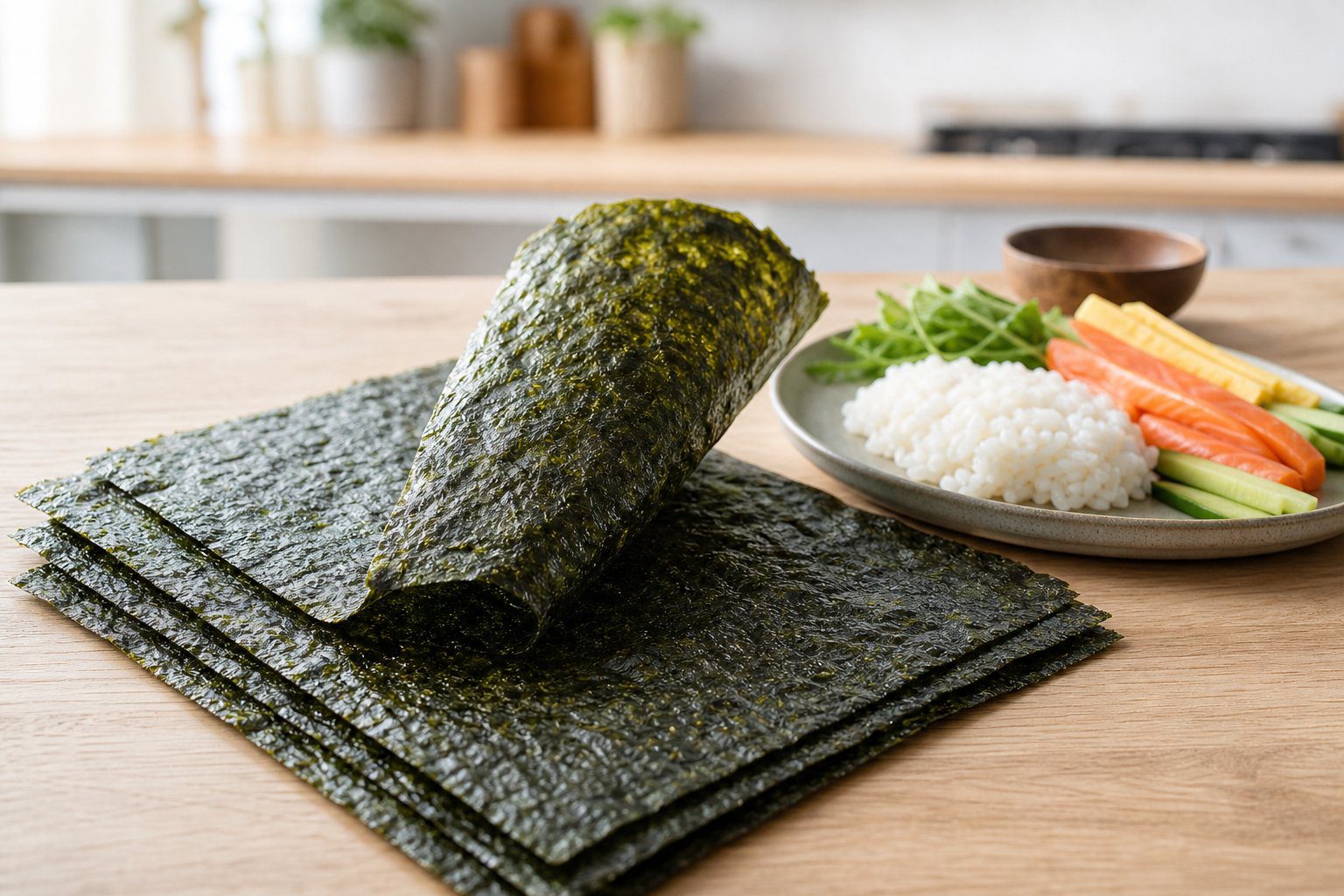
Sushi nori is edible seaweed that has been shredded, pressed into sheets and dried, which makes it shelf-stable and safe to eat with no further preparation. Most packets you buy are toasted, giving them the crisp snap and dark green colour you see on a hand roll.
Is Sushi Nori Actually Raw?
Most nori sold for sushi has been through heat. Sheets labelled yaki-nori are toasted over heat until crisp, and this is the standard product internationally.
Untoasted nori, called hoshi-nori, is dried but never roasted. It is purple-black, chewier and tastes more strongly of the sea. Some producers dry their sheets at low temperature so the product stays a true raw food by raw-diet standards.
Both versions are safe to eat as they come. Toasted nori simply tastes better in a roll.
From Red Algae to Dried Nori Sheets
Nori comes from red algae in the genus Pyropia, formerly classified as Porphyra. Farmers grow it on nets in shallow coastal water, then harvest, wash and shred it.
The shredded slurry is pressed onto frames and dried in a process close to traditional papermaking. Drying pulls out the water, and low-moisture foods do not support bacterial growth. That is why the sheets keep for months in a sealed bag.
What Does High-Quality Nori Taste Like?
Good nori tastes savoury and slightly sweet, with a clean ocean smell. The savoury hit comes from glutamic acid, the same compound behind the umami in soy sauce and miso, and it is part of what makes Japanese dishes so satisfying.
Hold a sheet up to the light. Quality nori is uniformly thin, deep green to near-black, with a glossy sheen on the smooth side. It should snap cleanly when you tear it. Pale, brownish or limp sheets have either aged badly or come from a later harvest, and picking the right sheets for your rolls makes a noticeable difference to the finished result.
Safety Considerations When Eating Nori
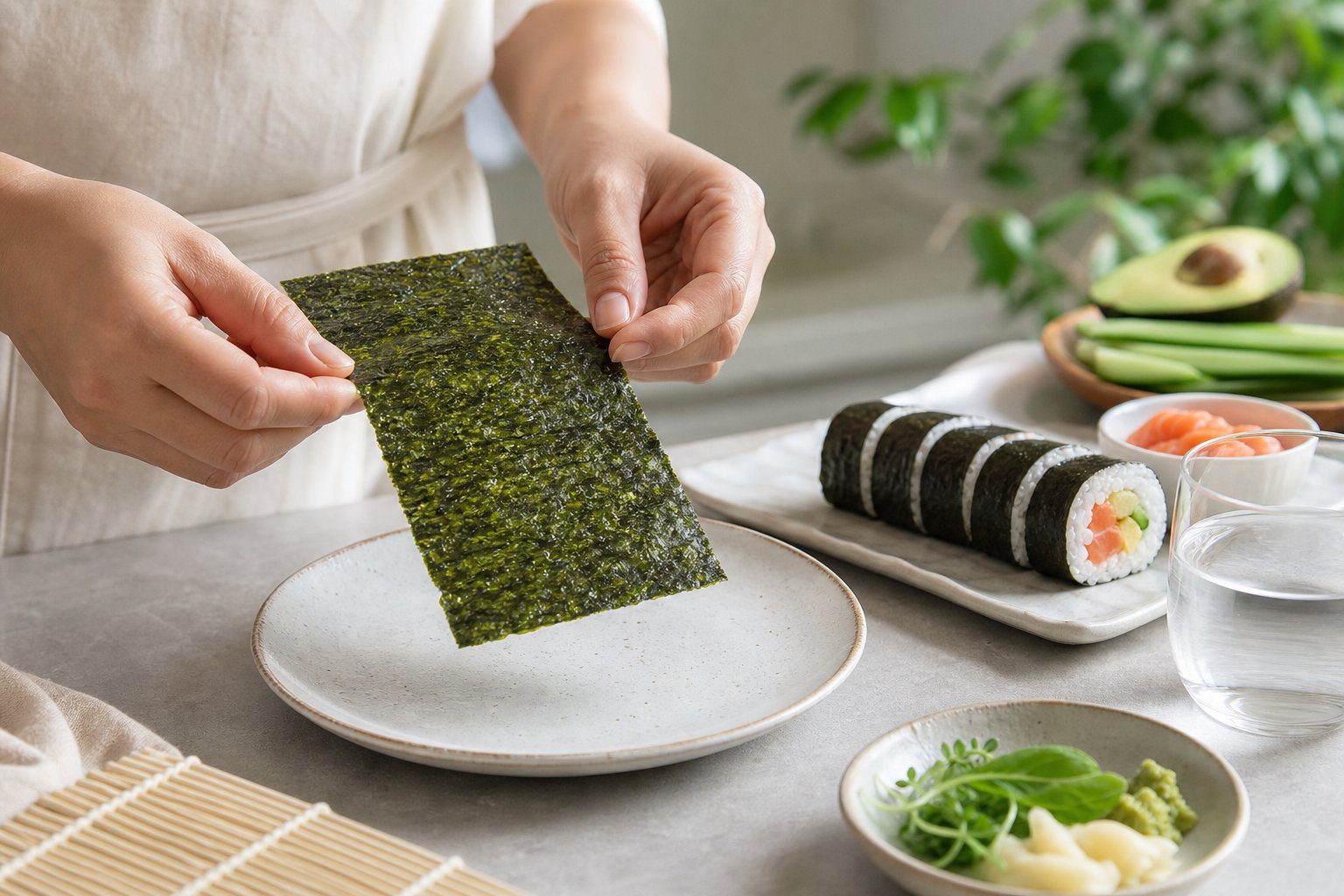
Nori poses minimal risk for most people, and the concerns worth knowing about are iodine load, trace heavy metals and a few specific health conditions. Bacteria and foodborne illness sit very low on that list.
Does Nori Carry a Foodborne Illness Risk?
Dried nori has too little moisture for bacteria to multiply. The sheets are washed during processing and most are heat-toasted, which adds a second layer of protection.
Risk in a sushi meal comes from the other components. Raw fish needs proper freezing and cold-chain handling, and cooked rice left at room temperature is a bigger concern than the wrapper. If you are curious about cooked and raw sushi options, the seaweed stays identical either way.
Iodine, Thyroid Function, and Sensible Portions
Nori is one of the richest natural sources of iodine, and this is the real limiting factor on how much you eat. A single sheet contains far more iodine than most land-grown foods.
Compared with kelp or kombu, nori is relatively low in iodine, so a few sheets a day sit comfortably within safe territory for healthy adults. Very high intake over time can disturb thyroid function and, in sensitive people, trigger or worsen hyperthyroidism.
Eating nori with a few sushi rolls a week will not push you near a problem. Eating packet after packet of snack sheets daily might.
Heavy Metals and How Reputable Sourcing Helps
Seaweed absorbs minerals from the water it grows in, including lead, mercury, arsenic and cadmium. Levels in nori are low, but growing conditions matter.
Buy from established brands that test their harvests and state their growing region. USDA organic certification or equivalent EU organic marks indicate an audited supply chain. Nori from Japanese, Korean or Irish producers with published quality checks is a safer bet than unlabelled bulk sheets.
Who Should Take Extra Care With Nori?
Four groups should be careful:
-
People with thyroid conditions, including hyperthyroidism or Hashimoto’s, should ask their GP about an iodine limit.
-
People taking blood thinners need steady vitamin K intake, and seaweed contributes to it.
-
People with shellfish allergies occasionally react to nori because of trace crustaceans caught in harvesting nets.
-
Children, whose smaller bodies reach iodine limits with much less seaweed.
Nutrition and Digestion: What Nori Adds to a Meal
Nori delivers a dense hit of vitamins and minerals for almost no calories, and its fibre feeds gut bacteria. A single sheet weighs around 3 grams, so the amounts per serving are modest even when the per-100g figures look dramatic.
Which Vitamins and Minerals Does Nori Provide?
Nori carries vitamin A, vitamin C, iron, potassium, calcium and magnesium. It contains roughly 30 to 50 percent protein by dry weight, with all nine essential amino acids.
Its most interesting nutrient is vitamin B12. Nori is one of very few plant foods with a usable form of B12, which makes it a genuine point of interest for vegans building plant-based sushi.
You also get antioxidants and small amounts of omega-3 fatty acids. The catch is portion size: two sheets on a roll contribute useful trace nutrients, not a day’s worth of anything.
Does Nori Support Digestion?
The dietary fibre in nori acts as a prebiotic. Certain gut bacteria, particularly in people who eat seaweed regularly, produce enzymes that break down its unusual sugars.
That fermentation supports a more varied gut microbiome. The fibre also adds bulk, which helps keep things moving and can ease constipation when you drink enough water alongside it.
Can Eating Nori Cause Bloating or Gas?
Large amounts of nori cause bloating and gas in some people. The same fermentable fibres that feed gut bacteria produce gas as a by-product.
Two or three sheets with a meal rarely cause trouble. Working through a full multi-pack of snack sheets in one sitting is where discomfort shows up. If you are new to seaweed, start with a sheet or two and build up over a few weeks.
Choosing, Storing, and Using Nori at Home
Plain sushi nori and seasoned snack nori are different products with different salt levels, and both go soft fast once air gets in. Keeping sheets crisp comes down to an airtight container and a desiccant sachet.
How Do Sushi Nori and Seasoned Nori Differ?
Sushi nori is plain toasted seaweed in full sheets, around 19cm by 21cm. Seasoned nori, or ajitsuke-nori, is brushed with soy sauce, sugar and sometimes sesame oil, then cut into small snack rectangles.
|
Sushi nori |
Seasoned nori |
|
|---|---|---|
|
Sheet size |
Full sheet |
Snack-sized cuts |
|
Added salt |
None |
Yes |
|
Flavour |
Clean, savoury |
Salty, sweet, oily |
|
Best for |
Rolls, onigiri |
Eating on its own |
|
Rolling ability |
Good |
Poor, too oily |
Never use seasoned nori for rolling. The oil stops the seam sealing and the seasoning fights with the vinegared rice.
How Should Nori Sheets Be Stored?
Moisture is the enemy. Once opened, move the sheets into an airtight container with the little silica desiccant packet that came in the bag.
Store in a cool, dark press away from the hob and the kettle. Sealed packets keep for a year or more; opened ones stay crisp for a few weeks if you reseal them properly. The fridge is a poor choice because condensation forms when you take the container out.
How Can You Use Nori Beyond Sushi?
Tear sheets into strips and scatter them over rice, noodles or a bowl of miso soup. Crumbled nori adds savoury depth to salads, stews and stir-fries, and a pinch stirred into a dressing with soy sauce lifts the whole thing.
Cut sheets into squares for nori wraps with rice and avocado. Toast a stale sheet over a low gas flame for five seconds a side and it crisps right back up, a trick worth keeping alongside the other staples in a Japanese pantry. Sea lettuce works similarly in soups, though it has a softer texture.
Sushi Nori Is Generally Safe Straight From the Pack
Eating sushi nori as it comes from the packet is safe for almost everyone. The sheets are dried, usually toasted, and low enough in moisture that bacteria cannot grow, so the seaweed wrapper is rarely the risky part of a sushi meal.
Keep portions sensible because of iodine, buy from producers who test and label their harvests, and check with your GP if you have a thyroid condition or take blood thinners. Store opened packets in an airtight container with the desiccant sachet, and use any softened sheets in soup or crumbled over rice.
Frequently Asked Questions
Can you eat sushi nori straight out of the packet?
Yes. Toasted nori sheets are ready to eat with no cooking, rinsing or soaking, which is why sushi chefs pull them straight from the bag to roll.
Is the nori in sushi cooked or raw?
Most nori sheets are toasted during production, so the wrapper on your roll has been heated. Untoasted hoshi-nori exists and is safe to eat too, but it is less common in supermarkets.
Can you eat nori on its own as a snack?
Nori snacks are widely eaten in Japan and Korea and sold in most Irish supermarkets. Seasoned snack packs contain added salt and oil, so check the label if you are watching sodium.
How much nori is too much if you have thyroid problems?
There is no single safe number, and anyone with thyroid problems should agree a limit with their GP. A few sheets a week alongside meals sits well below the level that disturbs thyroid function in most people.
Is nori safe during pregnancy?
Nori is safe in normal food amounts during pregnancy, and its iron and folate are useful. Keep intake moderate because iodine needs are higher but the upper limit still applies, and avoid concentrated seaweed supplements.
What should you do if nori sheets have gone soft?
Toast soft sheets for about five seconds per side over a low flame or in a dry pan, and they will crisp again. Soft nori is still safe to eat, so crumble any sheets you cannot revive into soup or over rice.