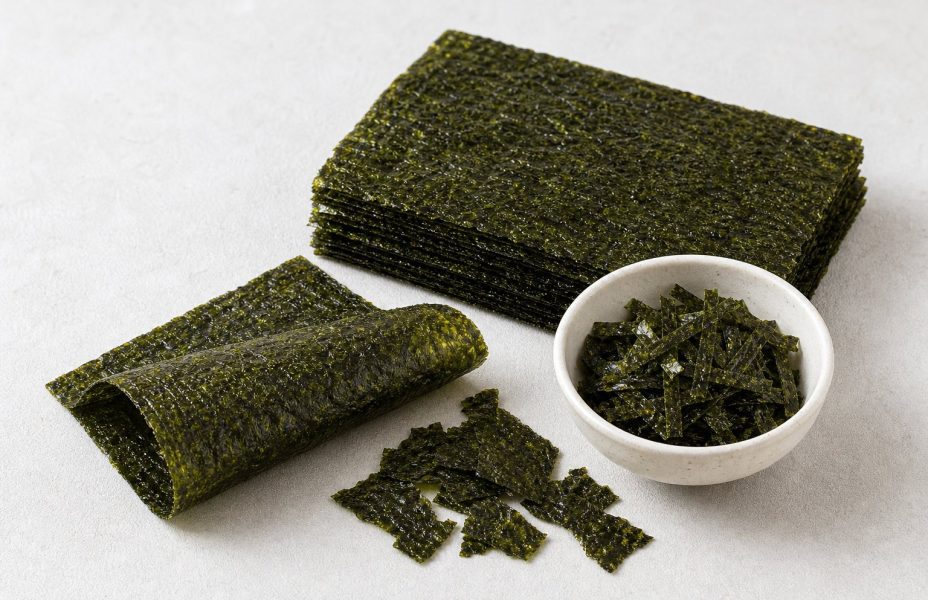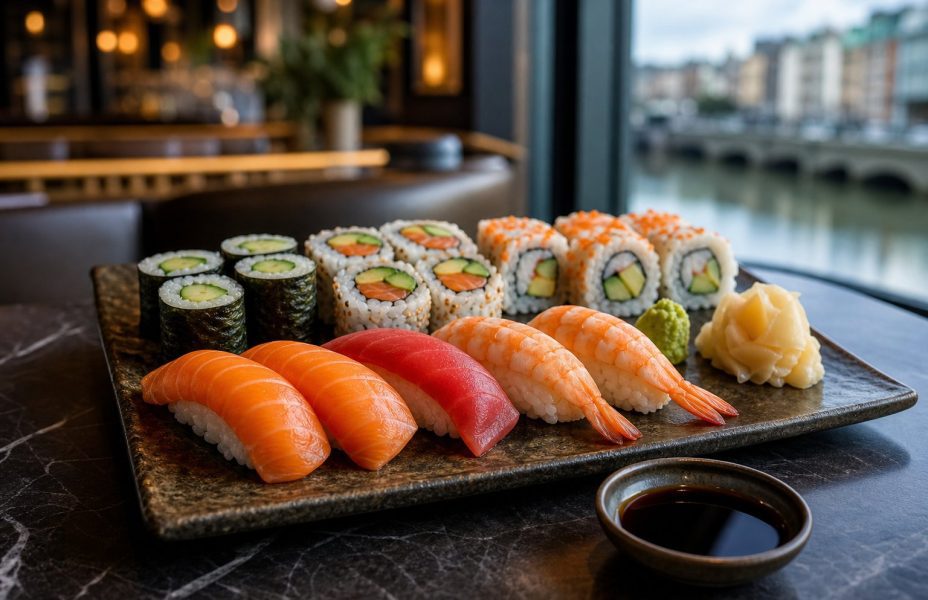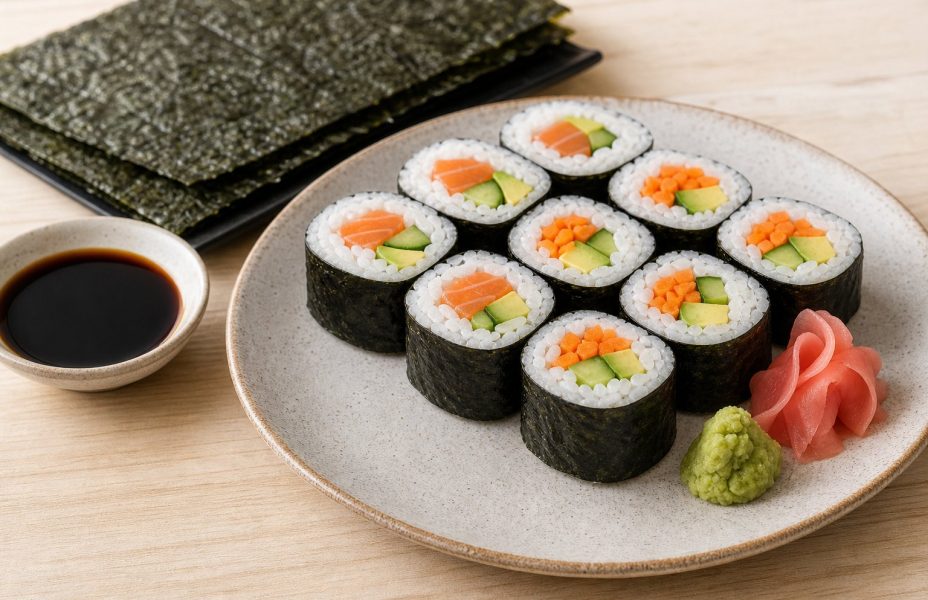
Nori is the thin, dark sheet of dried edible seaweed wrapped around most sushi rolls. It is made from red algae in the genus Pyropia, shredded and dried on racks in a process that looks a lot like papermaking. That single sheet does two jobs at once: it holds the rice and fillings in place, and it adds a savoury, sea-salty depth that plain rice cannot deliver on its own.
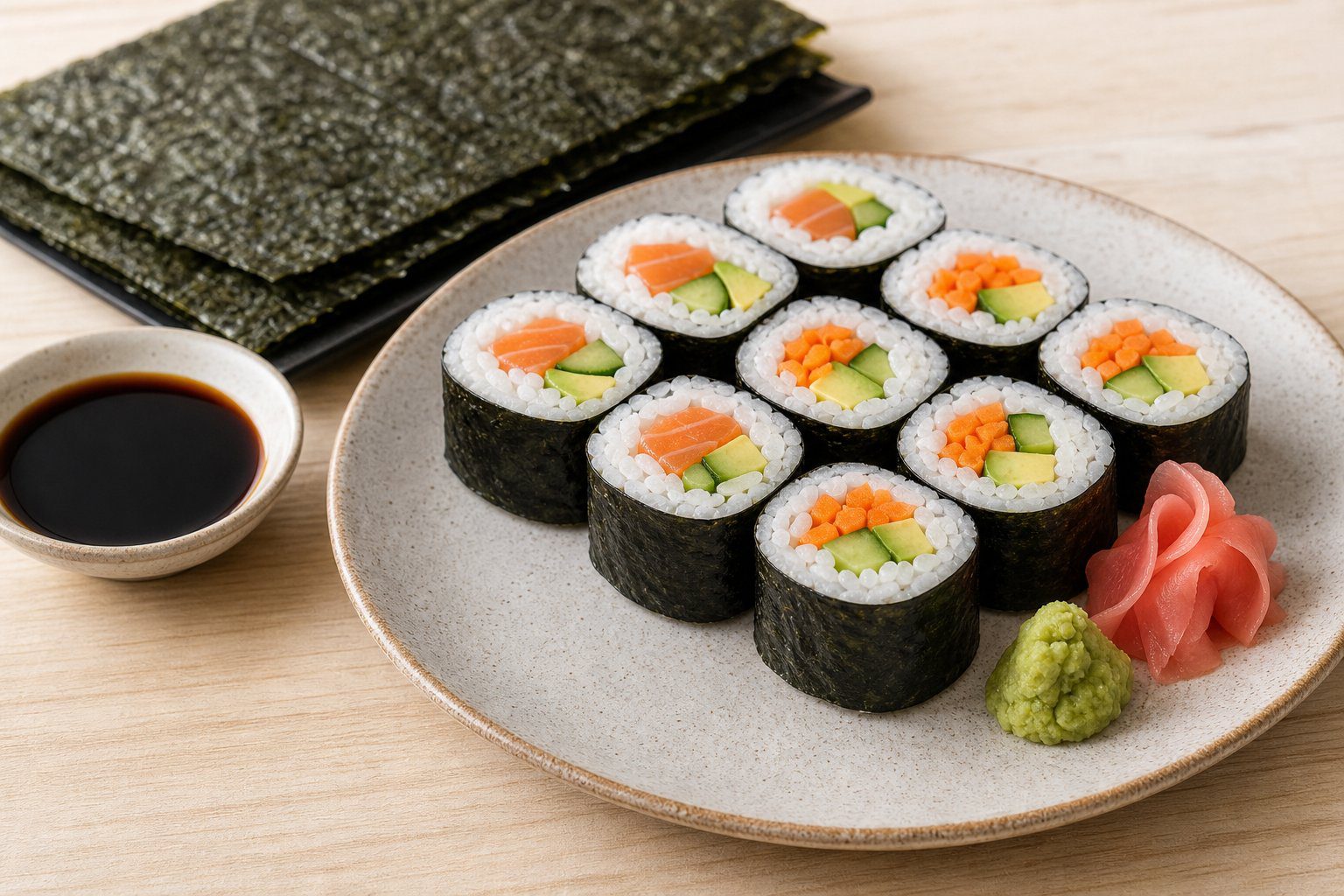
So when someone asks what is nori sushi, they are describing sushi that uses this seaweed sheet as a wrapper, whether that is a maki roll, a cone-shaped hand roll or a rice ball. The seaweed itself is not a modern invention. Nori has been eaten in Japan since the 700s, and was once used as currency and as offerings at shrines, according to Wikipedia’s history of nori.
Pick a sheet that is almost black with a glossy sheen, keep it airtight and dry, and you solve most of the problems home cooks have with soggy, chewy or tasteless sushi.
Key Takeaways
-
Nori is dried red algae pressed into paper-thin sheets, and it is the standard wrapper for sushi rolls and rice balls.
-
Roasted (yaki-nori) sheets suit sushi, while seasoned sheets and green aonori flakes serve different jobs.
-
Dark colour, crisp snap and airtight storage are the practical markers of good nori.
The Dark Sheet Around Sushi, Explained
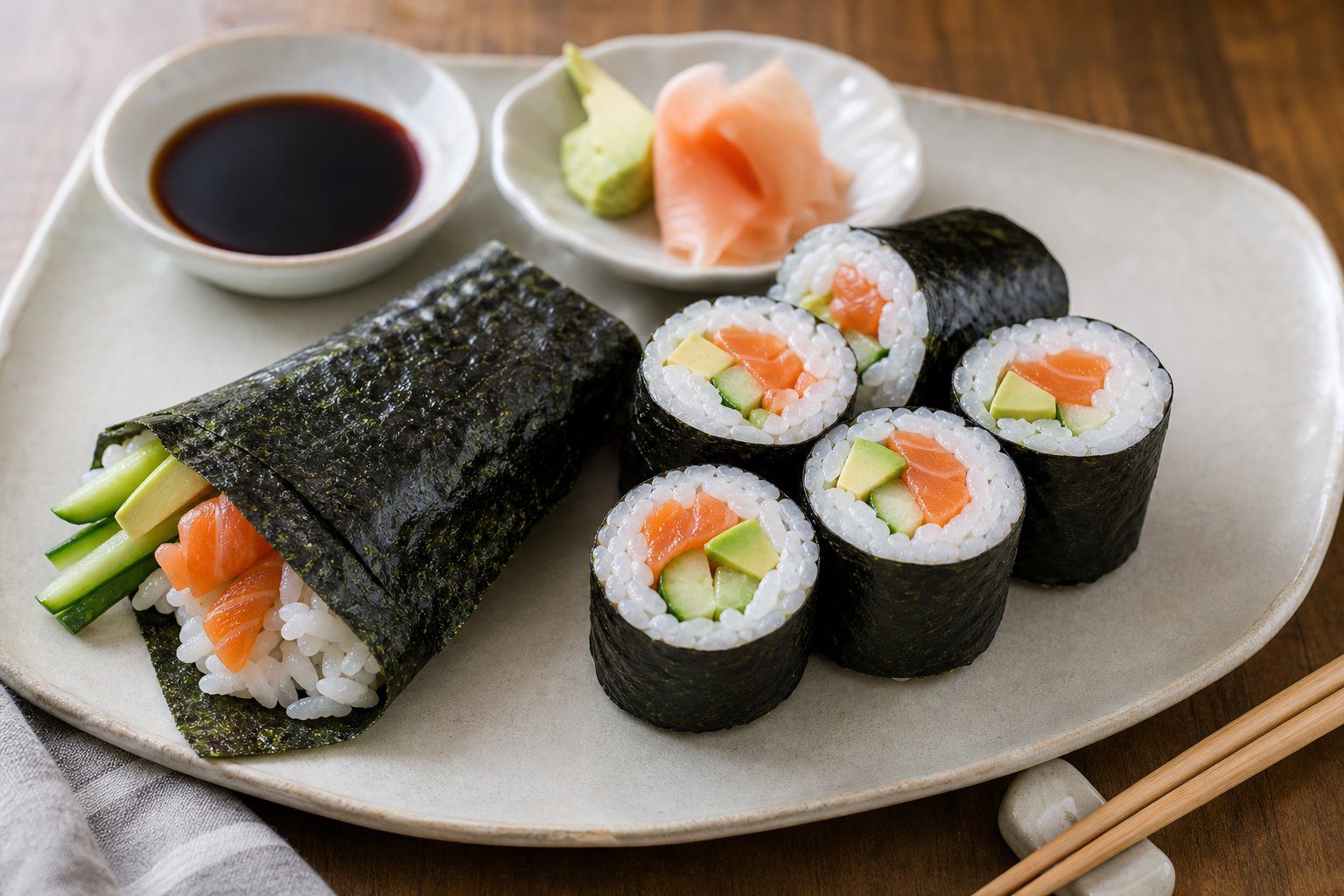
Nori is one specific family of edible seaweed, processed into flat sheets roughly 18 cm x 20 cm and weighing about 3 grams each. Its flavour sits somewhere between toasted sesame and sea air, with a strong umami note that makes it a staple of Japanese cooking.
Is Nori the Same as Seaweed?
Nori is a type of seaweed, but not every seaweed is nori. The word covers dried sheets made from Pyropia species such as P. yezoensis and P. tenera, once grouped under the name Porphyra.
Kombu, wakame and hijiki are different seaweeds with different uses. If you want the sheet that wraps a roll, nori is the only one of the group that works. Our guide to choosing the perfect seaweed for sushi rolls goes deeper on the distinctions.
What Is Nori Made From?
Nori starts life as reddish-purple algae grown on nets suspended near the sea surface. Farming is fast: roughly 45 days from seeding to first harvest, with repeat harvests about every ten days.
The harvested algae is washed, shredded into a slurry, spread thin and rack-dried. Heat during toasting shifts the pigments, which is why a red algae ends up looking dark green or near black.
What Does Nori Taste and Feel Like?
Good nori is crisp enough to snap and dissolves quickly on the tongue. The taste is mildly salty with a natural sweetness underneath, and the umami hit grows stronger as you chew.
Poor-quality sheets taste flat and papery, and they turn rubbery instead of melting. Wild-harvested iwanori (rock nori) has a rougher texture and a more assertive flavour.
Nori Types and How They Differ
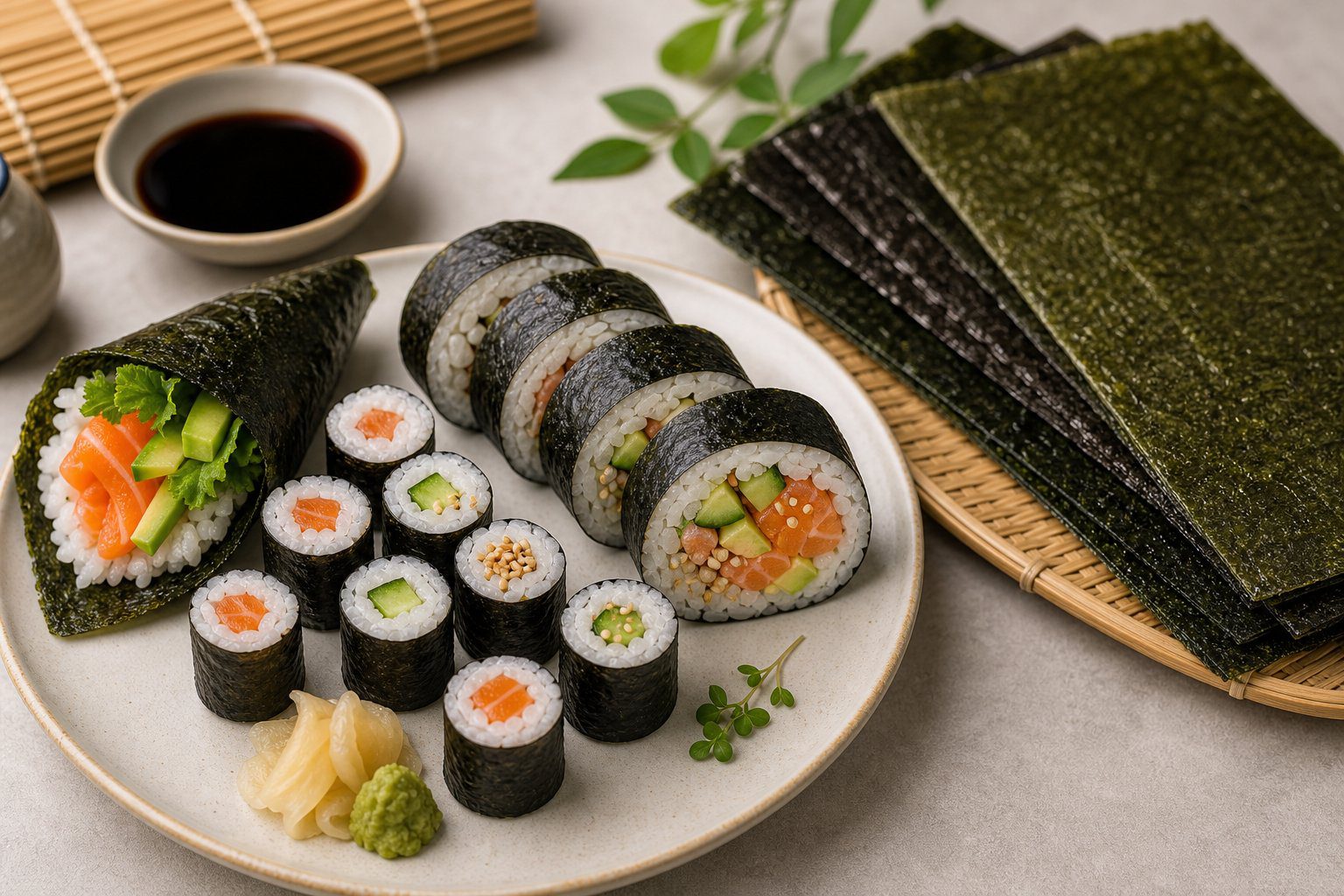
Four products share the nori name in most shops: plain roasted sheets, sweet-savoury seasoned sheets, Korean gim brushed with oil and salt, and green aonori flakes. Only the first is a safe default for sushi.
|
Yaki-nori |
Ajitsuke-nori |
Korean gim |
Aonori |
|
|---|---|---|---|---|
|
Form |
Full sheet |
Small sheets |
Small sheets |
Flakes/powder |
|
Added flavour |
None |
Soy sauce, mirin, sugar |
Sesame oil, salt |
None |
|
Best for sushi rolls |
Yes |
No |
No |
No |
|
Main use |
Maki, temaki, onigiri |
Snacking, rice |
Snacking, rice rolls |
Sprinkling |
What Is Yaki-Nori?
Yaki-nori is plain nori that has been toasted before packing, and it is what you want for sushi. Toasting drives off moisture, firms up the sheet and deepens the flavour.
Most sheets sold in Irish Asian grocers and supermarkets are already yaki-nori, so no extra step is needed.
When Should You Choose Seasoned Nori?
Choose ajitsuke-nori for snacking and for topping plain rice, not for rolling. The coating of soy sauce, sugar, sake, mirin and seasonings makes the sheet sweeter and more fragile.
Wrap sushi in seasoned nori and the flavour competes with the vinegared rice and fillings. Keep a separate pack for eating straight from the bag.
How Is Korean Gim Different From Japanese Nori?
Gim is the Korean version, usually brushed with sesame oil and salt before toasting. That oil gives it a glossy finish and a nutty taste that works beautifully with rice.
Gim sheets are often sold in small snack-size squares. Korean rice rolls (kimbap) use larger unseasoned sheets, which behave much like yaki-nori.
Is Aonori the Same as a Nori Sheet?
Aonori is a green powder or flake made from unrelated algae, Monostroma and Enteromorpha. It is sprinkled over okonomiyaki, takoyaki and yakisoba as a herb.
You cannot roll sushi with it. Think of aonori as a finishing seasoning in the same bracket as katsuobushi flakes.
How to Use Nori in Sushi and Everyday Cooking
One pack of nori covers far more ground than rolls alone: sheets for maki, cones for hand rolls, strips for rice balls, shreds for ramen and flakes for furikake. The handling rules change with each job.
Which Side of Nori Faces the Sushi Rice?
The rough, matte side faces the rice; the smooth, shiny side faces out. Run a finger across the sheet and the difference is easy to feel.
Rice grips the textured side better, so the roll holds together. The glossy outer face also looks neater once sliced.
How Do You Use Nori for Maki Rolls and Hand Rolls?
For maki, lay a full sheet on a bamboo mat and spread cooled seasoned sushi rice over about three-quarters of it, leaving a clear border at the far edge to seal the roll.
Add fillings in a line: salmon, tuna, avocado, cucumber, a smear of wasabi. Roll firmly, then wet the bare border with a little water to seal.
For temaki, use a half sheet, place rice in one corner, add filling on the diagonal and roll into a cone. Eat hand rolls within a couple of minutes while the nori still crackles. If you are working without a mat, our walkthrough on making uramaki rolls by hand covers the technique.
How Can You Keep Onigiri Wrapping Crisp?
Wrap onigiri in nori just before eating. Rice steam softens the sheet within minutes, which is why shop-bought rice balls use a plastic sleeve that keeps the two apart until you open it.
At home, cut a strip, keep it in a sealed bag and wrap the rice ball at the table. The dry sheet also stops your hands getting sticky.
What Else Can You Make With Nori?
Snip sheets into fine shreds for ramen, rice bowls and miso soup. Crumble toasted nori with sesame and salt for a quick furikake to sprinkle over rice.
Simmer sheets down with soy sauce and mirin for nori no tsukudani, a dark savoury paste that keeps in the fridge. Torn pieces also work pressed into tempura batter, and nori strips give plant-based rolls a meaty depth, useful when you are building sushi without fish.
Buying, Storing and Eating Nori Sensibly
Price tracks quality closely with nori: the cheapest sheets imported from China run around six cents each, while first-harvest shin-nori from the Ariake Sea reaches up to 90 cents per sheet. Both work, but they behave differently in the hand.
How Do You Recognise Quality Nori?
Look for a very dark, near-black colour with an even thickness and a slight sheen. Hold a sheet to the light: good nori shows few thin patches or holes.
It should feel dry and brittle, and snap cleanly. Sheets that bend without breaking have already picked up moisture. Grade letters or colour codes on the pack tell you where a producer ranks its own batches.
How to Store Nori So It Stays Crisp
Nori pulls water straight out of the air, so keep opened packs in an airtight container with the silica desiccant sachet that came inside. A resealable bag with the air pressed out is the next best option.
Store it in a dark cupboard away from the cooker. If sheets go limp, pass them briefly over a low gas flame or a dry pan for a few seconds a side to revive the snap.
What Nutrients Does Nori Provide?
Raw seaweed is about 85% water, 6% protein and 5% carbohydrate, with negligible fat. Per 100 g it is a rich source (20% or more of the Daily Value) of vitamin A, vitamin C, riboflavin and folate, plus moderate amounts of niacin, iron and zinc.
A sheet weighs only 3 g, so one roll’s worth contributes small amounts of fibre, minerals and calcium. Whether nori delivers usable vitamin B12 for vegans remains debated.
Are There Any Iodine or Contaminant Concerns?
Nori has a high iodine content, providing a substantial amount in just one gram. Sheets used for sushi are a modest portion, so normal eating sits well within sensible limits.
People with thyroid conditions should keep an eye on total seaweed intake and ask their GP. Seaweeds can also take up trace arsenic and other metals from seawater, which is a reason to buy from established producers and vary what you eat.
Why Nori Is More Than a Sushi Wrapper
Nori carries a long history alongside its practical job. Sheet-form nori (ita-nori) was invented in Asakusa, Tokyo, around 1750 during the Edo period, borrowing the techniques of Japanese papermaking, and the Asakusa name stuck to the product for generations.
Modern nori farming and rack-drying grew out of that craft, with the Ariake Sea still producing Japan’s finest harvests. The industry owes its survival to British phycologist Kathleen Mary Drew-Baker, whose research on Porphyra in Welsh waters (the source of laverbread) unlocked nori’s three-stage life cycle and saved post-war cultivation in Japan.
Choose dark, crisp yaki-nori, keep it airtight with its desiccant, roll with the rough side against the rice, and wrap rice balls at the last moment.
Frequently Asked Questions
Is nori sushi safe to eat if you have a seafood allergy?
Nori sheets are seaweed, not fish or shellfish, so they do not contain the proteins behind most seafood allergies. Cross-contact is the real risk, since sushi counters handle raw fish nearby, and some seasoned products include fish-based flavourings. Check the label and speak to staff before ordering.
Can you eat nori sheets straight from the packet?
Yes, toasted nori is ready to eat as it comes. Plain yaki-nori makes a light, savoury snack, and seasoned or oiled sheets are sold specifically for eating on their own.
Do you need to toast nori before making sushi?
No, almost all nori sold for sushi is already toasted. A quick pass over low heat helps only if the sheets have gone soft in storage, and a few seconds per side is plenty.
Why does nori become chewy in sushi?
Moisture is the cause: rice steam, damp fillings or time sitting after rolling soften the sheet. Let sushi rice cool to room temperature first, pat wet ingredients dry, and slice and serve rolls soon after making them.
Is nori suitable for vegan and vegetarian diets?
Plain nori is a sea vegetable and suits both vegan and vegetarian diets. Seasoned varieties sometimes include bonito or other fish extracts in the flavouring, so read the ingredients list on flavoured packs.